
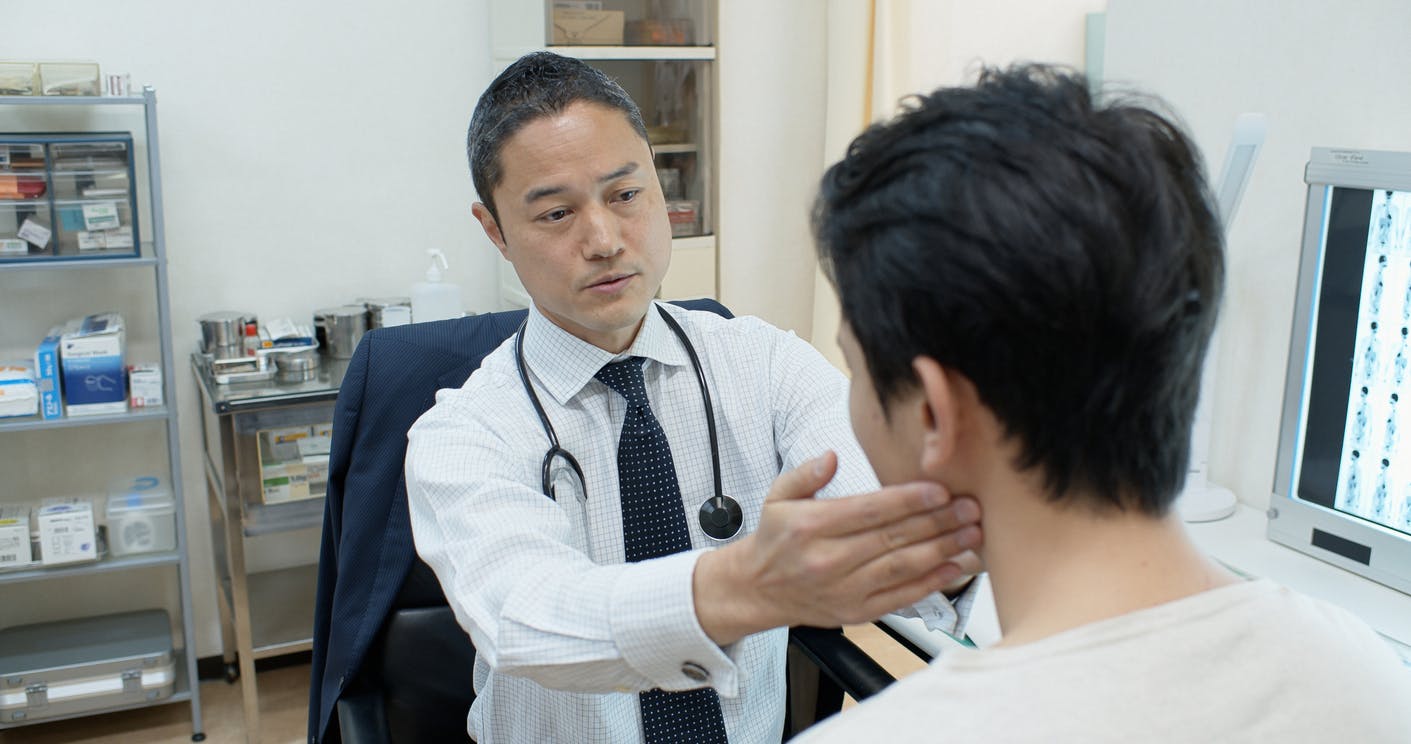
You've been referred to a maxillofacial surgeon and you're not quite sure what that means or what to expect from the appointment. It's understandable if you have questions, as most people haven't encountered this type of specialist before. Here's what you need to know about maxillofacial surgeons, when they're needed, and what to expect from your consultation.
What is Oral and Maxillofacial Surgery (OMS)?
Maxillofacial surgery, also known as oral and maxillofacial surgery (OMS), is a specialised branch of dentistry focusing on the diagnosis and surgical treatment of diseases, injuries and abnormalities of the head, face, jaw and neck.
OMS surgeons are qualified dental specialists who have undergone additional training. In addition to their standard dental training, they complete a three-year postgraduate residency programme in OMS, which includes hands-on surgical training.
In Singapore, to be officially recognised as an OMS surgeon, a dentist must obtain accreditation from the Ministry of Health (MOH).
OMS services
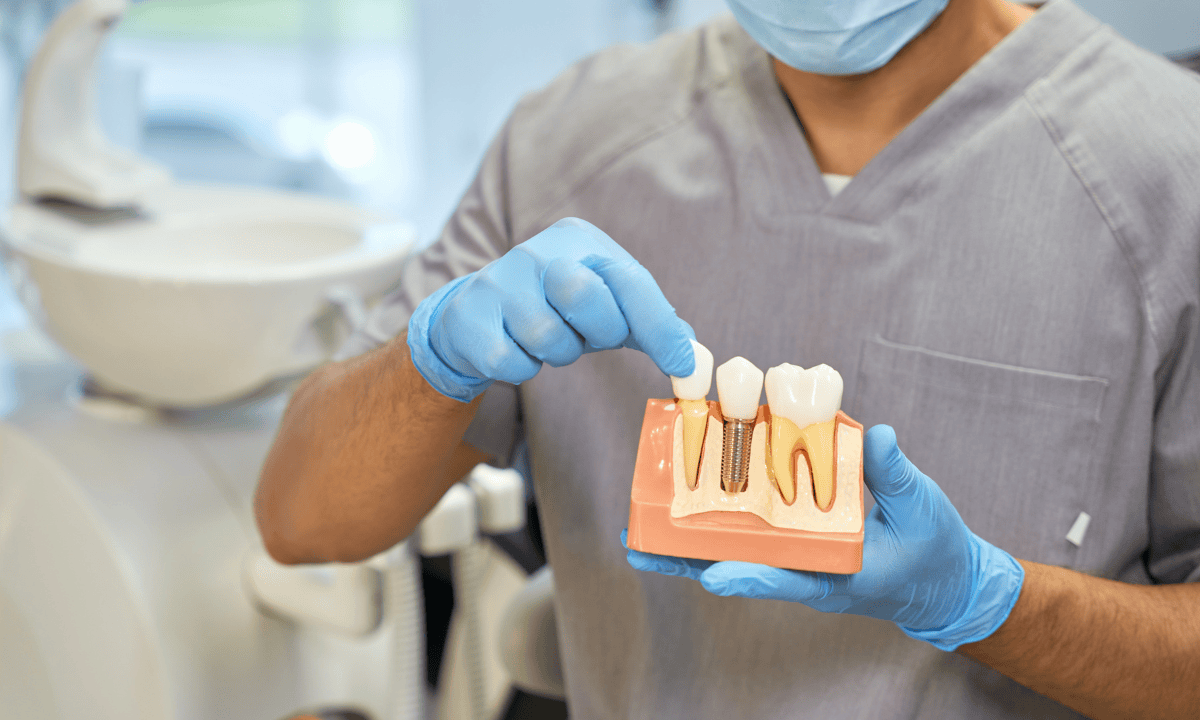
Oral and maxillofacial surgeons are trained to diagnose and treat a wide range of conditions affecting the head, face, jaws, and neck. Their scope of practice encompasses both medical and dental aspects, and they provide various specialised surgical services.
Here are some of the key responsibilities and procedures that oral and maxillofacial surgeons are involved in:
Tooth extractions
Oral and maxillofacial surgeons commonly perform extractions of teeth, including impacted wisdom teeth or teeth that are damaged or diseased.
Dental implant surgery
If you are missing one or more teeth, dental implants may be recommended to replace the missing teeth. OMS specialists are trained to place dental implants to support dental prosthetics like crowns, bridges, or dentures.
Orthognathic surgery
Orthognathic surgery involves the surgical correction of jaw abnormalities, such as malocclusion or jaw disproportion, to improve bite and facial aesthetics.
Correction of malocclusion:
If you have a misaligned jaw causing issues with your bite, speech, or appearance, orthognathic surgery may be recommended.
Jaw disproportion:
Surgical correction of jaw disproportion, such as an underbite or overbite, may be necessary to improve function and aesthetics.
Maxillofacial trauma
OMS specialists often treat facial injuries resulting from accidents, falls, or sports-related incidents. This can include fractures of the jaw and facial bones.
Reconstructive surgery
OMS specialists may perform reconstructive procedures to repair abnormalities or injuries, such as cleft palate and lip repair or reconstruction after the removal of tumours.
Treatment of Temporomandibular Joint (TMJ) disorders
If you have chronic jaw pain, difficulty opening or closing your mouth, or other TMJ-related issues, OMS specialists can diagnose and manage them.
Oral pathology
OMS specialists are trained to identify and manage oral and facial diseases, including oral cancers or jaw tumours. They may perform biopsies and other diagnostic procedures if there are abnormalities in the oral tissues, such as suspicious lesions or tumours.
Facial aesthetic surgery
Some oral and maxillofacial surgeons offer aesthetic or cosmetic procedures to enhance facial aesthetics, such as facelifts, rhinoplasty, or facial implant surgery.
Treatment of oral infections
OMS specialists may treat infections of the oral and maxillofacial region, including abscesses and other inflammatory conditions.
Pre-prosthetic surgery
Before the placement of dental prosthetics like dentures, oral surgeons may perform procedures to prepare the oral tissues for optimal prosthetic fit and function.
Sleep apnoea surgery
In some cases, OMS surgeons may be involved in surgical interventions for sleep-related breathing disorders, such as obstructive sleep apnoea.
These responsibilities highlight the diverse and comprehensive nature of OMS.
OMS specialists often work closely with other healthcare professionals, including dentists, orthodontists, physicians, and other surgeons, to provide integrated and multidisciplinary care for you.
If you have any dental, jaw or facial concerns that may require the attention of an OMS, schedule an appointment with Thomson Dental Centre to receive a clear diagnosis and personalised treatment plan.
Our oral maxillofacial surgeon in Singapore
Loading...
What to expect during an OMS consultation
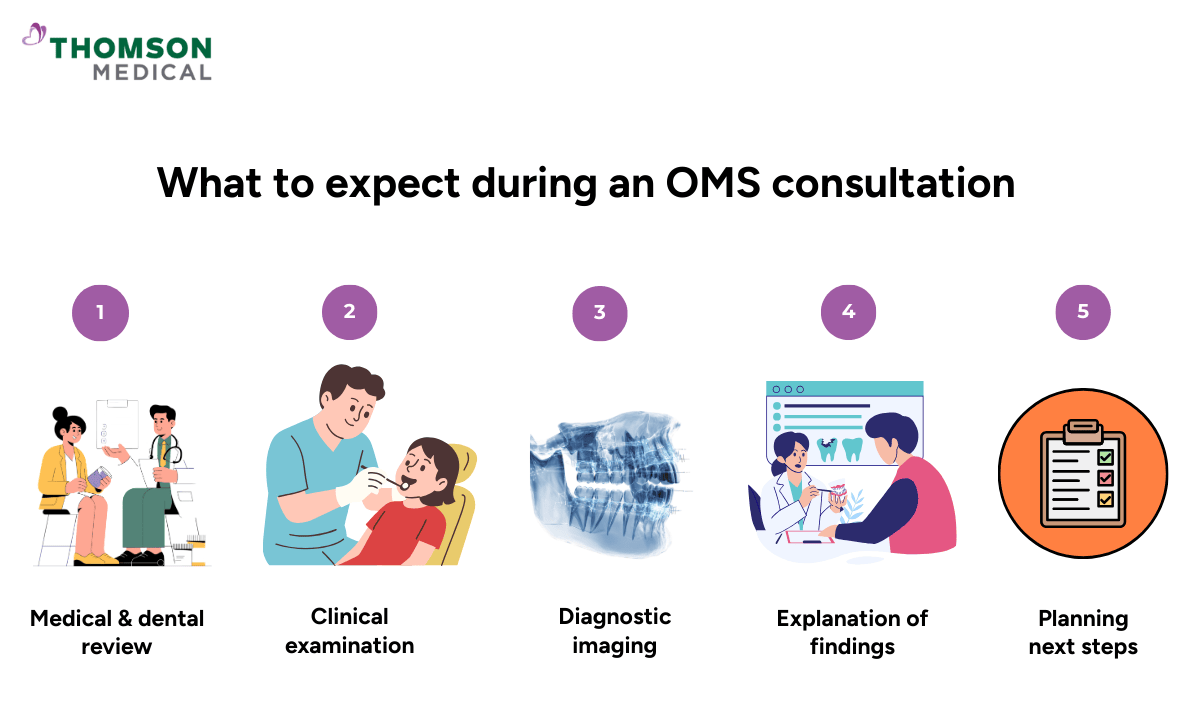
Your first appointment with an oral and maxillofacial surgeon is designed to provide a clear understanding of your condition and outline an appropriate treatment plan.
Although the specific steps may vary depending on your concerns, most consultations typically include the following components:
Medical and dental review:
A brief discussion of your symptoms, medical history, and previous dental treatments.
Clinical examination:
An assessment of your mouth, jaws, bite, and facial structures to identify the source of the problem.
Diagnostic imaging:
Dental X-rays or scans may be taken to evaluate the underlying anatomy and guide treatment planning.
Explanation of findings:
Your oral and maxillofacial surgeon will outline the diagnosis, discuss suitable treatment options, and answer any questions.
Planning next steps:
If surgery is required, you will receive guidance on preparation, risks, and expected recovery.
For non-surgical cases, a tailored management plan or referral may be provided.
If you would like further guidance or are ready to take the next step in your treatment, schedule an appointment with Thomson Medical today. Our OMS specialists are here to give you safe, informed, and timely care.
FAQ
What does a maxillofacial surgeon do?
A maxillofacial surgeon diagnoses and treats conditions affecting the mouth, jaws, face, and neck, including tooth extractions, jaw surgery, facial trauma, and oral diseases.
What is the meaning of maxillofacial?
Maxillofacial refers to the anatomical region that includes the jaws (maxilla and mandible) and the facial structures surrounding them.
Why have I been referred to maxillofacial?
You may have been referred because your dentist or doctor suspects an issue that requires specialist assessment or surgical management, such as impacted wisdom teeth, jaw problems, facial injury, or oral lesions.
What happens at a maxillofacial appointment?
You will have a review of your symptoms and medical history, a clinical examination, and, if needed, imaging tests. The surgeon will then explain the diagnosis and discuss treatment options.
How painful is maxillofacial surgery?
Most procedures are performed under local or general anaesthesia, so you should not feel pain during surgery. Some discomfort is expected afterwards, but it is usually manageable with prescribed medication.
Is maxillofacial surgery safe?
Yes, maxillofacial surgery is generally safe when performed by accredited specialists. Your surgeon will discuss the risks, benefits, and expected recovery so you can make an informed decision.
The information provided is intended for general guidance only and should not be considered medical advice. For personalised recommendations and advice based on your unique situation, schedule an appointment with Thomson Dental Centre today.