

If you’ve had a hysterectomy and are still feeling cramp-like pain, it can be confusing and unsettling. You may find yourself thinking, “My uterus has been removed, so why does this still feel like period cramps?”
The truth is that some women do experience pelvic cramping after a hysterectomy, whether their ovaries were removed or preserved. In many cases, there is a clear and manageable explanation.
Let’s walk through why cramping may happen after a hysterectomy, how to manage the discomfort, and when to see a doctor.
What is a hysterectomy?
A hysterectomy is a surgical procedure to remove your uterus (womb).
It is a common treatment for several gynaecological conditions, such as:
Adenomyosis
Uterine prolapse
Chronic pelvic pain
Depending on your condition and what your treatment requires, your doctor may also remove your ovaries and fallopian tubes.
If your ovaries were left in place, your body continues to produce oestrogen and progesterone, so you will not enter menopause straight away. Because the uterus has been removed, though, you will no longer have menstrual bleeding.
Can you have menstrual cramps after a hysterectomy?
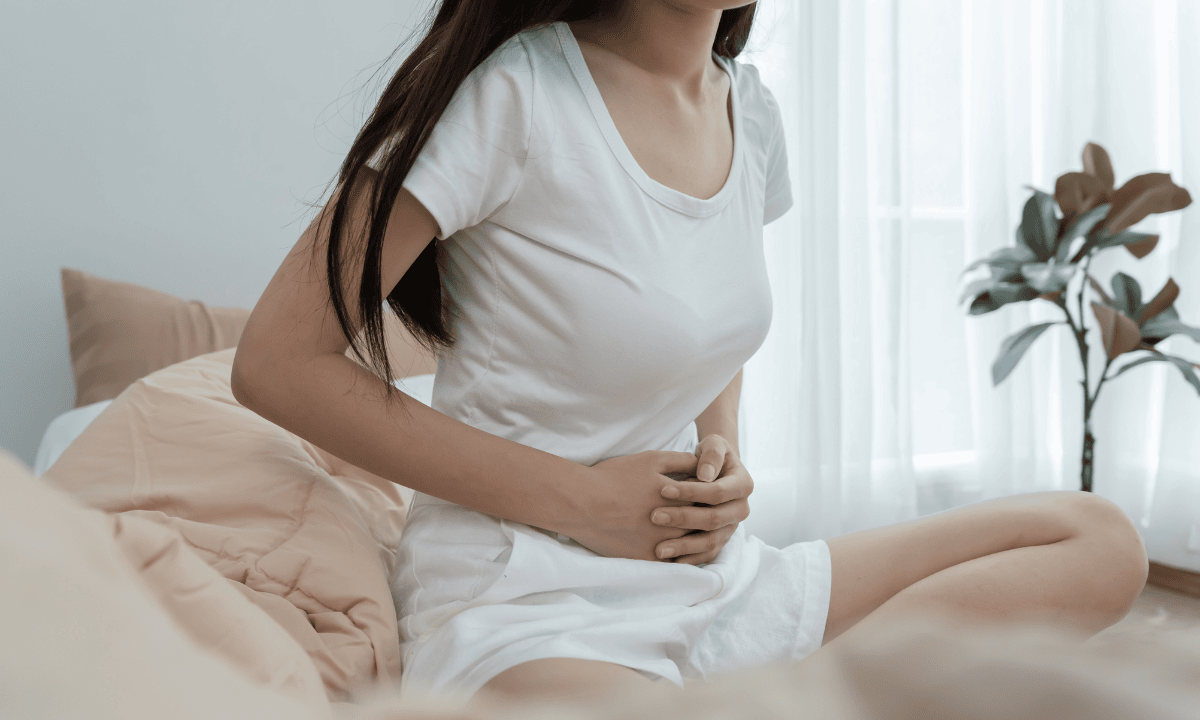
It’s natural to assume that once your womb is removed, menstrual-type cramps should disappear completely.
While you can no longer have true menstrual cramps without a uterus, the pelvic discomfort can feel very similar, especially if your ovaries were left in place.
You may notice:
Pelvic discomfort that comes and goes
A sense of heaviness or bloating in your lower abdomen
Mild lower back aching
Breast tenderness
To understand why this happens, let’s explore common causes of cramping after a hysterectomy.
Common causes of cramping after hysterectomy
Even without a womb, your body may still go through hormonal shifts or healing changes that produce sensations similar to period pain.
Ovarian activity and hormonal cycles
If your ovaries were preserved, they continue to produce hormones such as oestrogen and progesterone, and your body may still go through monthly hormonal fluctuations. These shifts can produce sensations like premenstrual symptoms.
Hormonal fluctuations alone usually cause mild symptoms. More persistent or severe cramping often has another underlying cause.
Scar tissue and adhesions
After a hysterectomy, your body naturally forms scar tissue as it heals. Sometimes, this scar tissue can cause nearby tissues or organs to stick together. This is called adhesions.
Adhesions can create:
A pulling sensation
Intermittent sharp twinges
Discomfort with certain movements
Not everyone develops symptoms from scar tissue. But when discomfort appears weeks or months after surgery, adhesions are one possible explanation.
Endometriosis remnants
Endometriosis is a condition where tissue similar to the lining of the womb grows outside your womb, for example, on the ovaries, bowel, bladder, or pelvic ligaments.
Even after your womb is removed, small patches of this tissue can remain in your pelvis. Because this tissue responds to hormones, it can continue to cause pain, especially if your ovaries are still active.
Ovarian remnant syndrome
In rare situations, a tiny piece of ovarian tissue may remain after surgery, even when the ovaries were intended to be fully removed. This is called ovarian remnant syndrome.
That small piece of tissue can still produce hormones, which may trigger cyclical cramping or hormonal symptoms.
Other pelvic conditions
Your pelvis contains several closely connected organs, and many conditions can cause pain that feels similar to menstrual cramps:
Irritable bowel syndrome (IBS)
Bladder inflammation
Pelvic floor muscle tension
Because everything sits so close together in the pelvis, discomfort from one area can feel like it’s coming from your womb, even though the womb is no longer there. Many of these conditions are manageable once identified.
If you’re unsure whether your symptoms are normal, schedule a consultation with Thomson Medical. Our gynaecologists will review your surgical history and current concerns and give you personalised advice.
Our gynaecologists in Singapore
Loading...
How to manage cramping after hysterectomy
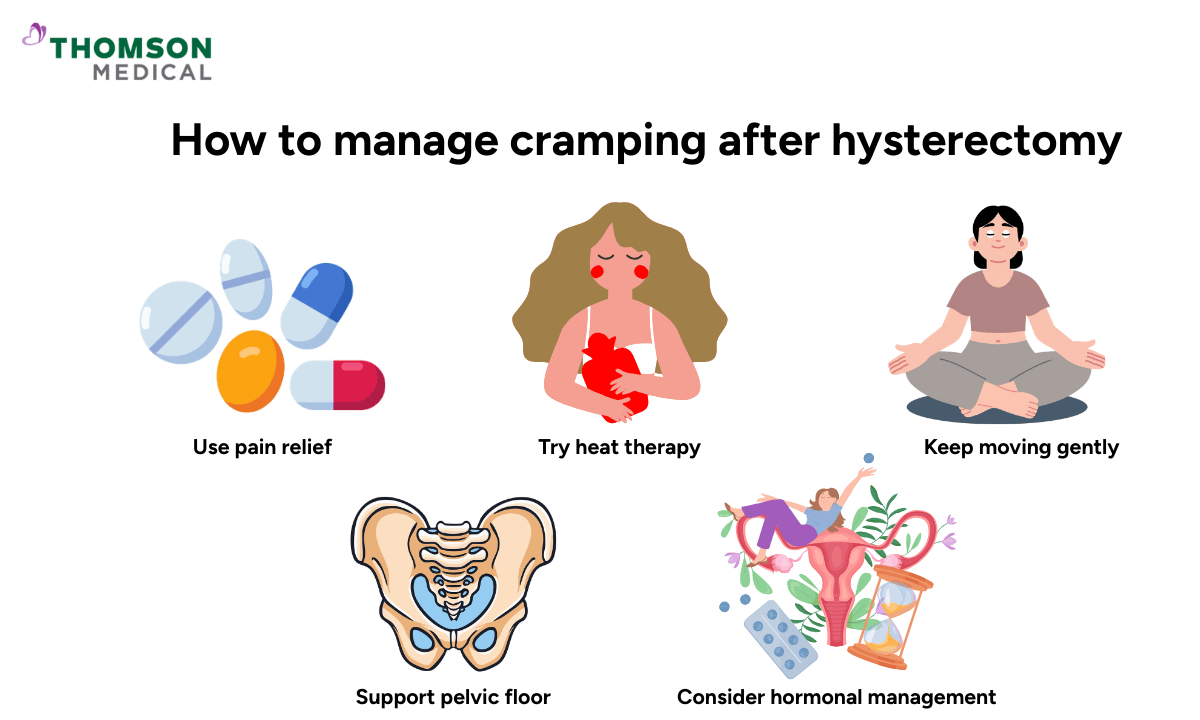
How you manage cramping depends on what is causing it and how severe it feels. In many cases, cramping is mild and may improve with conservative management.
Here are ways you can support your body.
Use pain relief
If your discomfort is mild to moderate, over-the-counter medications such as paracetamol and ibuprofen may help reduce inflammation and ease cramping.
It’s important to follow dosing instructions and check with your doctor if you have stomach, kidney, or other medical conditions.
For many women, pain medication may be enough to make their symptoms manageable.
Try heat therapy
A warm compress or heating pad placed on your lower abdomen can help:
Relax pelvic muscles
Improve blood flow
Reduce the intensity of cramp-like pain
You can apply warmth for 15–20 minutes at a time. Many women find this especially helpful in the evening when discomfort feels more noticeable.
Keep moving gently
It may feel surprising, but gentle movement often helps more than staying completely still. Light activities can improve circulation, reduce stiffness, and support bowel movement.
You don’t need intense exercise, as pushing yourself too hard can make your discomfort worse.
It’s better to start with gentle options such as:
Short walks
Gentle stretching
Low-impact yoga
Support your pelvic floor
After a hysterectomy, your pelvic floor muscles can sometimes become tight or overactive. Tight muscles can mimic menstrual cramps.
If your pain feels like deep pelvic pressure or worsens with sitting or stress, pelvic floor exercises may help. A trained physiotherapist can guide you through targeted relaxation techniques and exercises to reduce muscle tension.
Consider hormonal management
If your ovaries were preserved and your cramps seem to come and go in a monthly pattern, hormonal fluctuations may be playing a role.
In some cases, your doctor may discuss:
Medications to suppress ovulation
Hormone therapy
This is not necessary for everyone, but it can be helpful if symptoms are cyclical and affecting your quality of life.
When to see a doctor for post-hysterectomy cramps
Mild cramping that gradually improves over weeks or months is often part of healing or related to hormonal changes.
However, it's important to check in with your doctor if the pain:
Is severe or worsening
Persists without improvement
Interferes with your daily activities
Feels different from what you’ve experienced before
You may also want to seek medical advice if you notice:
Fever
Unusual vaginal discharge
Vaginal bleeding after the initial recovery period
Changes in bowel or bladder habits
Sudden sharp or intense abdominal pain
If your discomfort is mild and gradually improving, that is often part of the healing process. But if pain is ongoing, worsening, or interfering with your daily life, you do not need to tolerate it silently.
If you’re experiencing ongoing cramping after a hysterectomy, request an appointment with Thomson Medical. Our specialists can assess your symptoms and discuss options that may be appropriate for your situation.
FAQ
Is it normal to have cramps after a hysterectomy?
Yes, some women experience cramping after uterus removal surgery due to healing, scar tissue, hormonal activity (if ovaries remain), or residual conditions like endometriosis.
Can you still ovulate after a hysterectomy?
Yes, if your ovaries were left in place. They continue producing hormones and releasing eggs, even though you no longer have periods. If both ovaries were removed, ovulation stops and you enter surgical menopause.
How long do cramps typically last after hysterectomy surgery?
Cramping is usually most noticeable in the first few weeks and gradually improves. Recovery often takes 6–8 weeks after abdominal surgery and 4–6 weeks after laparoscopic hysterectomy or vaginal hysterectomy.
Why do I have cramps years after my hysterectomy?
Late cramping may be due to:
Residual endometriosis
Scar tissue
Ovarian remnant syndrome
Unrelated conditions like irritable bowel syndrome (IBS) or bladder issues
Can endometriosis come back after a hysterectomy?
Yes, endometriosis outside the uterus can remain and respond to hormones, especially if ovaries are preserved.
What is ovarian remnant syndrome and how do I know if I have it?
Ovarian remnant syndrome occurs when a small piece of ovarian tissue remains after removal and continues producing hormones. It may cause cyclical pelvic pain. Diagnosis requires medical evaluation and imaging.
The information provided is intended for general guidance only and should not be considered medical advice. For personalised recommendations and tailored advice based on your unique situations, please consult a specialist at Thomson Medical. Request an appointment with Thomson Medical today.
For more information, contact us:
Thomson Specialists (Women's Health)
Thomson Women's Clinic (TWC)
- Novena:
6592 6686 (Call), 8611 8986 (WA) - Bukit Batok:
6569 0668 (Call), 8686 3525 (WA) - Choa Chu Kang:
6893 1227 (Call), 8282 1796 (WA) Jurong:
6262 8588 (Call), 6262 8588 (WA)- Katong (female doctor):
6970 2272 (Call), 8611 9020 (WA) - Punggol:
6243 6843 (Call), 8811 0328 (WA) - Sembawang: 6753 5228
- Sengkang: 6388 8125
- Serangoon (female doctor): 6382 3313
- Tampines: 6857 6266
- Tiong Bahru: 6276 1525