

Being told you have an ovarian cyst can be unsettling. It is natural for questions to surface, especially when the word “cyst” brings thoughts of something serious. Many women share this initial worry, and you are not alone in feeling this way.
Even though they both involve the ovaries, ovarian cysts and ovarian cancer are different conditions. Most ovarian cysts are common and resolve on their own, while ovarian cancer is far less common and develops differently.
Understanding how the two compare, what symptoms to pay attention to, and when to seek medical advice can help you feel more informed and reassured.
What is an ovarian cyst?
An ovarian cyst is a small, fluid-filled sac that develops on or inside one of your ovaries.
These cysts are very common, especially if you are in your reproductive years. Most of them are harmless and usually go away on their own without you even realising it.
In some cases, you may experience mild bloating, a bit of pelvic discomfort, or changes in your periods, but you usually don’t need any treatment. In fact, many cysts are discovered by chance during routine check-ups or imaging tests.
What is ovarian cancer?
Ovarian cancer is very different from a cyst. It’s a disease that starts in your ovaries, the organs responsible for producing your eggs and hormones, where abnormal cells grow out of control.
Unlike a harmless cyst, ovarian cancer can spread to nearby tissues or other parts of your body if it’s not caught early.
One of the challenges of identifying ovarian cancer is that it usually doesn’t cause any noticeable symptoms in its early stages. That’s why doctors sometimes call it a “silent” disease.
For this reason, paying attention to subtle changes in your body is very important for early detection. If something feels off or you notice unusual changes, it’s best to consult your doctor early.
Key differences between ovarian cysts and ovarian cancer
So, what is the difference between an ovarian cyst and ovarian cancer, and how can you distinguish them?
The main distinction lies in how they behave in your body. Ovarian cysts are usually temporary and benign (non-cancerous). Most of them develop as a natural part of your menstrual cycle and disappear on their own within a few weeks or months without any treatment.
Ovarian cancer, on the other hand, involves abnormal cells that grow in an uncontrolled way and can spread to other parts of your body. It is a persistent condition that needs proper medical care.
It's completely understandable to feel worried when you hear these terms. But understanding the differences between these two can help ease your anxiety and give you clarity on what to watch for.
Symptoms
Symptoms can sometimes overlap between the two, so it’s natural to feel uncertain about which one you may have. Both cause bloating or pelvic discomfort, but they present in different ways.
Ovarian cysts
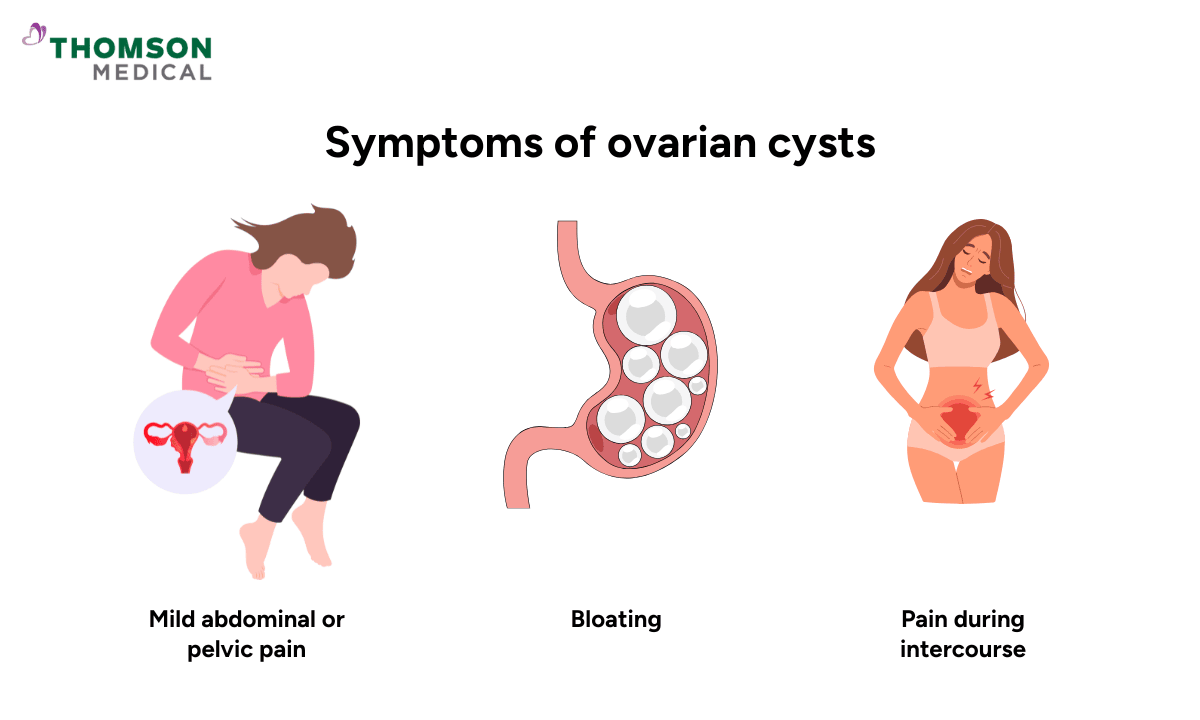
If you have ovarian cysts, you may notice:
Mild abdominal or pelvic pain
Bloating
Pain during intercourse
In many cases, cysts cause only mild or no symptoms at all. They also rarely affect your overall health.
Ovarian cancer
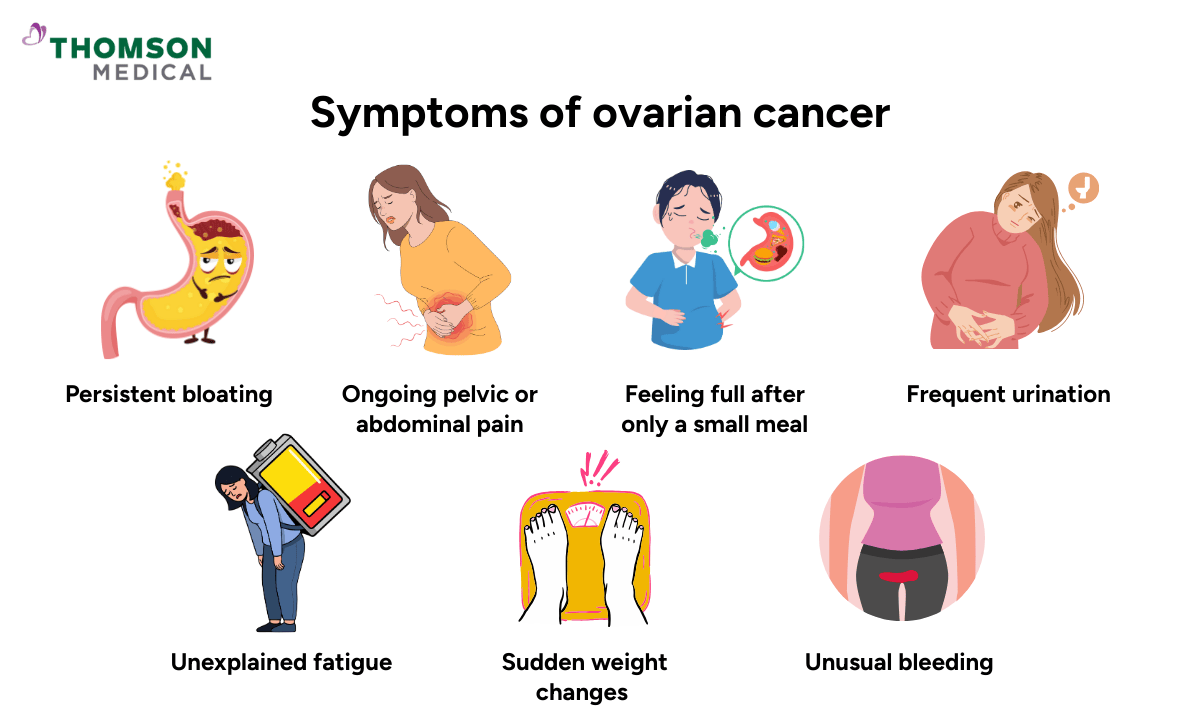
Ovarian cancer symptoms can be subtle and easy to miss at first, so it’s easy to mistake them for common digestive or hormonal issues.
When it progresses, there are some warning signs you can watch for:
Persistent bloating
Ongoing pelvic or abdominal pain
Feeling full after only a small meal
Frequent urination
Unexplained fatigue
Sudden weight changes (loss or gain)
Unusual bleeding, especially after menopause
If you’re experiencing these symptoms and they persist for more than a few weeks, it’s important to check with your doctor just to be safe.
Having these symptoms doesn’t mean you have cancer, as many benign conditions can also cause these signs. But seeing your doctor early can give you peace of mind and ensure that you have more options if treatment is needed later.
If you’re experiencing these symptoms and wondering what’s going on, schedule an appointment with Thomson Medical. Our specialists will assess your situation and create a personalised care plan for your specific needs.
Women's cancer specialists
Loading...
Risk factors
The risk factors also differ between ovarian cysts and ovarian cancer. Knowing these factors can help you understand what’s normal and when to seek care. This is especially important for ovarian cancer, which often shows vague or “silent” symptoms in early stages.
Ovarian cysts
Ovarian cysts are more common if you:
Are in your reproductive years
Have hormonal fluctuations during your menstrual cycle
Have endometriosis
Have pelvic infections
Have had previous ovarian cysts
Ovarian cysts are usually a normal part of how your ovaries function. If you have concerns about these cysts, scheduling regular check-ups with your doctor can help you monitor them and make sure there’s nothing serious.
Ovarian cancer
Your risk of ovarian cancer may be higher if you:
Have a family history of ovarian cancer
Have genetic mutations such as BRCA1 or BRCA2
Are over 50 years old
Have never been pregnant
Have had breast cancer, uterine cancer, or endometrial cancer
While these factors can increase risk, having one or more of them doesn’t mean you are guaranteed to develop ovarian cancer. In fact, many women with these risks never get cancer. Knowing your risk simply helps you and your doctor decide when closer monitoring or checkups may be helpful.
Link between ovarian cysts and ovarian cancer
Most ovarian cysts are harmless and don’t lead to cancer. However, there are certain types of cysts that may need more attention, especially if they contain abnormal or pre-cancerous cells.
For this reason, your doctor may suggest imaging or follow-up appointments to monitor your cysts over time. Having a cyst does not always mean you will develop ovarian cancer, but keeping track of persistent or unusual cysts is important to help you catch changes early and stay on track with your ovarian health.
How are ovarian cysts and ovarian cancer diagnosed?

If you’re experiencing symptoms or your doctor has found something during a pelvic examination, they may suggest some routine tests to get a clear picture of what’s going on inside you.
These tests may include:
Imaging tests:
Blood tests:
If you have certain risk factors, your doctor may order a CA125 blood test, which can help detect ovarian cancer.
Biopsy or surgical procedure:
Sometimes, your doctor may suggest removing the cyst or taking a tissue sample to examine it under a microscope to get the most accurate diagnosis.
Your test results will usually be ready within a few days, though the exact timing depends on which tests you've had. The waiting can feel difficult, and it's completely normal to feel anxious during this time. If worries come up while you're waiting, don’t hesitate to reach out to your doctor. They're there to listen, answer your questions, and help you feel more at ease.
Treating ovarian cysts and ovarian cancer
Fortunately, there are effective treatments for both ovarian cysts and ovarian cancer. However, the approaches are very different.
Ovarian cysts
Most ovarian cysts don’t need treatment at all. Your doctor may recommend follow-up ultrasounds to monitor them and make sure they disappear on their own.
If a cyst is large and causes discomfort or persists over time, you may need medication to prevent new cysts from forming or surgery to remove the cyst.
Ovarian cancer
For ovarian cancer, your treatment plan will depend on the stage of cancer when it’s detected. Usually, the earlier it’s found, the better the outcome.
Treatment options your doctor may suggest include:
Surgical treatment:
This helps remove the tumour or affected ovaries.
Chemotherapy:
Chemotherapy involves using medication to kill cancer cells or stop them from growing.
Targeted therapy:
This is a newer treatment that targets cancer cells specifically, without affecting healthy ones.
A combination approach:
Your doctor may combine different treatments for the best results.
Hearing about cancer treatments can be scary, and that’s normal. Everyone’s journey is different, but with the right care and support, many women respond well to treatment. Your doctor will be with you at every step, explaining your options and helping you make decisions that feel right for you.
If you have concerns about your ovarian health, schedule an appointment with Thomson Medical to get the personalised care you deserve.
FAQ
How fast do ovarian cysts grow?
Ovarian cysts grow at different rates depending on their type. Some appear and disappear within a few weeks, while others may grow slowly over months.
Most cysts are small and harmless, and many go away on their own without causing any issues. Rapidly growing cysts or those that become very large are less common and usually require closer monitoring by your doctor.
How do you know if the cyst is cancerous?
Unfortunately, it’s not possible to tell if you have cancerous cysts just by symptoms alone, because most cysts, both benign and malignant, can look similar.
Your doctors usually rely on imaging tests like ultrasound, CT scans, or MRI to examine the cyst. Blood tests, including the CA-125 marker, can help indicate a higher risk of ovarian cancer in certain women. If there is concern, your doctor may suggest a biopsy or surgical removal of the cyst to confirm whether it is cancerous.
What can happen if a cyst is left untreated?
Many ovarian cysts resolve naturally and don’t cause problems. However, some cysts can lead to complications if left untreated.
Large cysts may press on nearby organs, causing discomfort or urinary issues. A cyst can sometimes rupture, leading to sudden pain and internal bleeding, which is a medical emergency.
In rare cases, an untreated cyst may turn out to be cancerous. This is why your doctor usually monitors cysts over time and recommends follow-up imaging when needed.
Does having an ovarian cyst increase your chances of developing ovarian cancer?
Most ovarian cysts are benign and don’t increase your risk of ovarian cancer. However, certain types of cysts, such as complex cysts that contain solid areas or abnormal cells, may carry a slightly higher risk.
Your doctor will often monitor these cysts over time to detect any concerning changes early. If you have a simple, functional cyst, it doesn’t mean you will develop ovarian cancer.
How can I reduce my risk of ovarian cancer?
There are some factors that may help lower your risk of developing ovarian cancer, including:
Having children
Breastfeeding
Using oral contraceptives
Surgical removal of the ovaries or fallopian tubes
Maintaining a healthy lifestyle
Can ovarian cysts go away on their own?
Yes, they can. In fact, most ovarian cysts go away naturally within a few weeks to a few months without any treatment. To confirm the cyst has resolved, your doctor may suggest a follow-up ultrasound.
The information provided is intended for general guidance only and should not be considered medical advice. For personalised recommendations and advice based on your unique situation, please consult a specialist at Thomson Medical. Request an appointment with Thomson Medical today.
For more information, contact us:
Thomson Specialists (Women's Health)
Thomson Women's Clinic (TWC)
- Novena:
6592 6686 (Call), 8611 8986 (WA) - Bukit Batok:
6569 0668 (Call), 8686 3525 (WA) - Choa Chu Kang:
6893 1227 (Call), 8282 1796 (WA) - Jurong:
6262 8588 (Call), 6262 8588 (WA) - Katong (female doctor):
6970 2272 (Call), 8611 9020 (WA) - Punggol:
6243 6843 (Call), 8811 0328 (WA) - Sembawang: 6753 5228
- Sengkang: 6388 8125
- Serangoon (female doctor): 6382 3313
- Tampines: 6857 6266
- Tiong Bahru: 6276 1525
Notice
The range of services may vary between TWC/TS locations. Please contact your preferred branch directly to enquire about the current availability.
Request an Appointment