

Pain behind the ear can be unsettling, especially when it appears suddenly and you cannot tell where it is coming from. It might feel sharp, throbbing, or like a deep ache that refuses to go away, which can naturally make you worry about whether something is wrong with your ear or your head.
In many cases, the discomfort does not actually start in the ear itself. It often comes from tension, irritated nerves, or strain in nearby areas like the neck or jaw. Identifying the source can help you find the right treatment and ease your worry.
What causes pain behind the ear?
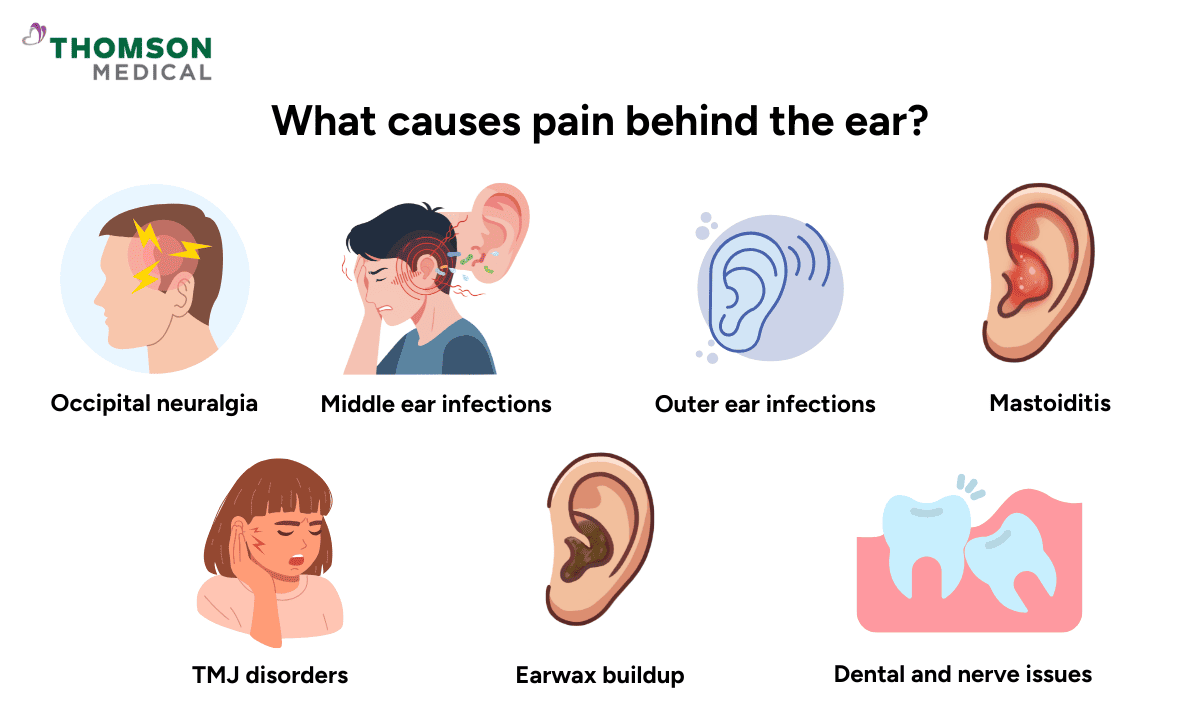
The area behind the ear is made up of bones, muscles, and nerves working closely together. Because so many structures meet here, pain in this area can have different causes, ranging from the inner ear to the jaw.
Occipital neuralgia
This is a common cause of sharp, shooting pain behind your ear. It happens when the occipital nerves, which run from the top of your spinal cord up through your scalp, get irritated or inflamed.
It can sometimes be triggered by:
Tight neck muscles
Poor posture
Pressure on the nerves
Symptoms to watch for:
A sharp, electric shock-like pain on one side of your head
Light sensitivity or tenderness when you touch your scalp
Pain that starts at the base of your skull and moves upward
Spotting this type of nerve pain early can help you get the right treatment. Unlike ear infections, occipital neuralgia usually responds well to gentle massage, heat therapy, and fixing your posture, not just pain medication.
Outer ear infections (Otitis externa)
Also known as swimmer’s ear, otitis externa is an infection in the ear canal, the small passage that carries sound from your outer ear to the eardrum.
It often happens after swimming, when water gets trapped inside your ear. This makes your ear damper, creating an ideal environment for bacteria to grow.
Using cotton buds to clean your ear can also increase the risk, as it may scratch the skin inside.
Symptoms to watch for:
Pain that gets worse when you gently pull the earlobe or press the small flap in front of your ear
Fluid leaking from the ear (ear discharge), which may be clear or pus-like
Itching inside the ear
Redness or swelling of the ear canal
Temporary difficulty in hearing
If you notice these symptoms, it is a good idea to let your ear rest and stay as dry as possible. Try to avoid swimming, getting water into the ear, or using headphones for a while, as these can slow down healing.
Middle ear infections (Otitis media)
Otitis media is a common ear infection that occurs when fluid gets trapped behind your eardrum. This often happens after you've had a cold, flu, or sinus infection. When bacteria or viruses grow in that trapped fluid, it creates pressure and pain that can spread to the area behind your ear.
This infection can also lead to Eustachian Tube Dysfunction (ETD), a condition when the Eustachian tube that connects your ear to your throat gets blocked.
Symptoms to watch for:
Deep pressure or a feeling of fullness in the ear.
Hearing loss or muffled sound
Fever and feeling unusually tired
Fluid draining from the ear if your eardrum tears or ruptures
Keep an eye on your fever and pain. Many infections improve on their own, but if the pressure or discomfort does not go away, you may need medical treatment to help clear the blocked Eustachian tube.
If you are experiencing symptoms that may suggest a middle ear infection, schedule a consultation with our specialists at Thomson Medical Centre (TMC) for an examination of your ear and personalised advice on how to manage the infection.
Mastoiditis
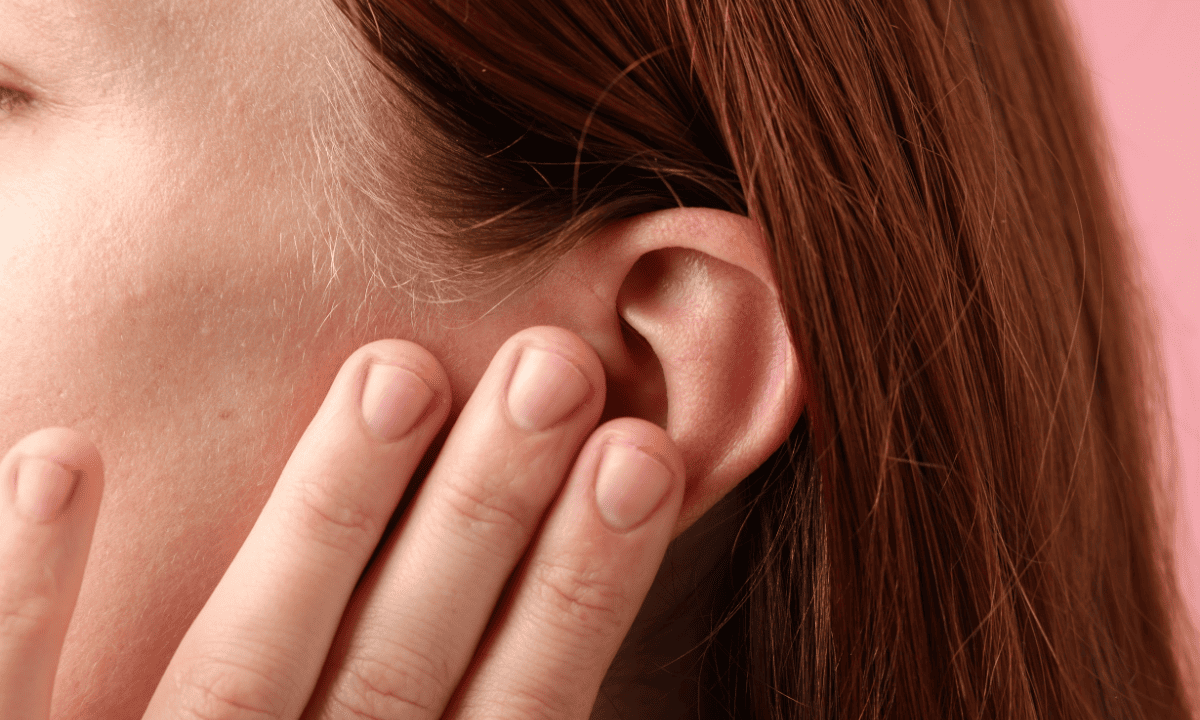
When a middle ear infection is not treated properly, it can sometimes spread to the mastoid bone (the spongy, honeycomb-like bone just behind your ear). When this happens, the bone can fill with infected material and start to break down.
This is a more serious condition that needs medical advice quickly to prevent the infection from spreading further to the brain or causing complications such as blood clots.
Symptoms to watch for:
Redness and swelling behind your ear
The area feels hot and tender to the touch
Your ear starting to look pushed forward or sticking out more than usual
Because this bone sits very close to the brain, these warning signs should never be ignored. If you notice these changes, you should seek medical care as soon as possible. Treatment usually involves antibiotics to clear the infection and prevent it from spreading further.
Temporomandibular joint (TMJ) disorders
Problems with the TMJ, which is the joint that connects your jaw to the skull, can often cause pain that spreads to the ear area. It happens because this joint sits very close to the ear canal. If you grind your teeth at night or clench your jaw due to stress, the muscle tension can spread upwards and affect your ear.
Symptoms to watch for:
A dull ache that gets worse when chewing, yawning, or talking
Clicking or popping sounds when opening or closing your mouth
Difficulty in opening the jaw fully
Soreness or tenderness around the jaw or temple area
Reducing strain on the jaw often helps ease ear discomfort. Wearing a night guard while sleeping or finding ways to relax jaw tension can make a noticeable difference and may help settle the pain.
If you notice ongoing jaw pain or ear discomfort that affects your daily activities, consider seeking medical advice for a proper evaluation. Schedule a consultation with our specialists at Thomson Medical Centre to discuss suitable care options for your condition.
Earwax buildup and blockages
Sometimes, the cause is just earwax buildup or something small stuck in your ear canal. When earwax hardens and blocks your ear, it presses against the sensitive skin and eardrum, causing discomfort or pain.
Symptoms to watch for:
Sudden hearing changes or ringing in the ear (tinnitus)
A feeling that your ear is blocked or plugged
You might feel tempted to clean your ear yourself, but putting cotton buds or other objects inside usually pushes the wax deeper and irritates your ear. Your healthcare provider can safely remove the blockage, relieving your discomfort and restoring your hearing.
Dental and nerve issues
Sometimes, pain behind or around your ear isn't actually coming from your ear. Dental problems, such as an impacted wisdom tooth or a deep cavity, can send pain up your jawline to your ear.
In rare cases, viral infections like shingles can affect your facial nerve and lead to Ramsay Hunt syndrome, a rare complication of shingles that can cause facial nerve paralysis and a painful rash around your ear.
Symptoms to watch for:
Weakness or drooping on one side of your face
A painful red rash with blisters inside or around your ear
Severe tooth pain that seems to travel toward your ear
It can be hard to tell tooth pain from ear pain. Your ear and teeth share nearby nerves, so the pain can feel mixed together. If your ears look normal but the pain persists, a dental checkup can help find or rule out tooth-related causes.
When to seek medical urgency
Most pain behind your ear is harmless and gets better with rest or simple treatment. But some symptoms mean something more serious is going on and need prompt medical attention. Conditions like bone infections behind the ear or blood clots need urgent medical care.
Seek medical help immediately if you notice:
A high fever with severe pain
Sudden weakness or drooping on one side of your face
Redness, swelling, or warmth behind your ear
Sudden hearing loss or hearing becoming muffled very quickly
Sudden severe dizziness, fainting, or collapse
Noticing these symptoms early can help protect your health. While these situations don't happen often, quick medical attention gives you a higher chance of avoiding complications and recovering well.
Our ENT specialist in Singapore
Loading...
How is it diagnosed?
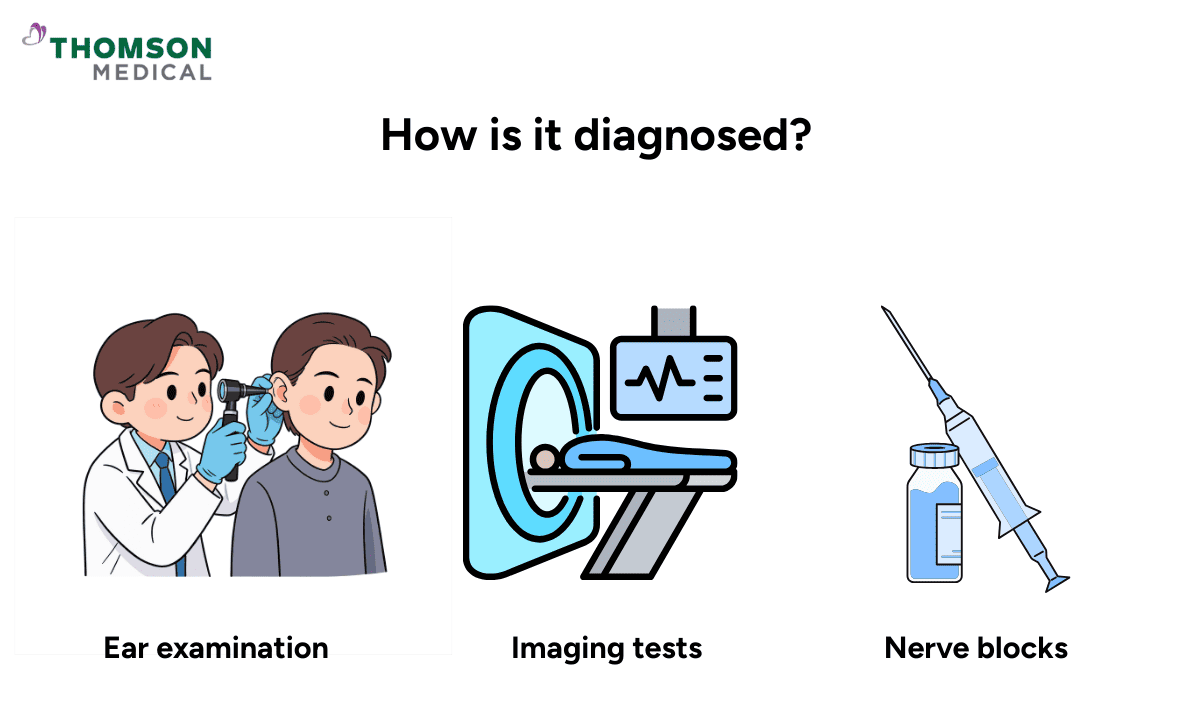
Because the pain could be coming from your teeth, neck, or ear, your doctor will start by asking about your medical history.
They'll usually want to know:
Whether you've had a recent cold, flu, or respiratory infection
If you've injured your head, neck, or ear recently
Whether you've experienced similar symptoms before
To confirm the diagnosis, your doctor may also suggest the following:
Ear examination:
Your doctor uses a small tool called an 'otoscope' to look inside your ear canal.
This shows whether your eardrum is red, if there's fluid trapped behind it, or if something is blocking your ear.
Imaging tests:
You might need a CT or MRI scan.
They allow your doctor to see the mastoid bone, inner ear, and soft tissues to rule out blood clots or deep infections.
Nerve blocks:
If your doctor thinks you have occipital neuralgia, they may inject a small amount of local anaesthetic to numb the nerve.
If your pain disappears, that confirms the diagnosis.
Getting the right diagnosis means you'll get the right treatment. It stops you from taking antibiotics when the problem is just earwax or missing a nerve issue that needs different care.
What are some treatment options?
Treatment depends on what is causing the pain. The focus is always on treating the root problem, not just covering up the symptoms.
Common treatments include:
| Cause | Typical treatment approaches |
|---|---|
Occipital neuralgia |
|
Middle ear infections (Otitis media) |
|
Outer ear infections (Otitis externa) |
|
Mastoiditis |
|
TMJ disorders |
|
Dental and nerve issues |
|
Earwax and blockages |
|
Many cases of pain behind the ear improve well with the right treatment. Make sure you speak with your doctor about the next steps for your care. If the pain continues or keeps coming back despite home care, it is important to follow up with your doctor or specialist to find the right next step.
Treatment works best when it targets the right cause. If your symptoms are not improving with rest or home care, a medical review can help work out what is going on and what might help. Don't hesitate to schedule a consultation with Thomson Medical Centre for a professional assessment.
How to prevent pain behind the ear
You can prevent pain behind the ear by taking simple steps to care for your ears and overall health. Small daily habits, especially those that protect your ears from irritation and infection, can lower the chance of discomfort developing.
Helpful prevention measures include:
Avoid inserting cotton buds or objects into your ear to prevent pushing wax deeper and causing blockage
Wear ear protection such as earplugs or a swimming cap when swimming to keep water out of your ear canal
Rest, stay hydrated, and manage cold or flu symptoms early to reduce pressure and infection in the middle ear
Relax your jaw by reducing stress, avoiding teeth grinding, and limiting excessive chewing to reduce strain near the ear
Attend regular medical and dental check-ups, as some causes of pain behind the ear can be linked to jaw, nerve, or general health conditions
Looking after these small habits can go a long way in protecting the sensitive areas around your ears. Even if discomfort does happen, many causes of pain behind the ear respond well to treatment, and early care can support your recovery journey.
FAQ
Is pain behind the ear a sign of a stroke?
This is very unlikely. Stroke symptoms usually include sudden weakness, numbness on one side of the body, or trouble speaking clearly. Pain that stays behind the ear is more often linked to nerve irritation, muscle strain, or conditions such as occipital neuralgia.
Why does your ear hurt when you swallow?
This often happens when the Eustachian tube is blocked or inflamed, sometimes due to a throat or sinus infection. The tube opens when you swallow, so irritation in that area can cause sharp or uncomfortable ear pain.
Can you use ear drops for any type of ear pain?
No. If your eardrum is torn, which may show as fluid or discharge coming from the ear, ear drops can damage the inner ear and affect hearing. It is safest to have your ear checked before using any drops.
What is the difference between inner and outer ear infections?
Outer ear infections affect the ear canal and often cause pain when you touch or pull your ear. Middle ear infections happen behind the eardrum and usually create a deep pressure or throbbing feeling. Inner ear problems are less likely to cause pain alone and more likely to affect balance or cause dizziness.
Can stress or jaw problems cause pain behind the ear?
Yes, tension in the jaw joint or surrounding muscles can send pain toward the ear or the area behind it. Teeth grinding, jaw clenching, or joint inflammation can all contribute. A dental or medical assessment can help confirm the cause and guide treatment.
Can sleeping position cause pain behind your ear?
Yes, it can. Sleeping on one side for long periods or using a pillow that does not support your neck properly can strain nearby muscles and nerves. You may find relief by changing your sleeping position, using a supportive pillow, and keeping your neck in a neutral, comfortable alignment.
The information provided is intended for general guidance only and should not be considered medical advice. For personalised recommendations and tailored advice based on your unique situations, schedule a consultation with Thomson Medical Centre today.
For more information, contact us:
Thomson Medical Concierge
- 8.30am - 5.30pm
- WhatsApp: 9147 2051
Need help finding the right specialist or booking for a group?
Our Medical Concierge is here to help you. Simply fill in our form, and we'll check and connect you with the right specialist promptly.
Notice:
The range of services may vary between Thomson clinic locations. Please contact your preferred branch directly to enquire about the current availability.
Get In Touch