

If going to the toilet has become painful or difficult since your surgery, you're not alone. Bowel discomfort is one of the more common challenges you might face in the weeks following hysterectomy surgery, and there's usually a clear reason why.
Painful bowel movements after a hysterectomy are often linked to swelling, the effects of pain medication, and temporary changes in your pelvic floor muscles. In most cases, things improve steadily with some adjustments to your diet, hydration, and daily habits.
Understanding what's behind your discomfort, what's normal during recovery, and when it's worth speaking to your doctor can help you manage this part of your recovery with less worry.
Why are there painful bowel movements after a hysterectomy?
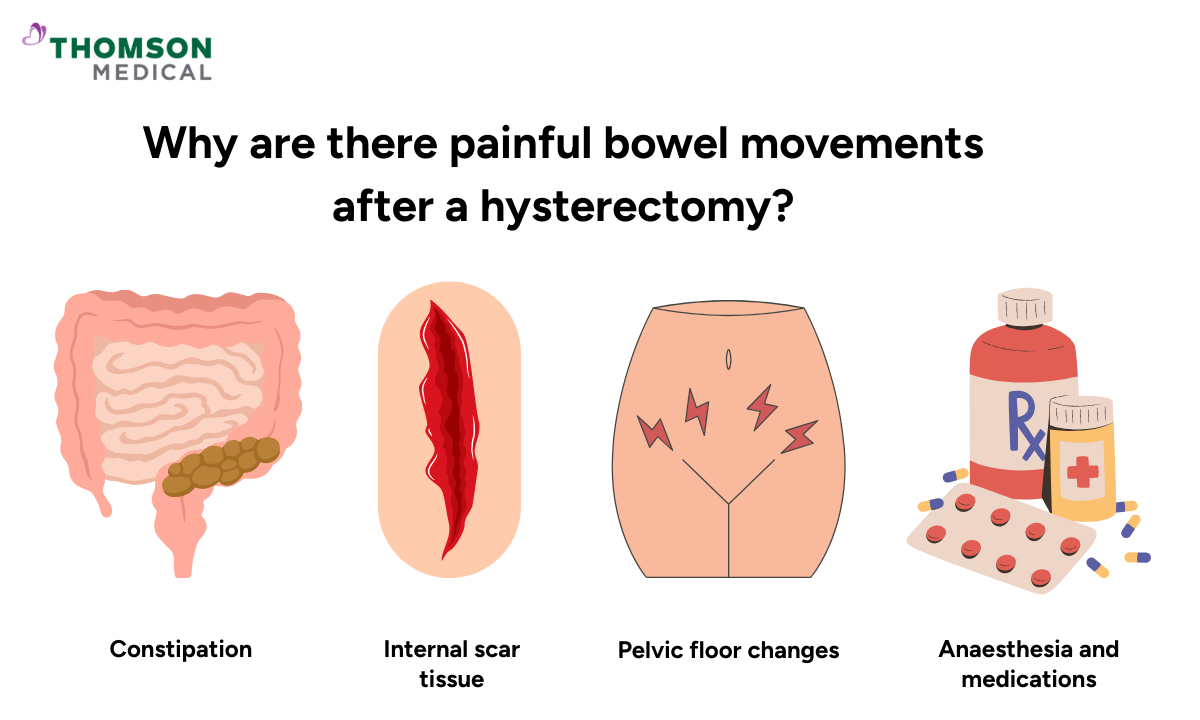
During a hysterectomy, the surrounding pelvic tissues, nerves, and muscles are all affected, even when surgery goes smoothly. Your digestive system needs some time to settle afterwards, which is why bowel changes are so common.
There are a few reasons why bowel movements may feel painful:
Swelling and tissue irritation:
Your pelvic area, including the rectum and nearby nerves, becomes inflamed after surgery. This inflammation makes the tissues more sensitive.
When stool passes through or presses against the rectal area, you feel pain or pressure that wouldn't normally be there.
Constipation:
Pain after surgery often limits how much you move around. Opioids (pain medications) slow your digestive system down considerably.
When stool stays in your bowel longer, it becomes harder and drier, making it much more painful to pass.
Internal scar tissue:
As your body heals, adhesions (bands of scar tissue) can form internally. These may make passing stool feel uncomfortable or restricted.
Pelvic floor changes:
Surgery can temporarily weaken the pelvic floor muscles, which support your bowel, bladder, and other pelvic organs.
When these muscles aren't working properly, you may feel like you need to strain more during bowel movements.
You might also notice that your bowels don’t empty completely.
Anaesthesia and medications:
Painkillers, antibiotics, and anaesthesia used during and after surgery can disrupt your gut flora or slow down gut motility (how well your bowel keeps things moving).
This makes bowel movements more difficult and uncomfortable in the days that follow.
Understanding these causes helps you see that bowel pain isn't a sign you've done something wrong. It is a normal response to pelvic surgery that improves as your tissues heal and inflammation reduces.
What symptoms might you notice?
Bowel discomfort after a hysterectomy can show up in different ways, and your experience may not look exactly like someone else's.
You might experience:
Pain, burning sensation, or pressure during bowel movements
Bloating, cramping, or a general heaviness in the abdomen
Changes in your stool, such as very hard, pellet-like, or very loose stools
Small amounts of rectal bleeding (often from straining or hemorrhoids) or mucus in your stool
Nausea, especially if constipation is severe
Pelvic discomfort or a dragging sensation in the lower abdomen
Most of these symptoms are a normal part of recovery and tend to improve within the first two to three weeks. As swelling reduces, your digestive system gradually gets back on track.
However, if you notice heavy rectal bleeding, severe pain, or no bowel movement for more than 48 hours, these need medical attention promptly.
How long will this last?
Recovery in this area can take a little time, but most symptoms improve gradually over the first few weeks. The recovery timeline varies from person to person.
Timeframe | What to Expect |
Weeks 1–2 | Mild pain, straining, and constipation are most common. Wind and bloating are also common as your digestive system wakes up. |
Weeks 2–3 | Constipation typically begins to ease with good hydration and fibre intake. Bowel movements should start to feel less painful. |
Weeks 3–4 | Discomfort should reduce noticeably. Bowel movements become more regular and easier to pass. |
Beyond 4 weeks | Most symptoms should have resolved. Ongoing difficulty or pain at this stage should be evaluated by your doctor. |
As you heal, bowel movements should become easier and less painful, with less straining and more regularity. If you’re not noticing this kind of progress after 2 to 3 weeks, it’s advisable to consult your doctor to assess what may be delaying your recovery.
Our gynaecologists in Singapore
Loading...
How to prevent constipation after your hysterectomy
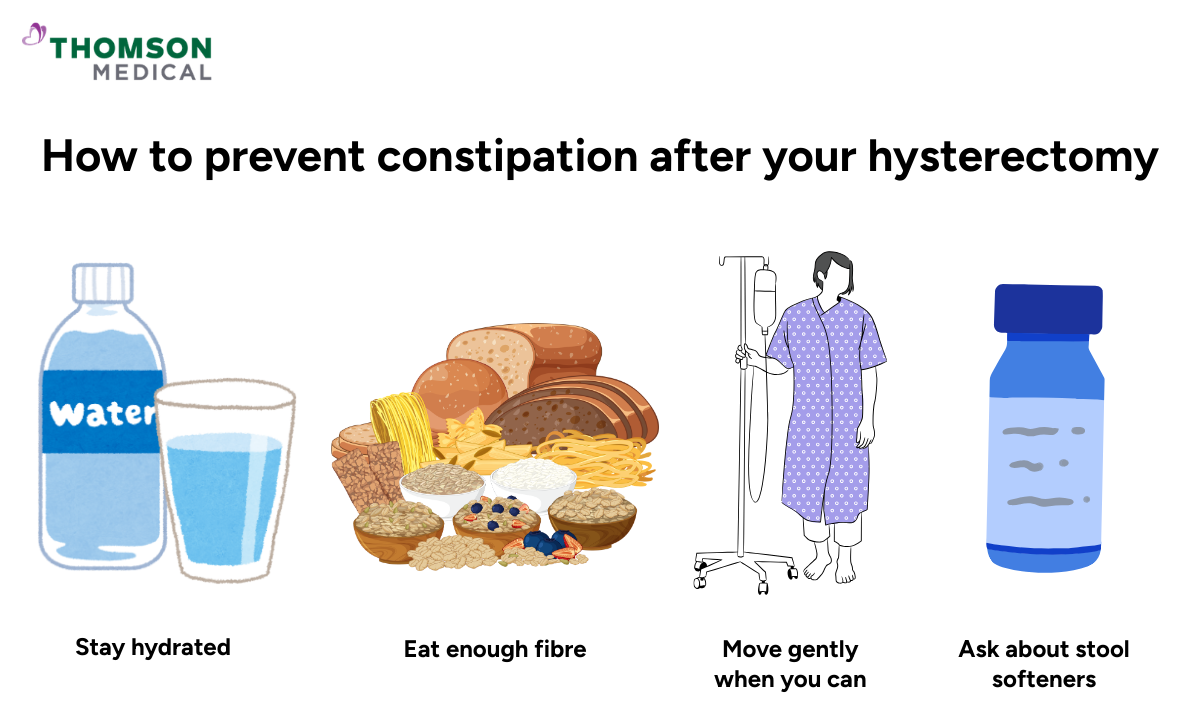
Preventing constipation is one of the most effective ways to reduce bowel pain during your recovery. These small steps are often helpful when started from the beginning.
Stay hydrated
When you're dehydrated, your body absorbs more water from your stool, making it harder and more difficult to pass.
Drinking eight to ten glasses of water each day typically keeps your stool softer and easier to move through your digestive system.
Eat enough fibre
Fibre-rich foods such as fruits, vegetables, whole grains, oats, and chia seeds help add bulk to your stool, making it easier to pass. This bulk also retains water, keeping your stool soft rather than dry and hard.
You may need around 25 to 30 grams of fibre intake daily to keep your bowels moving comfortably during recovery.
Move gently when you can
Even short, slow walks help stimulate your bowels to contract and move stool along, which is why gentle movement is encouraged from the early days after surgery.
Your doctor will guide you on when it's safe to start moving around based on the type of hysterectomy you had.
Ask about stool softeners
Stool softeners and mild laxatives can make a significant difference during your recovery, especially in the first two weeks when constipation is most common. These medications work by either adding moisture to your stool or stimulating your bowel to move, both of which make bowel movements more comfortable.
Most stool softeners start working within 12 to 24 hours, so taking them regularly rather than waiting until you're already constipated tends to work better.
Review your medications
If you're finding that your bowels aren't moving despite drinking plenty of water and eating fibre, it's worth talking to your doctor about whether adjusting your opioids or considering other pain medication options might work for you.
Taking your medication 30 to 60 minutes before you expect to have a bowel movement may give it time to work, so you're more comfortable when you need to go. This can also help you avoid tensing up from fear of pain, which can make things harder.
These steps work together to keep your digestive system moving smoothly. Doing just one or two won't be as effective as combining all of them from the start.
If constipation or slow recovery is affecting your comfort after a hysterectomy, request an appointment with Thomson Medical to review your symptoms, adjust your medications if needed, and get clear guidance from our specialists on how to support your bowel function and overall recovery safely.
How to make bowel movements less painful
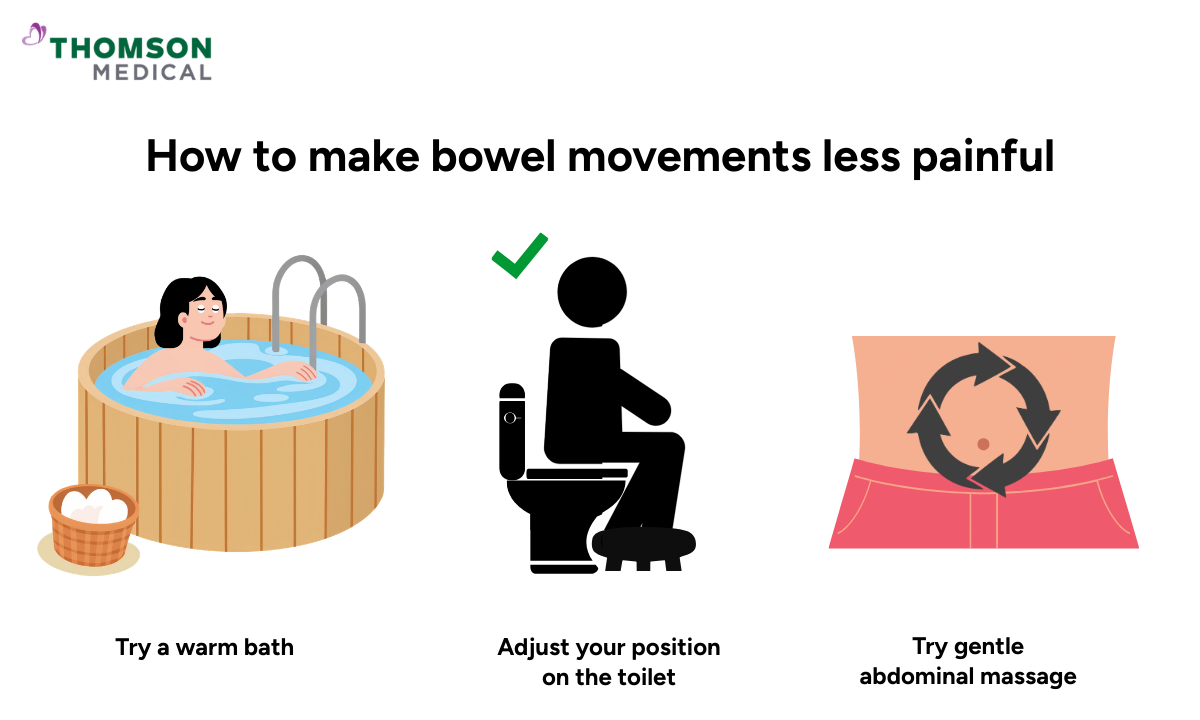
Even with good prevention, some discomfort during bowel movements is still common in the early weeks of recovery. If you're finding things painful, here are several approaches that can bring relief.
Try a warm bath or sitz bath
Soaking for around 10 to 15 minutes in warm water before you go to the toilet can relax your pelvic muscles and reduce the pain and tension you feel during bowel movements.
Adjust your position on the toilet
Placing your feet on a small step or footstool while you're on the toilet is a simple change that can help considerably. This raises your knees above your hips, which straightens the angle of your rectum and makes it easier for stool to pass through without you needing to strain.
Try gentle abdominal massage
Massaging your abdomen in a slow, circular motion, moving clockwise, can help when things feel stuck. This follows the natural direction of your bowel and can encourage stool to move along. Massaging your abdomen for around 5 to 10 minutes before attempting a bowel movement can sometimes help get things moving.
Straining puts pressure on your healing tissues and can cause problems you'd rather avoid. If a stool isn't moving, waiting and trying again later is a better approach than forcing it. Your bowel will move when it's ready, and being patient protects your healing body.
When to see a doctor
Most bowel discomfort after a hysterectomy is manageable at home and gradually improves on its own. However, some symptoms indicate a complication that needs prompt medical attention.
Contact your doctor promptly if you notice:
Severe abdominal pain, bloating, or cramping
No bowel movement or inability to pass wind for more than 48 hours
Rectal bleeding that's more than a small streak, or bleeding that soaks toilet paper
Persistent nausea or vomiting
A fever of 38°C or above, or any signs of infection, such as redness, swelling, or unusual discharge from your wound
A sudden increase in pelvic pain
These symptoms can point to complications such as infection, bowel obstruction, or internal bleeding. While most women recover without experiencing any of these issues, catching complications early when they do occur means they can be treated promptly before they become more serious.
If you experience any of these warning signs after your hysterectomy, request an appointment with Thomson Medical. Our specialists can help assess your condition, identify any complications, and discuss treatment options to guide you on the next steps for recovery.
FAQ
How long do bowel movements hurt after a hysterectomy?
For most people, discomfort improves within one to three weeks. The exact timeline depends on the type of surgery you had, how your body heals, and your bowel habits during recovery.
Can your intestines shift after a hysterectomy?
Some slight positional changes to the intestines can occur as your body adjusts after surgery. This is generally normal. Severe displacement or bowel obstruction is uncommon, but if you experience sudden or worsening abdominal pain, it is worth contacting your doctor.
How do you manage constipation after a hysterectomy?
A combination of approaches tends to work best. Eating a fibre-rich diet, drinking plenty of water, using a stool softener if your doctor recommends one, and placing your feet on a small step while on the toilet can all make passing stool easier and more comfortable.
What is the most common complication after an abdominal hysterectomy?
Constipation and temporary changes to bladder or bowel function are among the most frequently reported symptoms after an abdominal hysterectomy. The most common complications include infection, bleeding, and injury to nearby organs like the bladder or bowel.
When should I be concerned about pain after a hysterectomy?
Some pain in the early weeks of recovery is expected. However, pain that gets worse rather than better, feels severe, or comes alongside symptoms such as fever, vomiting, or rectal bleeding should be assessed by your doctor promptly.
Is it normal to feel bloated after a hysterectomy?
Yes, mild bloating is very common in the weeks after surgery. It often settles as you become more active and your digestive system returns to normal. Bloating that persists, worsens, or comes with an inability to pass wind or stool may need medical attention.
Should I be concerned about occasional blood in my stool after surgery?
Small streaks of blood caused by straining are not uncommon during recovery. However, if you notice persistent blood in stool, a larger amount of blood, or blood that appears dark or tarry, please speak to your doctor as soon as possible.
The information provided is intended for general guidance only and should not be considered medical advice. For personalised recommendations and advice based on your unique situation, please consult a specialist at Thomson Medical. Request an appointment with Thomson Medical today.
For more information, contact us:
Thomson Specialists (Women's Health)
Thomson Women's Clinic (TWC)
- Novena:
6592 6686 (Call), 8611 8986 (WA) - Bukit Batok:
6569 0668 (Call), 8686 3525 (WA) - Choa Chu Kang:
6893 1227 (Call), 8282 1796 (WA) Jurong:
6262 8588 (Call), 6262 8588 (WA)- Katong (female doctor):
6970 2272 (Call), 8611 9020 (WA) - Punggol:
6243 6843 (Call), 8811 0328 (WA) - Sembawang: 6753 5228
- Sengkang: 6388 8125
- Serangoon (female doctor): 6382 3313
- Tampines: 6857 6266
- Tiong Bahru: 6276 1525