

Stage 3 cervical cancer is a diagnosis no one ever expects to hear. In the days following the news, many women find themselves caught between shock, fear, and an overwhelming need to understand what lies ahead.
Having clear, trustworthy information about what stage 3 means, how it is treated, and what support is available can help you feel more confident and prepared as you take your next steps.
What is stage 3 cervical cancer?
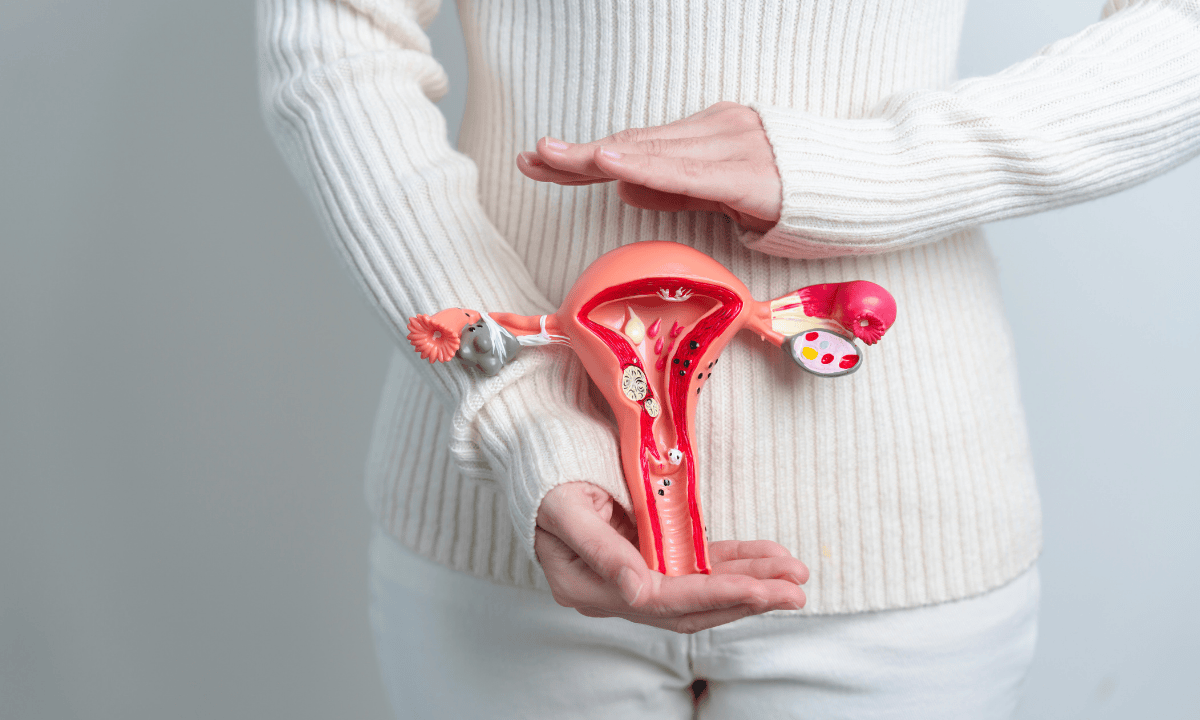
Stage 3 cervical cancer means that the cancer has spread beyond your cervix and uterus to surrounding areas, such as your lower part of the vagina, pelvic walls, or nearby lymph nodes. However, it has not spread to distant organs like your lungs or liver.
This stage lies between stages 1 and 2 and stage 4 when it comes to cancer spread.
Stage 1:
Cancer is confined to the cervix only.
Stage 2:
Cancer has spread beyond the cervix but not to the pelvic walls, lower vagina, or lymph nodes.
Stage 3:
Cancer has spread beyond your cervix and uterus.
Stage 4:
Cancer has spread to distant organs outside the pelvis, such as the lungs or liver.
Symptoms of stage 3 cervical cancer
By stage 3, cervical cancer symptoms tend to become harder to ignore, though everyone's experience is different.
You may experience some of the following:
Abnormal vaginal bleeding (after sex, between periods, or after menopause)
Watery, bloody, or foul-smelling vaginal discharge
Pain during sexual intercourse
As the tumour grows, it can start pressing against nearby structures. This pressure on the ureters (the tubes that carry urine from your kidneys to your bladder) or lymph nodes can make it difficult to urinate or have a bowel movement. You might also notice swelling in one or both legs, which happens when lymph nodes become blocked.
Substages of stage 3 cervical cancer
Stage 3 cervical cancer is further divided into substages based on the FIGO (International Federation of Gynaecology and Obstetrics) classification. This helps your care team understand exactly how far the cancer has spread so they can create the right treatment plan for you.
Here's how the substages work:
Stage 3A:
Cancer has spread to the lower third of the vagina but not to the pelvic wall.
Stage 3B:
Cancer has extended to the pelvic wall.
Stage 3C:
Cancer has spread to nearby lymph nodes.
Your oncology team will figure out which substage applies to you through a combination of imaging tests like CT scans or MRI scans and some laboratory tests. Once they have this complete picture, they can design a treatment approach that fits your specific case.
If you have questions about your stage or what it means for your treatment, a consultation with our O&G oncology specialist can help clarify your options and provide reassurance as you plan your next steps. Schedule an appointment with Thomson Medical today.
Cervical cancer specialist in Singapore
Loading...
Outlook for women with stage 3 cervical cancer
A stage 3 diagnosis often brings up heavy questions: Can treatment still work? Is there hope?
Stage 3 cervical cancer is advanced, but it can be treated. Many women continue living full lives after their treatment. You'll probably hear about cervical cancer survival rates as you learn more about your prognosis. These statistics can feel scary, but they may not tell you the whole story.
Understanding the 5-year survival rate
A survival rate refers to the percentage of people who are still alive a certain number of years after being diagnosed with cancer, most commonly measured at five years.
For stage 3 cervical cancer, average 5-year survival rates vary by substage:
Stage 3A: around 50%
Stage 3B: around 40%
Stage 3C: around 35%
When you first see these numbers, they can feel pretty discouraging. But survival rates are based on large groups of patients who were treated years ago. They can't predict what will happen in your case.
What matters for you depends on many things, such as your age, your overall health, how well your body responds to treatment, and other individual factors.
And here's something else: the treatments available now are much better than what was available even ten years ago. Many women do better than the statistics would suggest, especially when they start treatment promptly and see it through.
Treatment options for stage 3 cervical cancer
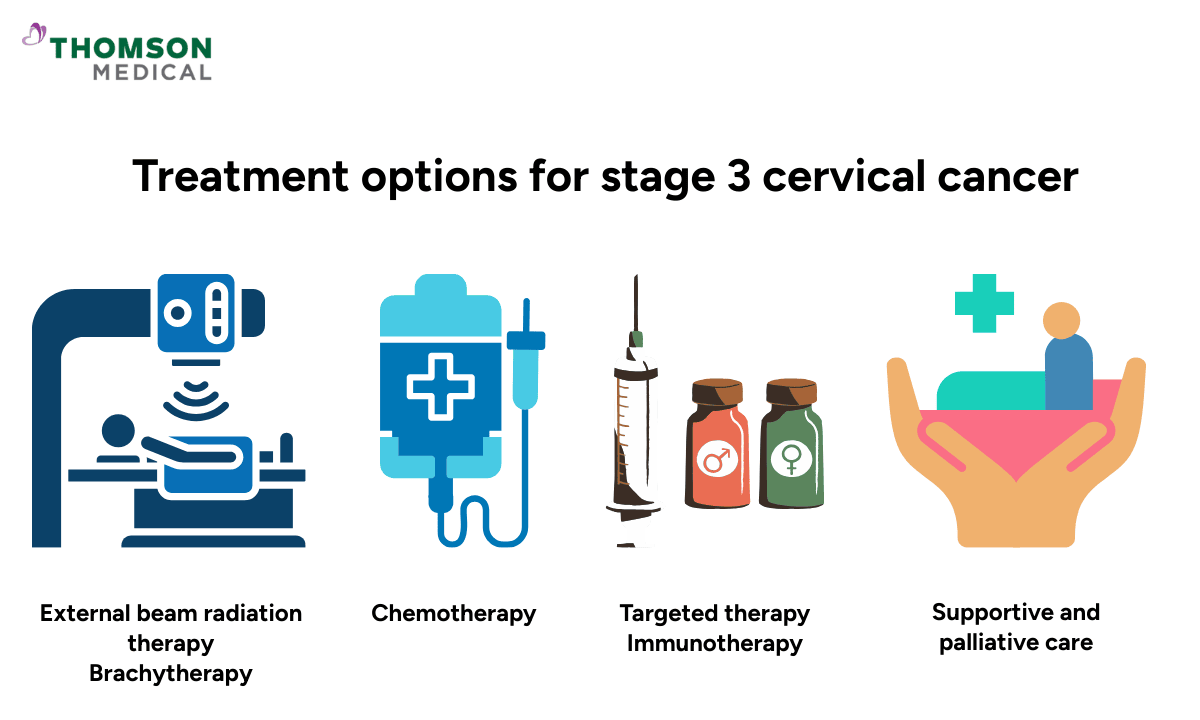
Now that you understand what the diagnosis means, it's time to talk about treatment. For many women, this is when things start to feel less overwhelming.
At stage 3, surgery usually isn't an option. Since the cancer has spread to nearby tissues and lymph nodes, it's not safe to remove everything surgically. Instead, your treatment will aim to control the disease, manage any symptoms you're experiencing, and give you the best chance at long-term survival.
Concurrent chemoradiation
The main treatment for stage 3 cervical cancer is concurrent chemoradiation, which combines radiation therapy with chemotherapy. This approach has been shown to be the most effective for controlling the tumour at this stage.
Treatment usually includes:
External beam radiation therapy (EBRT):
EBRT is the most common type of radiation therapy.
It uses a machine outside your body to deliver small doses of high-energy beams to target your pelvis and destroy cancer cells.
Brachytherapy (internal radiation therapy):
Brachytherapy involves placing radioactive material inside your body.
It delivers radiation directly with high doses to your cervix and surrounding tissues.
Chemotherapy:
Cisplatin is mostly used to help make radiation more effective.
A multidisciplinary team carefully plans and coordinates your treatment, providing ongoing support to manage side effects and guide you through each stage of care.
Targeted therapy and immunotherapy
In some situations, especially if the cancer recurs or progresses, additional treatments may be considered. Your oncology team will discuss whether these options are appropriate for your individual case.
Supportive and palliative care
Your doctor might also recommend supportive or palliative care while you're going through treatment. This means getting help with things like pain, fatigue, or trouble urinating so you can feel as comfortable as possible during treatment.
A stage 3 diagnosis is a big event, and that's not something to minimise. But you still have plenty of treatment options that may be helpful for your situation, and many women with this diagnosis are able to go on to live long and fulfilling lives.
If you have been diagnosed with cervical cancer or feel that something may not be right, request an appointment with Thomson Medical. Our oncology team is here to guide you, and you do not have to navigate this journey alone.
FAQ
What causes stage 3 cervical cancer?
Stage 3 cervical cancer is mainly caused by a long-term infection with high-risk human papillomavirus (HPV), especially types 16 and 18. HPV is common and often clears on its own, but when it persists for many years, it can lead to cancer.
How serious is stage 3 cervical cancer?
Stage 3 cervical cancer is an advanced but still treatable stage. While it has spread beyond the cervix, it has not reached distant organs, and many women respond well to treatment when care begins promptly.
How long does it take to develop stage 3 cervical cancer?
Cervical cancer usually develops slowly over 10 years, starting from precancerous cell changes. In some women, especially those with persistent high-risk HPV or weaker immune systems, progression may occur faster.
Why is surgery not usually an option for stage 3 cervical cancer?
By stage 3, the cancer has spread beyond areas that cannot be completely removed with surgery alone. Radiation and chemotherapy are more effective at this stage.
What side effects might I experience during treatment?
Common side effects of chemoradiation include:
Fatigue
Nausea and vomiting
Diarrhea or bladder irritation
Skin changes in treated areas
Vaginal dryness or narrowing
Menstrual changes or infertility
Long-term: lymphedema (leg swelling), bowel or bladder issues
Your doctor will monitor you closely and help manage these effects throughout treatment.
Can I get pregnant after treatment for stage 3 cervical cancer?
Unfortunately, pregnancy may not be possible after treatment, as radiation and chemotherapy affect your ovaries and uterus. Fertility preservation is usually not an option at this stage, but counselling and support are available.
The information provided is intended for general guidance only and should not be considered medical advice. For personalised recommendations and advice based on your unique situation, please consult a specialist at Thomson Medical. Request an appointment with Thomson Medical today.
For more information, contact us:
Thomson Specialists (Women's Health)
Thomson Women's Clinic (TWC)
- Novena:
6592 6686 (Call), 8611 8986 (WA) - Bukit Batok:
6569 0668 (Call), 8686 3525 (WA) - Choa Chu Kang:
6893 1227 (Call), 8282 1796 (WA) Jurong:
6262 8588 (Call), 6262 8588 (WA)- Katong (female doctor):
6970 2272 (Call), 8611 9020 (WA) - Punggol:
6243 6843 (Call), 8811 0328 (WA) - Sembawang: 6753 5228
- Sengkang: 6388 8125
- Serangoon (female doctor): 6382 3313
- Tampines: 6857 6266
- Tiong Bahru: 6276 1525