

If you or someone you love has been diagnosed with stage 4 cervical cancer, you're probably feeling scared and unsure about what happens next. You may be lying awake worrying about what comes next – and you’re not alone in feeling this way.
This diagnosis raises many difficult questions, and you deserve clear, honest information that helps you understand your options and feel supported during this stage of your journey.
What is stage 4 cervical cancer?
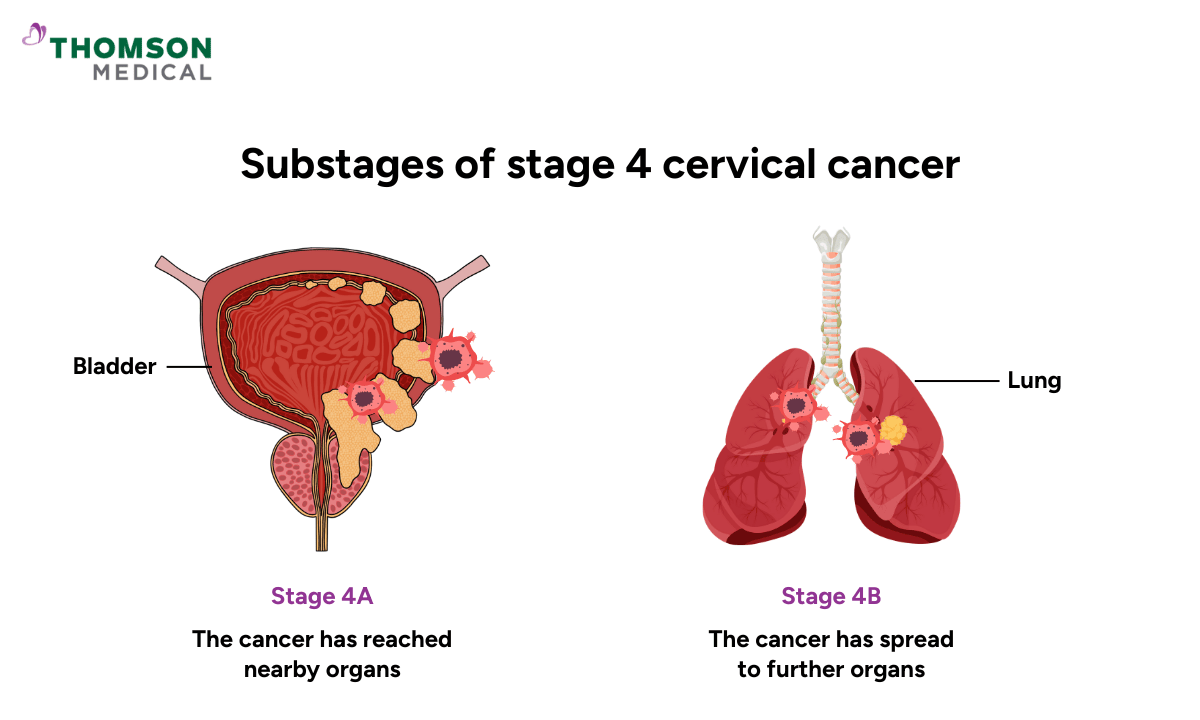
Understanding what “stage 4” means can help you make sense of what your doctors are explaining and what to expect in the coming months. To put it simply, stage 4 cervical cancer means the cancer has moved beyond your cervix to other parts of your body. Doctors call this spread "metastasis".
At this stage, the cancer can affect different areas:
Stage 4A:
The cancer has reached nearby organs, usually the bladder or rectum, but hasn't spread to distant parts of your body.
Stage 4B:
The cancer has spread to organs further away, such as the lungs, bones, liver, or lymph nodes.
What is the survival rate for stage 4 cervical cancer?
For stage 4, five-year survival rates are generally around 15%. Seeing these numbers can feel frightening, but it’s important to remember they represent broad averages, not your personal outlook. Many people respond far better to newer treatments than older statistics suggest.
The outlook varies for each person and depends on a few important things:
Where the cancer has spread and which organs are affected
How your body responds to treatment
Your overall health before diagnosis
Access to newer treatment options
These can feel frightening, but there's something important to know: these figures are getting better. New treatments like immunotherapy and targeted therapy are helping people feel better than ever.
What are the symptoms of stage 4 cervical cancer?
When cervical cancer reaches stage 4, your body may begin to show new changes. Since the cancer can affect different organs, you might notice more symptoms in various areas.
You might experience:
Pain in your pelvis or discomfort during sex
Heavier than usual vaginal bleeding, especially after menopause or sexual activity
Vaginal discharge that smells unpleasant
Swelling in your legs from blocked lymph nodes
Difficulty urinating or opening your bowels
Blood in your urine or stool if the cancer affects your bladder or rectum
Feeling exhausted, losing weight without trying, or not feeling hungry
Finding it hard to breathe or coughing up blood if the cancer has reached your lungs
Bone pain or unexpected breaks if cancer has spread to your bones
Knowing these symptoms early helps you have more detailed conversations with your doctors about what you're experiencing and what might help.
If you notice these symptoms, let your doctor know so they can keep track of how you’re doing and adjust your care if needed. Request an appointment with Thomson Medical. Our oncology specialist can assess your symptoms, evaluate any changes, and ensure your treatment plan remains appropriate for your stage 4 cervical cancer.
What are the treatment options for stage 4 cervical cancer?
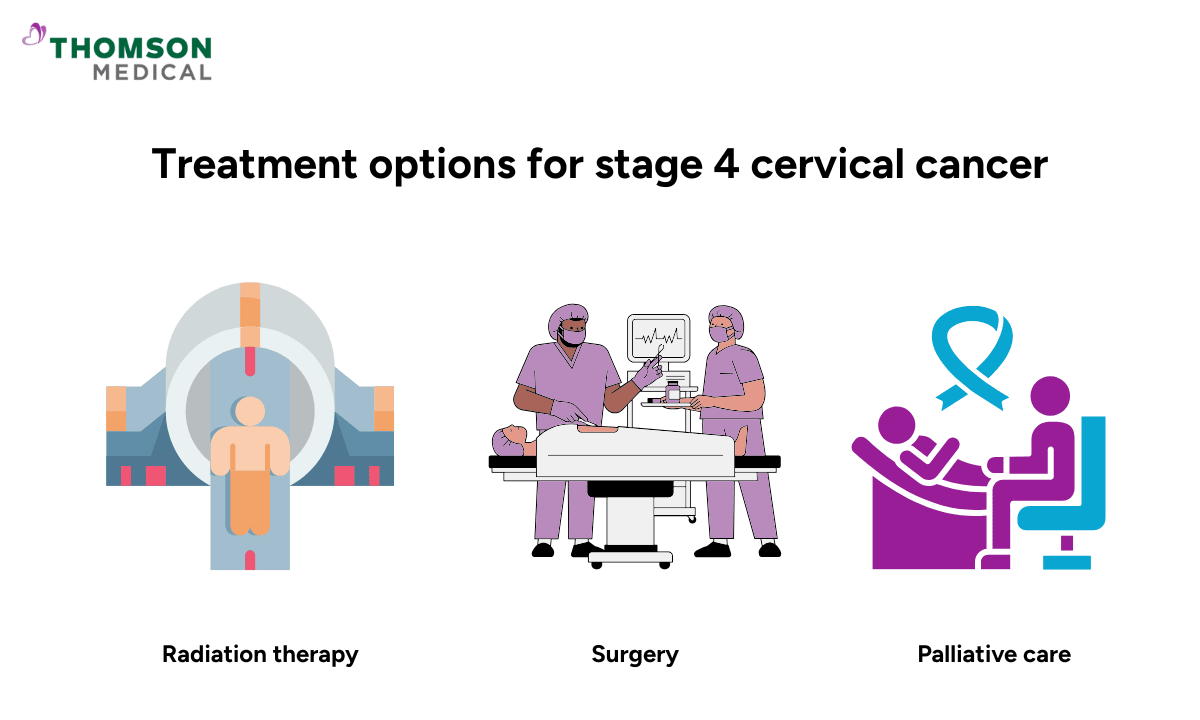
If you're facing stage 4 cervical cancer, your treatment will generally focus on slowing the cancer's growth, easing your symptoms, and helping you live as comfortably as possible. Your doctor will take time to understand your situation and create a suitable treatment plan for your unique circumstances.
Here are the main options available:
Chemotherapy:
Uses strong medicines that travel through your bloodstream to fight cancer cells wherever they are in your body.
Common medicines include cisplatin, carboplatin, paclitaxel, and topotecan.
Sometimes doctors combine this with radiation therapy for better results.
Radiation therapy:
Uses targeted beams to destroy cancer cells in specific areas.
It’s particularly good at easing pain, stopping bleeding, and shrinking tumours that press on nerves or bones.
This treatment can include brachytherapy and external beam radiation therapy, where you’ll lie still while a machine directs beams at the cancer.
Targeted therapy:
Goes after weak spots specific to cancer cells while leaving healthy cells alone.
The treatment tends to have different side effects than traditional chemotherapy.
Immunotherapy:
Helps your immune system fight back against cancer.
Your doctors will test your cancer to see if this treatment is suitable for you.
Surgery:
Not usually the main treatment at this stage.
However, it can sometimes help if there's a specific blockage causing problems with your bowel or bladder.
Palliative care:
Specialises in managing pain, easing difficult symptoms, and supporting your emotional wellbeing.
Your palliative care team can suggest everything from the right pain medicines to complementary therapies like massage or acupuncture.
Research into new treatments continues to bring hope. Scientists are looking into treatments that use vaccines, therapies that target specific genes, and adoptive T-cell therapy that uses changed cells.
Our cervical cancer specialist
Loading...
How do you take care of your physical and emotional wellbeing?
Living with advanced cancer touches every part of your life. Taking care of your emotional health matters just as much as the medical treatment.
Here are some ways to get support:
Join a support group either online or in your area to connect with people who truly understand what you're going through
Talk openly with your family and partner so they know how to support you better, even on tough days
Try gentle practices like meditation and yoga for peaceful moments when everything feels overwhelming
Speak with a psycho-oncologist, the professional counsellors who specialise in cancer care and can help with the anxiety and depression that often come with this diagnosis
How to reduce the risks of cervical cancer?
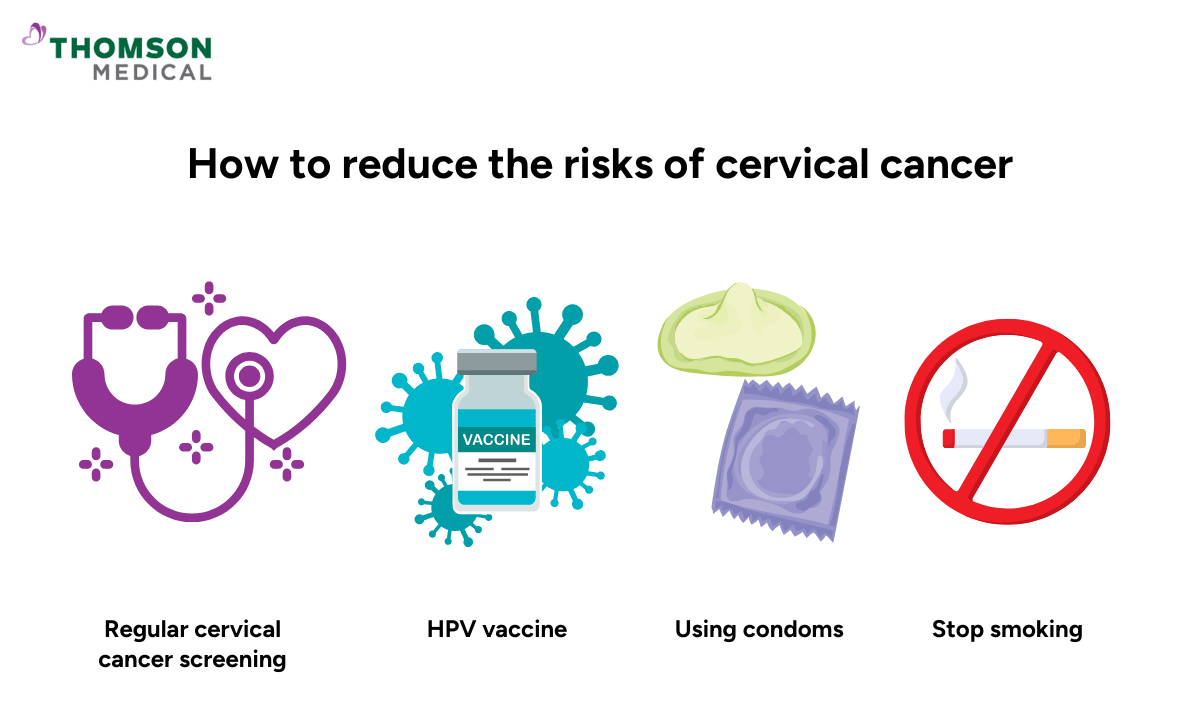
While you're focused on your current journey, you might also want to help protect the people you care about. Sharing what you've learnt about how cervical cancer develops could make a real difference for your daughters, sisters, and friends down the line.
Here's what makes a difference:
Encourage regular cervical cancer screening through HPV tests and Pap smears, which can catch abnormal cells early
Consider the HPV vaccine, which protects against the high-risk HPV types that cause most cervical cancers
Practise safer sex by using condoms and limiting the number of sexual partners, since HPV spreads through sexual contact
If you smoke, seek support to quit, as smoking can speed up cervical changes.
Follow up on abnormal screening results promptly, ensuring any issues are addressed early.
If you’re unsure about when to screen, whether the HPV vaccine is suitable, or how to lower cervical cancer risk, request an appointment with Thomson Medical. Our specialist can walk you through each option and answer your questions.
FAQ
What exactly happens in the body when someone has stage 4 cervical cancer?
- In stage 4 cervical cancer, cancer cells have spread beyond the cervix to other parts of your body.
- In stage 4A, the cancer typically affects nearby pelvic organs like your bladder or rectum.
- In stage 4B, the cancer spreads to organs further away, like your lungs, liver, bones, or lymph nodes far from your pelvis.
This progression is why symptoms can show up in different parts of your body and why treatment becomes more involved than it would be at earlier stages.
How do doctors diagnose cervical cancer stage 4?
Your doctors use several tests to see where the cancer has spread. CT scans, MRI scans, and PET scans create detailed pictures of your body to find where cancer cells are.
A biopsy confirms that any lumps or growths in other areas are actually cancer that started in your cervix. They might also do a cystoscopy to look at your bladder or a proctoscopy to check your rectum.
Is there any possibility of curing stage 4 cervical cancer?
This is probably the most challenging question to answer, and it's important to be honest with you. Stage 4 cervical cancer is rarely curable, but that doesn't mean treatment can't help you.
Many people find that treatment controls the disease for long periods, and some achieve remission with aggressive therapy that combines chemotherapy, radiation therapy, and immunotherapy. New treatments are genuinely improving outcomes, giving people more time and a better quality of life than was possible even a few years ago.
Will I definitely need chemotherapy if I have stage 4 cervical cancer?
Most doctors recommend chemotherapy for stage 4 cervical cancer because it can reach cancer cells anywhere in your body. However, your specific plan depends on your individual situation, where the cancer has spread, which organs are affected, and how well you're likely to cope with treatment.
Some people have chemotherapy with radiation therapy or targeted therapy, while others might be suitable for immunotherapy based on specific markers in their cancer. The important thing is that you're part of the conversation about what's right for you.
What happens if I choose not to pursue active treatment?
This is a very personal choice, and only you know what's right for you. Without active treatment, the cancer will likely continue growing and spreading, and symptoms will gradually get worse over time. But choosing not to have chemotherapy or other cancer-directed treatments doesn't mean you're left on your own.
Palliative care offers excellent symptom management, pain control, and emotional support to keep you comfortable. Some people find that focusing on quality of life rather than aggressive treatment feels more right for them, especially if they've already tried treatments that didn't work or if the side effects feel too difficult. There's no wrong choice here.
Are the survival statistics really accurate for my situation?
Survival rate statistics give a general picture based on large groups of people, but they can't tell you what will happen to you personally. These numbers usually come from people diagnosed five or more years ago, before newer treatments became available.
What happens to you depends on many things that statistics can't capture, like your specific type of cervical cancer, how your cancer responds to treatment, your age, your overall health, and whether you can access newer therapies. What matters most is getting the best care possible and living as well as you can.
The information is intended for general guidance only and should not be considered medical advice. For personalised recommendations and advice based on your unique situation, please consult a specialist at Thomson Medical. Request an appointment with Thomson Medical today.
Reference:
Ogasawara, A., & Hasegawa, K. (2025). Recent advances in immunotherapy for cervical cancer. International Journal of Clinical Oncology, 30(3), 434–448. https://doi.org/10.1007/s10147-025-02699-0
Oishi, S., Kudaka, W., Toita, T., Ariga, T., Nakamoto, T., Wakayama, A., Nagai, Y., Kaneshima, I., Nishihira, K., & Aoki, Y. (2016, July 1). Prognostic Factors and Treatment Outcome for Patients with Stage IVB Cervical Cancer. Anticancer Research. https://ar.iiarjournals.org/content/36/7/3471
Schiff, J. P., Mintz, R., Cohen, A. C., Huang, Y., Thaker, P., Massad, L. S., ... & Grigsby, P. W. (2022). Overall survival in patients with FIGO stage IVA cervical cancer. Gynecologic oncology, 166(2), 292-299. https://www.sciencedirect.com/science/article/abs/pii/S009082582200333X
For more information, contact us:
Thomson Fertility
- Paragon: 6252 7766
- Novena: 6399 3758, 8811 0358 (WA)
Thomson Specialists (Women's Health)
Thomson Women's Clinic
- Novena:
6592 6686 (Call), 8611 8986 (WA) - Bukit Batok:
6569 0668 (Call), 8686 3525 (WA) - Choa Chu Kang:
6893 1227 (Call), 8282 1796 (WA) Jurong:
6262 8588 (Call), 6262 8588 (WA)- Katong (female doctor):
6970 2272 (Call), 8611 9020 (WA) - Punggol:
6243 6843 (Call), 8811 0328 (WA) - Sembawang: 6753 5228
- Sengkang: 6388 8125
- Serangoon (female doctor): 6382 3313
- Tampines: 6857 6266
- Tiong Bahru: 6276 1525