

Many women quietly accept hot flushes, broken sleep, and mood changes as the unavoidable cost of getting older – but menopause is not something you simply have to endure.
Several treatments, both hormonal and non-hormonal, can help manage these symptoms, and your doctor can advise on the most appropriate approach for your situation.
What is menopause?
Menopause marks the point at which a woman's menstrual periods permanently stop, signalling the end of the reproductive years. It is confirmed after 12 consecutive months without a period. Most women in Singapore reach menopause between the ages of 45 and 55, with the average age around 51 – though individual timing can vary.
Many women first notice changes during perimenopause – the transitional phase that can begin several years before menopause itself. During this time, hormone levels start to fluctuate, periods may become irregular, and symptoms such as hot flushes and sleep disruption can already begin.
When is menopause confirmed?
In many women aged 45 and above, menopause can usually be assessed based on symptoms and menstrual history.
Blood tests are not always needed. However, a doctor may consider tests such as follicle-stimulating hormone (FSH) in selected situations, such as when symptoms occur before age 45 or when the diagnosis is unclear.
Common symptoms of menopause
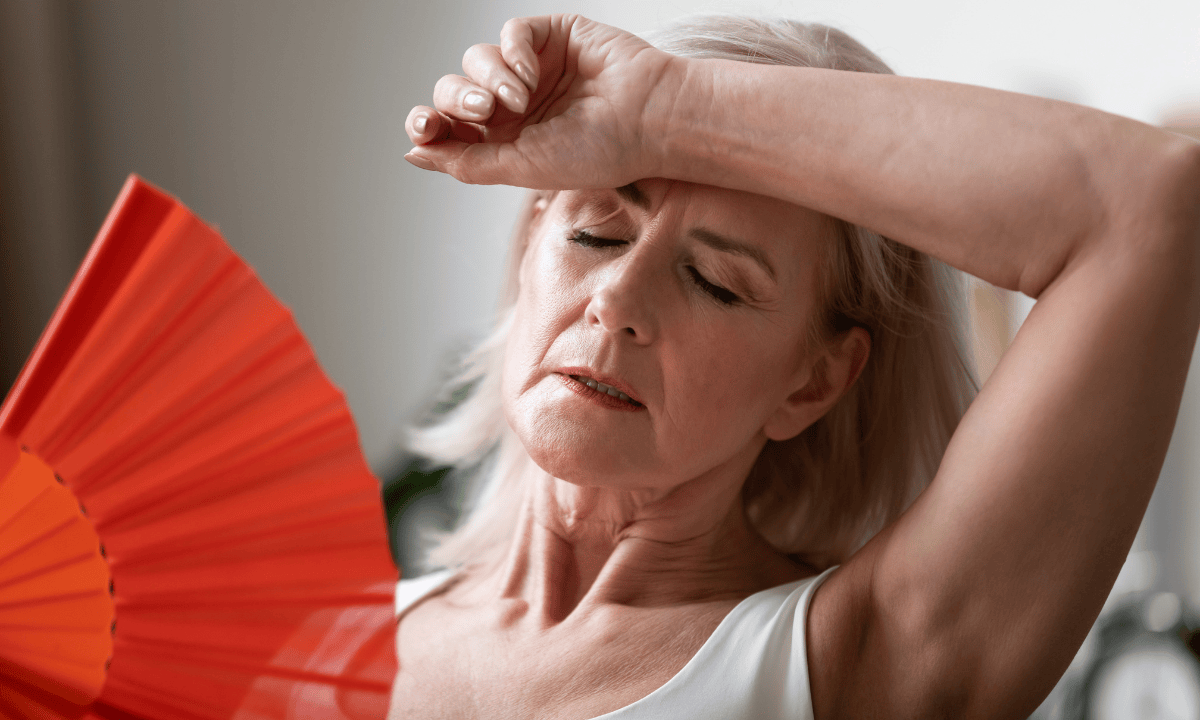
Symptoms during menopause vary widely. Some women experience only mild changes, while others find certain symptoms significantly affect their daily life. Symptoms arise primarily from declining oestrogen levels and typically begin during perimenopause.
Physical symptoms
Hot flushes:
Sudden waves of heat, often accompanied by sweating and skin redness. These are among the most commonly reported symptoms and can range from brief and mild to frequent and disruptive.
Night sweats:
Hot flushes occurring during sleep, which can interfere with sleep quality.
Vaginal dryness and discomfort:
Reduced oestrogen can cause vaginal dryness as the tissues become thinner and less lubricated, which may cause discomfort during intercourse or everyday activity. This is sometimes called the genitourinary syndrome of menopause (GSM).
Changes in bladder function:
Some women notice increased urgency or a greater susceptibility to urinary tract infections (UTI).
Joint and muscle discomfort:
Aching or stiffness in the joints and muscles is reported by some women, though the exact relationship with hormonal changes is still being studied.
Weight changes:
Hormonal shifts, reduced muscle mass, and a slowing metabolism can contribute to changes in body composition, particularly around the abdomen.
Emotional and cognitive symptoms
Mood changes:
Irritability, anxiety, and low mood are common, particularly during perimenopause when hormone levels are most volatile.
Sleep disturbances:
Difficulty falling or staying asleep affects many women and can worsen fatigue and mood.
Changes in concentration or memory:
Some women describe a feeling of mental fogginess during this phase, sometimes called "brain fog". Research into the relationship between hormonal changes and cognition is ongoing.
Changes in libido:
A decrease in sexual desire is reported by some women and may relate to both hormonal and psychological factors.
Longer-term health considerations
If certain aspects of menopause are left unaddressed over time, they may contribute to longer-term health considerations:
Oestrogen plays a role in maintaining bone strength. Its decline after menopause can increase the risk of osteoporosis and fractures. Regular bone density assessments may be recommended depending on individual risk factors.
Cardiovascular health:
The risk of cardiovascular disease tends to increase after menopause, partly because oestrogen has a protective effect on the cardiovascular system. A healthy lifestyle and regular health monitoring remain important during this phase.
These considerations are worth discussing with a healthcare provider, who can help determine whether any preventive measures are appropriate for your circumstances.
Menopause looks different for every woman, and so does the right approach to managing it. If your symptoms are affecting your daily life or you simply want to understand your options better, request an appointment with Thomson Medical to get personalised guidance based on your health history and needs.
Our gynaecological specialists
Loading...
Menopause treatments and management options
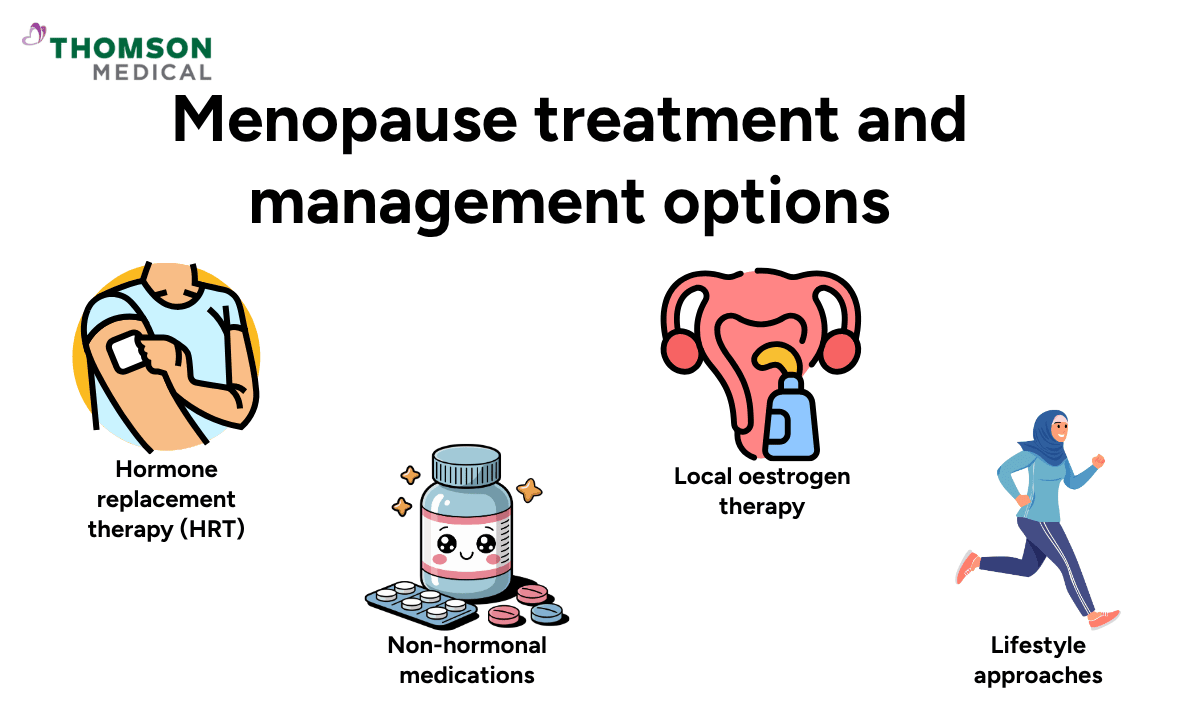
There is no single right approach to managing menopause – the most suitable options depend on the nature and severity of your symptoms, your medical history, and your personal preferences. The following outlines the main options that a doctor may discuss with you.
Hormone replacement therapy (HRT)
HRT can help relieve symptoms such as hot flushes and night sweats. It may also support sleep and mood symptoms when these occur around the same time as other menopause-related symptoms. For women with a uterus, a progestogen is usually prescribed alongside oestrogen to protect the uterine lining.
HRT is available in several forms, including tablets, patches, gels, and sprays. Which form is most appropriate depends on individual factors.
However, it’s important to note that HRT may not be suitable for everyone. For women with a history of certain cancers, blood clots, strokes, heart disease, liver disease or unexplained vaginal bleeding, your gynaecologist will need to carefully assess your situation before recommending this option.
Non-hormonal medications
For women who prefer not to use or are unable to use hormonal therapy, certain non-hormonal medications may help with specific symptoms.
Some non-hormonal medicines may be considered when HRT is unsuitable or not preferred. These may include certain antidepressants, such as SSRIs or SNRIs, although they are not usually used as first-line treatment for hot flushes alone. A doctor can advise based on your symptoms, medical history and medication profile.
Local oestrogen therapy
For women whose primary concern is vaginal dryness, discomfort, or related urinary symptoms, low-dose oestrogen applied directly to the vaginal area (as a cream, pessary, or ring) may offer relief.
Because the oestrogen acts locally rather than being absorbed systemically in significant quantities, this approach is often considered separately from systemic HRT and may be suitable for women who do not wish to use full-body hormonal therapy.
Lifestyle approaches
Lifestyle adjustments can meaningfully support wellbeing during menopause, particularly for women with mild to moderate symptoms. Regularly discussed approaches include:
Regular physical activity:
Weight-bearing and resistance exercise can help support bone density, cardiovascular health, and mood. Aerobic exercise may also help reduce the frequency of hot flushes in some women.
Balanced nutrition:
A diet rich in calcium and vitamin D supports bone health. Reducing caffeine, alcohol, and spicy foods may help some women manage hot flushes, though individual responses vary.
Sleep hygiene:
Maintaining consistent sleep and wake times, keeping the bedroom cool, and limiting screen use before bed can help mitigate sleep disruption.
Stress management:
Techniques such as mindfulness, yoga, or breathing exercises may help with mood and sleep, though they are unlikely to address hormonal symptoms on their own.
Complementary therapies
Some women explore complementary options such as acupuncture, phytoestrogens (plant-based compounds with weak oestrogen-like effects, found in soy and certain supplements), or herbal preparations.
The evidence base for these approaches varies, and some supplements can interact with medications. It is worth discussing any complementary therapies you are considering with your doctor before starting them.
When should you speak with a doctor?
Menopause does not require medical treatment in all cases, and many women manage well with lifestyle adjustments alone.
However, speaking with a gynaecologist may be helpful if:
Symptoms are significantly affecting your sleep, daily functioning, work, or relationships
You are experiencing vaginal or urinary symptoms that are causing discomfort
You have questions about HRT or want to understand which options may be appropriate for you
You have concerns about bone health, cardiovascular risk, or other longer-term considerations
Your periods have become very irregular or you are unsure whether you are in perimenopause
You should also seek medical advice if you experience:
Bleeding between periods
Very heavy bleeding
Any vaginal bleeding after menopause has been confirmed
A healthcare provider can help clarify what is happening, assess your individual situation, and discuss a management plan that suits your health history and preferences.
Menopause is a natural transition, but that doesn't mean you have to manage its effects without support. Request an appointment with Thomson Medical to discuss your symptoms and explore what management options may be right for you.
FAQ
What causes menopause?
Menopause occurs as the ovaries naturally reduce their production of oestrogen and progesterone over time, eventually stopping the release of eggs and the menstrual cycle. This is a normal biological process linked to ageing.
In some cases, menopause can occur earlier as a result of surgery (such as the removal of your ovaries), certain medical treatments, or underlying health conditions – this is sometimes called 'premature' or 'surgical' menopause.
What is the difference between perimenopause and menopause?
Perimenopause refers to the transitional phase leading up to menopause, during which hormone levels begin to fluctuate and symptoms may start. Periods may become irregular but have not yet stopped.
Menopause itself is confirmed after 12 consecutive months without a period. Perimenopause can last several years, and many women experience their most noticeable symptoms during this phase rather than after menopause is confirmed.
How long do menopause symptoms last?
The duration of symptoms varies considerably between individuals. Hot flushes and night sweats commonly persist for several years after menopause, though the timeline differs from person to person. Some women find symptoms resolve within a few years; others experience them for longer. A doctor can help assess your situation and discuss whether management is appropriate.
Does menopause affect bone and heart health?
Yes, declining oestrogen levels after menopause can affect both. Oestrogen supports bone density, and its reduction increases the risk of osteoporosis over time. Cardiovascular risk also tends to rise after menopause.
Both risks can be mitigated through lifestyle measures, and, in some cases, medical management means making regular health check-ups an important part of care during and after the menopause transition.
Are there menopause treatments that do not involve hormones?
Yes. Non-hormonal options include certain prescribed medications (such as SSRIs and SNRIs for hot flushes), local vaginal oestrogen for genitourinary symptoms, and lifestyle interventions such as exercise and dietary adjustments.
Some women also explore complementary therapies. The suitability of any approach depends on individual circumstances, and a doctor can help identify what may be most appropriate.
Can I still get pregnant during perimenopause?
Yes. Pregnancy is still possible during perimenopause, even if your periods are irregular. Speak with your doctor about contraception until menopause has been confirmed.
The information provided is intended for general guidance only and should not be considered medical advice. For personalised recommendations and tailored advice based on your unique situations, please consult a specialist at Thomson Medical. Request an appointment with Thomson Medical today.
Reference:
World Health Organization. (2022). Menopause. https://www.who.int/news-room/fact-sheets/detail/menopause
For more information, contact us:
Thomson Specialists (Women's Health)
Thomson Women's Clinic (TWC)
- Novena:
6592 6686 (Call), 8611 8986 (WA) - Bukit Batok:
6569 0668 (Call), 8686 3525 (WA) - Choa Chu Kang:
6893 1227 (Call), 8282 1796 (WA) Jurong:
6262 8588 (Call), 6262 8588 (WA)- Katong (female doctor):
6970 2272 (Call), 8611 9020 (WA) - Punggol:
6243 6843 (Call), 8811 0328 (WA) - Sembawang: 6753 5228
- Sengkang: 6388 8125
- Serangoon (female doctor): 6382 3313
- Tampines: 6857 6266
- Tiong Bahru: 6276 1525