

If you’re experiencing difficulty conceiving, particularly if you’re over the age of 35, you may be considering an in vitro fertilisation (IVF) procedure. Some might wonder, are IVF pregnancies high risk? Not necessarily. While some pregnancies do require closer monitoring, many progress normally and result in successful births.
Whether or not your pregnancy is high risk depends on factors such as your age, medical history, and whether you are carrying more than one baby.
What is an IVF pregnancy?
IVF is a type of assisted reproductive technology. The process begins with egg retrieval, during which eggs are collected from your ovaries and fertilised with sperm in a laboratory. Once fertilised, the embryos are monitored for a few days before one is transferred into your uterus (womb).
A fertility specialist then transfers one or more resulting embryos into your womb, where they may implant in the uterine lining. If an embryo implants successfully, your pregnancy will develop just like a natural pregnancy.
Are IVF pregnancies high risk?
Conceiving through IVF alone does not make your pregnancy high risk. In fact, many IVF pregnancies progress normally and result in healthy babies. However, your care team will often monitor an IVF pregnancy more closely.
This isn’t because IVF itself is risky, but rather because women who conceive through IVF often have other factors that could increase the chance of complications, such as:
Older maternal age (over 35), that may slightly raise the chance of miscarriage and chromosomal differences in the embryo
Multiple pregnancy (twins or more), which raises the chance of premature birth, low birth weight, and other complications
Existing health conditions, such as diabetes or high blood pressure
Uterine differences, such as fibroids, polyps, or scarring from previous procedures
A history of miscarriage or previous pregnancy complications
Lifestyle factors, including smoking, excess weight, or a diet low in key nutrients
Conditions related to fertility, such as endometriosis, hormonal disorders that can affect how the pregnancy progresses, or polyendocrine metabolic ovarian syndrome (PMOS), formerly known as polycystic ovary syndrome (PCOS).
However, whether your pregnancy is classified as high risk depends on your individual circumstances, not on the fact that you conceived through IVF. Your doctor will consider all these factors together to determine the level of monitoring and support you need.
What are the pregnancy complications to be aware of?
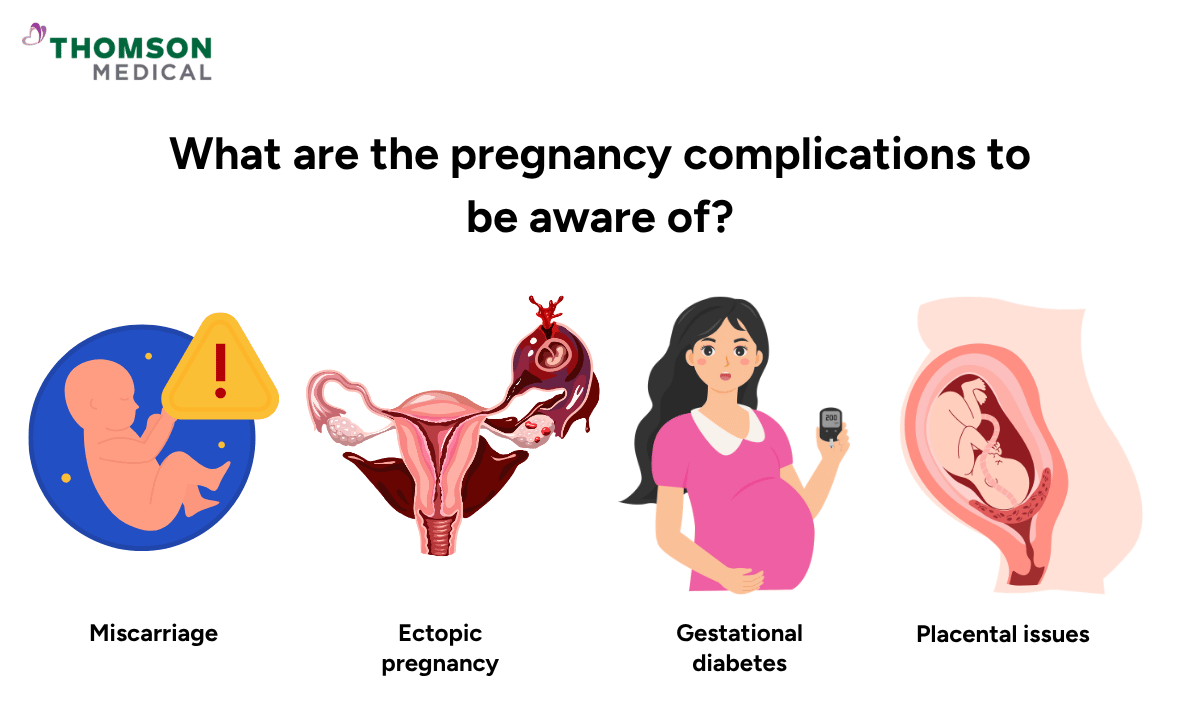
IVF may slightly raise the chance of certain complications. Knowing what to look out for helps you get the right support quickly if something does not feel right.
Miscarriage, particularly in the early weeks
Ectopic pregnancy, where the embryo implants outside the womb, usually in a fallopian tube
Bleeding in early pregnancy
High blood pressure or pre-eclampsia
Placenta praevia (where the placenta sits too low in the womb and partially or fully covers the cervix)
Placental abruption (where the placenta separates from the uterine wall before delivery)
Knowing the potential complications associated with fertility treatment can help you feel more prepared during pregnancy. Request an appointment with Thomson Medical for pregnancy support from a pregnancy specialist.
Our fertility doctors in Singapore
Loading...
Is there any risk to the baby?
Generally, babies born through IVF are healthy and develop normally without any complications. However, if you’re carrying multiples or have additional risk factors, your doctor will monitor for certain outcomes, including:
Low birth weight
Premature birth, which is more common with multiple pregnancies
A slightly raised chance of certain birth abnormalities, though these remain uncommon overall
Some babies may need extra care after birth, such as time in a neonatal unit
It’s important to remember that these risks are not inevitable. Because many of these risks are linked to carrying multiple pregnancies rather than to the IVF procedure itself.
How could you support a healthy pregnancy?
While not every complication may be able to be prevented, there are a few steps mothers could take to support a healthier pregnancy. For example:
Follow your medication plan carefully, including any progesterone support
Attend all your scheduled ultrasound scans and appointments
Maintain a balanced diet and a healthy weight where possible
Avoid smoking and alcohol
Keep any ongoing health conditions well managed
Your care team may also recommend:
Single embryo transfer to reduce the chance of a multiple pregnancy
Preimplantation genetic testing (PGT) of the embryos before transfer, if this is suitable for your situation
Staying in close contact with your doctor, asking questions, and attending all your appointments are the most important steps you may take.
When should you contact your doctor?
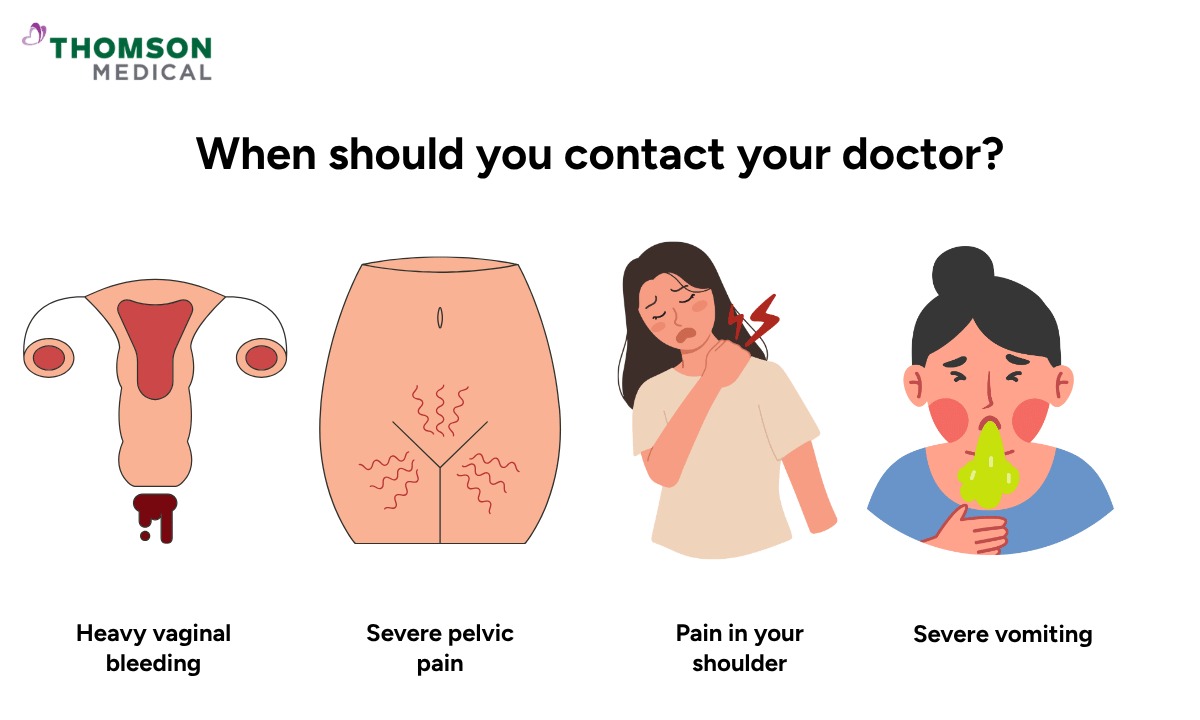
Most symptoms in pregnancy have straightforward explanations. However, some need prompt attention. Contact your doctor straight away if you experience:
Severe abdominal or pelvic pain
Pain in your shoulder, which may sometimes signal an ectopic pregnancy
Persistent or severe vomiting
Sudden swelling, severe headaches, or changes in your vision
Getting checked promptly gives your doctor the best chance of identifying and addressing any concerns early. If you are unsure whether a symptom is normal, contact your doctor or maternity care team.
If you are pregnant following IVF and experience heavy bleeding, severe pain, or any other concerning symptoms, request an appointment at Thomson Medical. A fertility specialist could assess your progress and provide advice on the next steps for your care.
FAQ
Are all IVF pregnancies classified as high risk?
No, many IVF pregnancies are considered low risk, especially in younger women who have had a single embryo transfer and do not have underlying medical conditions. Your level of risk depends on your individual circumstances, not on IVF alone.
Is miscarriage more common with IVF?
The chance of miscarriage may be slightly higher in IVF pregnancies overall. However, this is often related to maternal age and underlying fertility issues rather than the IVF process itself.
Does age affect IVF pregnancy risk?
Maternal age is one of the main factors that affect pregnancy outcomes. As maternal age increases, the chance of miscarriage, chromosomal differences, and pregnancy complications also rises.
Do IVF babies have a higher risk of birth abnormalities?
Most IVF babies are born healthy. While some studies have reported a slightly increased risk of certain birth abnormalities, the overall risk remains low and may be influenced by factors such as parental age and underlying infertility rather than IVF itself.
Are twin pregnancies from IVF considered high risk?
Twin pregnancies are considered higher risk regardless of whether they are conceived through IVF or naturally. They have a higher chance of complications such as premature birth and other health problems during pregnancy.
Do IVF babies need to be delivered early?
Many reach full term, though they are often delivered slightly earlier, at around 38 weeks, due to closer monitoring. Early delivery, sometimes by caesarean delivery, is usually only recommended if complications develop.
The information provided is intended for general guidance only and should not be considered medical advice. For personalised recommendations and tailored advice based on your unique conditions, request an appointment with Thomson Medical.
For more information, contact us:
Thomson Fertility Centre
- Paragon: 6252 7766
- Novena: 6399 3758, 8811 0358 (WA)