

Periods do change over the years, particularly in the lead-up to menopause, so a shift in your cycle isn’t unusual in itself. But a flow that has become consistently heavier, periods lasting longer than usual, or bleeding between periods are patterns worth looking into rather than putting down to age.
Fibroids are one of the more common explanations. Depending on where they sit in the womb, they can distort the lining of the uterine cavity, which is why bleeding is often the first symptom people notice. Here’s how fibroids affect bleeding, what the different patterns may indicate, and what can be done about them.
What are uterine fibroids?
Uterine fibroids are growths made of muscle and fibrous tissue that develop in or around your uterus. They are very common, especially in women aged 30 to 50. Fibroids are usually non-cancerous growths, and even when they cause symptoms, they very rarely become cancerous.
Their growth is mainly influenced by hormones, particularly oestrogen and progesterone. This is why they tend to appear during the reproductive years and often shrink after menopause.
However, you may have fibroids without realising it, only discovering them during a routine scan. This is because some fibroids cause no symptoms, while others may have a negative impact on daily life or even fertility.
Types of fibroids
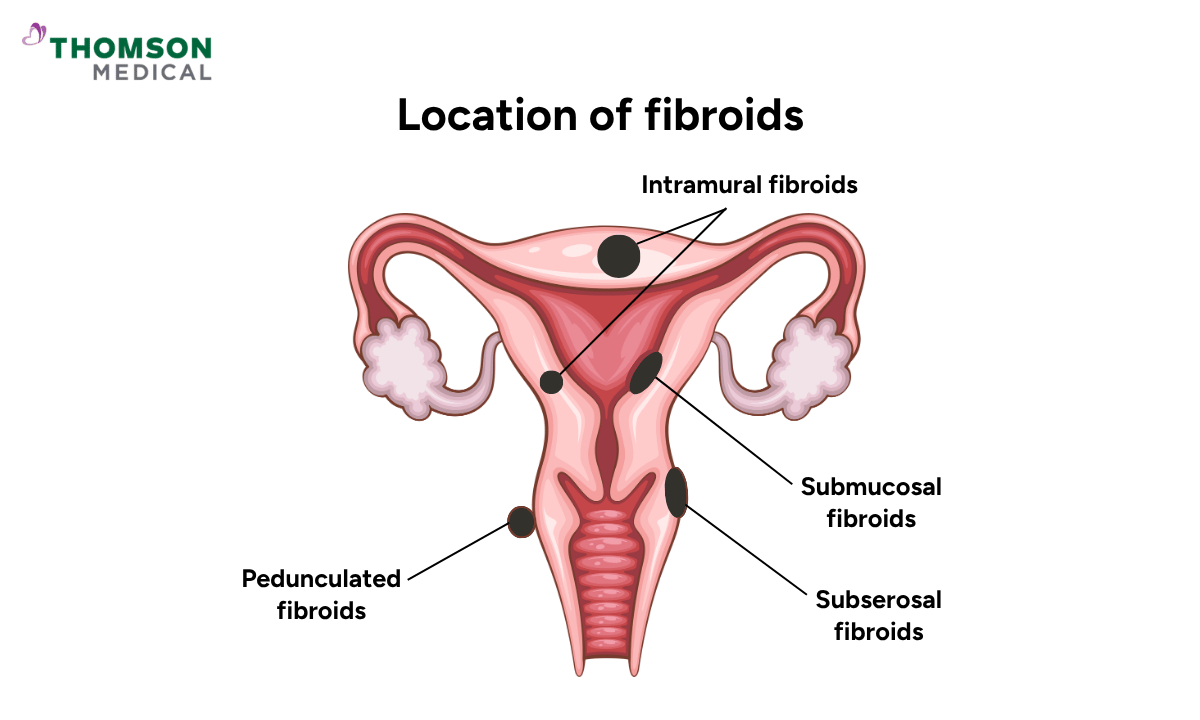
Fibroids are generally grouped into 4 main types based on where they grow in or around the uterus:
Submucosal fibroids, that grow just beneath the inner lining of the uterus
Intramural fibroids, which sit within the muscular wall of the uterus
Subserosal fibroids, that grow on the outer surface of the uterus
Pedunculated fibroids, which grow on a stalk, either inside or outside the uterus
Can fibroids cause bleeding?
Heavy or prolonged menstrual bleeding is actually one of the most commonly reported symptoms of fibroids. It may show up in different ways depending on the size and location of the growths.
Submucosal fibroids:
They could enlarge the surface area of the endometrium (the tissue that sheds during your period).
More tissue needs to shed each cycle, which could lead to heavier or longer periods.
Intramural fibroids:
They develop inside the myometrium, the thick muscle layer that contracts to push out the uterine lining each month.
When these contractions are disrupted, the uterus struggles to slow blood flow, which may result in heavier or prolonged periods.
Pedunculated fibroids:
Those growing inside the cavity may irritate the uterine lining and affect normal shedding, leading to irregular or heavier bleeding.
Those growing on the outer surface are less likely to cause bleeding but may contribute to pelvic discomfort and pressure.
However, if bleeding changes suddenly or occurs outside your normal cycle, your doctor may do additional tests to rule out other causes before attributing it to fibroid activity.
Our O&G specialists
Loading...
Types of bleeding linked to fibroids
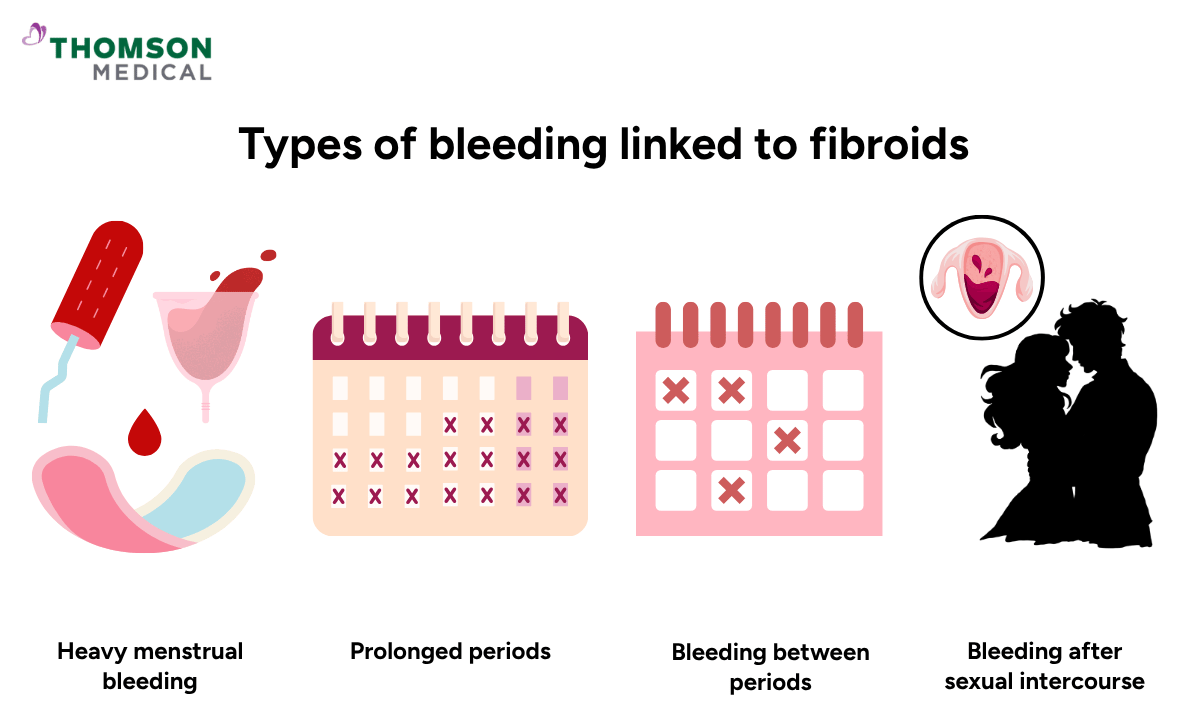
The type of bleeding experienced by women with fibroids may vary and depends on the location and size of your fibroids.
Heavy menstrual bleeding
Heavy periods (menorrhagia) are the most common bleeding symptom associated with fibroids. You might notice signs such as:
Soaking through a pad or tampon every one to two hours
Using more than five pads or tampons a day
Passing blood clots larger than a 50-cent coin (around 2.5 cm)
Needing to wake at night to change your sanitary protection
Using double protection, such as a pad and tampon together
Submucosal fibroids are most strongly linked to heavy or irregular bleeding. Intramural fibroids may also contribute, especially if they distort the uterine cavity. Pedunculated fibroids may cause bleeding if they are located within or near the uterine cavity.
Prolonged periods
A period that lasts longer than seven days may also be a sign of fibroids. This happens because fibroids may create more endometrial tissue that needs to shed, or they may make it harder for the uterus to contract efficiently enough to end your period on time. You may find that your period simply does not seem to end when you would expect it to.
Bleeding between periods
Any bleeding that occurs outside your regular period (intermenstrual bleeding) may appear as light pink or brown spotting, though it may sometimes look like fresh red bleeding too. Submucosal fibroids are most commonly associated with this type of bleeding, as they sit closest to the uterine lining.
Bleeding after sexual intercourse
Bleeding after sexual intercourse, sometimes called postcoital bleeding, could occur with submucosal or pedunculated fibroids located near the cervix. These fibroids may become irritated during intercourse and cause bleeding afterwards.
Because postcoital bleeding may also point to other gynaecological conditions, it's always worth getting it checked by your doctor to get a clearer picture of what is going on.
If you notice changes in your menstrual bleeding, it is worth discussing them with a doctor. Request an appointment with Thomson Medical to identify the cause and explore suitable treatment options.
Why do fibroids cause abnormal bleeding?
Understanding why fibroids affect bleeding the way they do could make it easier to discuss with your doctor. There are three main reasons this happens:
Size and location
Submucosal fibroids grow just beneath the uterine lining, while larger intramural fibroids may press into or distort the uterine cavity. When this happens, the surface area of the lining that needs to shed each month increases, and more lining to shed typically means a heavier period.
They affect how your uterus contracts
Normally, the muscles of your uterus contract during menstruation to compress blood vessels and help limit how much you bleed. Fibroids sitting within the uterine wall may interfere with this process, making it harder for your body to regulate blood loss as effectively as it usually would.
Hormonal sensitivity
Fibroids contain more oestrogen and progesterone receptors than normal uterine tissue. This makes them more responsive to hormonal changes, which may cause the uterine lining to thicken further. A thicker lining means heavier bleeding when it sheds.
Together, these factors help explain why fibroid-related bleeding could feel so different from a typical period and why getting the right diagnosis matters.
How is fibroid-related bleeding diagnosed?
Your doctor will likely start with a pelvic examination to check for any changes in the size or shape of your uterus.
From there, you may be referred for further tests:
Transvaginal ultrasound: the most common imaging tool, used to assess the size and location of fibroids
Blood tests: such as a full blood count, to check whether heavy bleeding has led to anaemia
Saline infusion sonohysterography (SIS): a specialised scan used to get a more detailed view of fibroids within the uterine cavity
An MRI scan: recommended when a detailed picture of the fibroids is needed
Hysteroscopy: to look directly inside the uterus
These tests aren't all routinely needed. Your doctor will recommend only the ones most relevant to your situation. Together, they help confirm whether fibroids are the cause of your bleeding and guide the most suitable next steps for your care.
Treatment options for fibroid-related bleeding
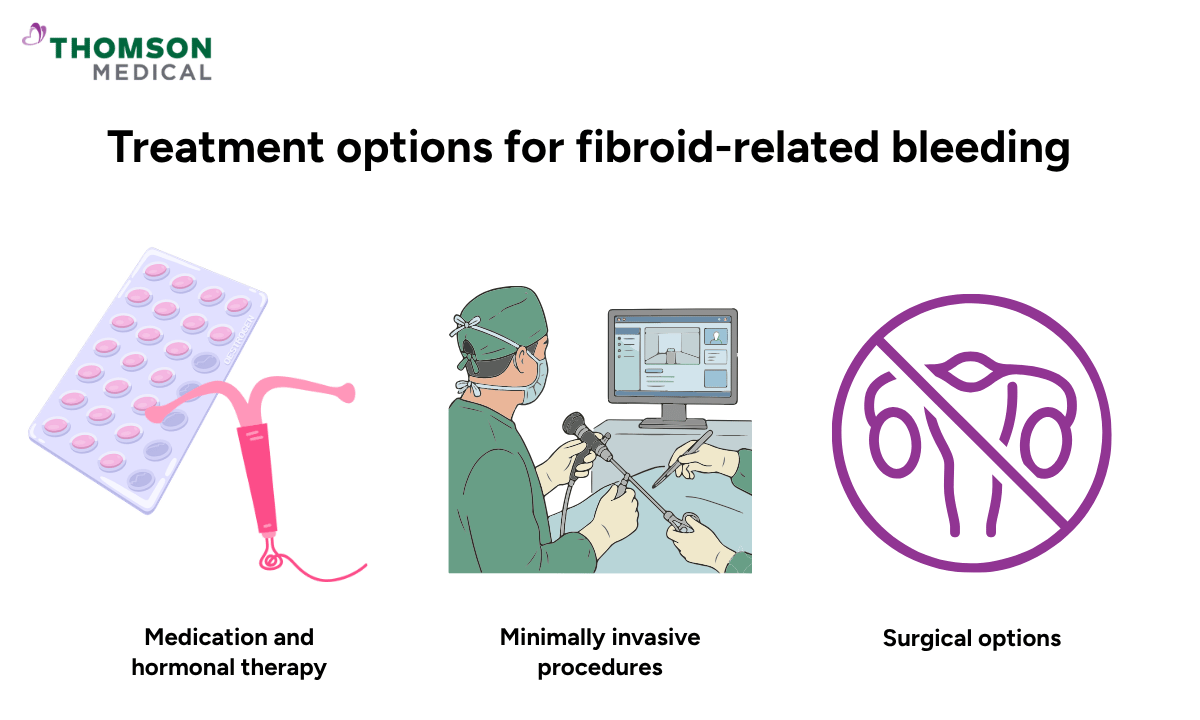
Treatment is not the same for every woman, and the right option depends on your symptoms, the size and location of your fibroids, and whether you are planning a future pregnancy.
Medication and hormonal therapy
For many women, the first step in managing fibroid-related bleeding usually involves medication, which includes:
Pain relief options to help manage period pain.
Iron supplements to help replenish iron lost through heavy bleeding.
Hormonal therapy, such as the contraceptive pill, hormonal injections, or an intrauterine device (IUD), may help regulate your cycle and reduce bleeding.
GnRH agonists that help lower oestrogen levels, which may help shrink fibroids before other treatments are carried out.
Tranexamic acid, a non-hormonal medicine that could help reduce heavy menstrual bleeding.
These options are generally less invasive and may help reduce symptoms in many cases.
Minimally invasive procedures
If medication alone does not bring enough relief, there are several procedures that could treat fibroids without major surgery.
These may include:
Uterine artery embolisation (UAE):
Small particles are injected to block the blood supply to the fibroids, which may cause them to shrink over time.
Radiofrequency ablation:
Uses heat energy to shrink fibroid tissue and reduce its blood supply.
Laparoscopic or robotic myomectomy:
Myomectomy is a surgical procedure designed to remove fibroids.
This is usually done through laparoscopic surgery (keyhole surgery) or robotic-assisted surgery.
This option preserves the uterus and is often considered by women who wish to keep the possibility of future pregnancy open.
Endometrial ablation:
This procedure aims to destroy the uterine lining to reduce or, in some cases, stop menstrual bleeding.
Because pregnancy is not recommended after this procedure, it's generally suited to women who have completed their family.
These procedures often come with shorter recovery times compared to open surgery.
Surgical options
In some cases, surgery may be the most appropriate path forward. This is usually considered when fibroids are large, numerous, causing significant symptoms, or have not responded to other treatments.
Surgical options include:
Abdominal myomectomy:
Removes fibroids through a larger incision in the abdomen.
It is often recommended for multiple, very large, or deeply embedded fibroids and preserves the uterus for those who wish to have children in the future.
Hysterectomy:
A hysterectomy involves the surgical removal of the uterus, which is usually only considered when other treatments have not worked or are not suitable.
As this procedure will prevent you from becoming pregnant in the future, your doctor will discuss the pros and cons of the procedure with you in detail before you decide to undertake it.
Your doctor will discuss all of this with you carefully so you could make a decision that feels right for you.
When to see a doctor
Speak to your doctor if you notice any of the following:
Heavy bleeding that soaks through pads or tampons within an hour or two
Bleeding between your periods
Periods lasting longer than seven days
Persistent tiredness, weakness, dizziness, or a fast heartbeat, which could be signs of anaemia
Pain during or after sexual intercourse
A feeling of pressure or fullness in your lower abdomen
If your symptoms are affecting your energy levels, comfort, or daily routine, request an appointment with Thomson Medical to explore the underlying cause and treatment options.
FAQ
Is heavy bleeding always caused by fibroids?
No, heavy menstrual bleeding can have many causes, and fibroids are only one of them. Other possibilities include:
- Adenomyosis (when endometrial tissue grows into the uterine muscle)
- Endometrial polyps
- Hormonal imbalances
- Ovulatory disorders
- Thyroid conditions
Can small fibroids cause bleeding?
Yes, they can, but it depends more on where the fibroid sits than how big it is. Even a small submucosal fibroid can cause noticeable bleeding because it sits so close to the endometrium. Larger fibroids on the outer surface of the uterus may cause no bleeding at all.
Can fibroid bleeding lead to anaemia?
Yes, ongoing heavy or prolonged bleeding can gradually deplete your iron stores, leading to iron-deficiency anaemia. You might notice signs such as tiredness, breathlessness, dizziness, pale skin, or a fast heartbeat.
How long can you bleed when you have fibroids?
A typical menstrual period lasts between three and seven days. With fibroids, periods can last longer than this, sometimes with noticeably heavier flow.
Can fibroids cause bleeding after menopause?
Most fibroids shrink after menopause due to reduced hormone levels. If you experience any bleeding after menopause, it is important to consult a doctor to check the possible causes.
Can fibroids cause back pain?
Yes, fibroids can sometimes cause back pain, especially if they are large or sit towards the back of the uterus. They may press on nearby muscles, nerves, or surrounding organs, leading to a dull ache, heaviness, or discomfort that can come and go.
The information provided is intended for general guidance only and should not be considered medical advice. For personalised recommendations and tailored advice based on your unique conditions, request a consultation with Thomson Medical.
For more information, contact us:
Thomson Specialists (Women's Health)
Thomson Women's Clinic (TWC)
- Novena:
6592 6686 (Call), 8611 8986 (WA) - Bukit Batok:
6569 0668 (Call), 8686 3525 (WA) - Choa Chu Kang:
6893 1227 (Call), 8282 1796 (WA) Jurong:
6262 8588 (Call), 6262 8588 (WA)- Katong (female doctor):
6970 2272 (Call), 8611 9020 (WA) - Punggol:
6243 6843 (Call), 8811 0328 (WA) - Sembawang: 6753 5228
- Sengkang: 6388 8125
- Serangoon (female doctor): 6382 3313
- Tampines: 6857 6266
- Tiong Bahru: 6276 1525