

Between 2018 and 2022, cervical cancer ranked as the tenth most common cancer amongst women in Singapore. However, the good news is that cervical cancer also happens to be one of the most preventable cancers.
Regular screening tests can detect abnormal cell changes before they become cancer, while the HPV vaccine can prevent the virus responsible for most cervical cancers. Understanding when to get screened and what to look out for can help you protect your health and live with greater confidence.
What is cervical cancer?
Cervical cancer is a type of cancer that starts in your cervix (the lower part of your uterus that connects to your vagina).
Most cervical cancers are caused by human papillomavirus (HPV), a common virus that can spread through sexual contact. In most cases, the body clears HPV infections naturally without any issues. However, certain high-risk types of HPV can cause cell changes that may eventually lead to cervical cancer.
But just having HPV doesn't mean you're guaranteed to get cancer. With regular screening and the right preventive care, cervical cancer can be detected early or perhaps even prevented altogether.
Why do prevention and early detection matter?
Cervical cancer is highly preventable. It develops very slowly, often over many years. This gives you multiple chances to catch it early. It starts with precancerous changes – the warning signs where cells look abnormal but aren't cancer yet.
Because it grows so slowly, regular screening can catch these cells early while they're still treatable. If you do develop cervical cancer, finding it at stage 1 gives you a cure rate over 90%.
What are the early signs of cervical cancer?
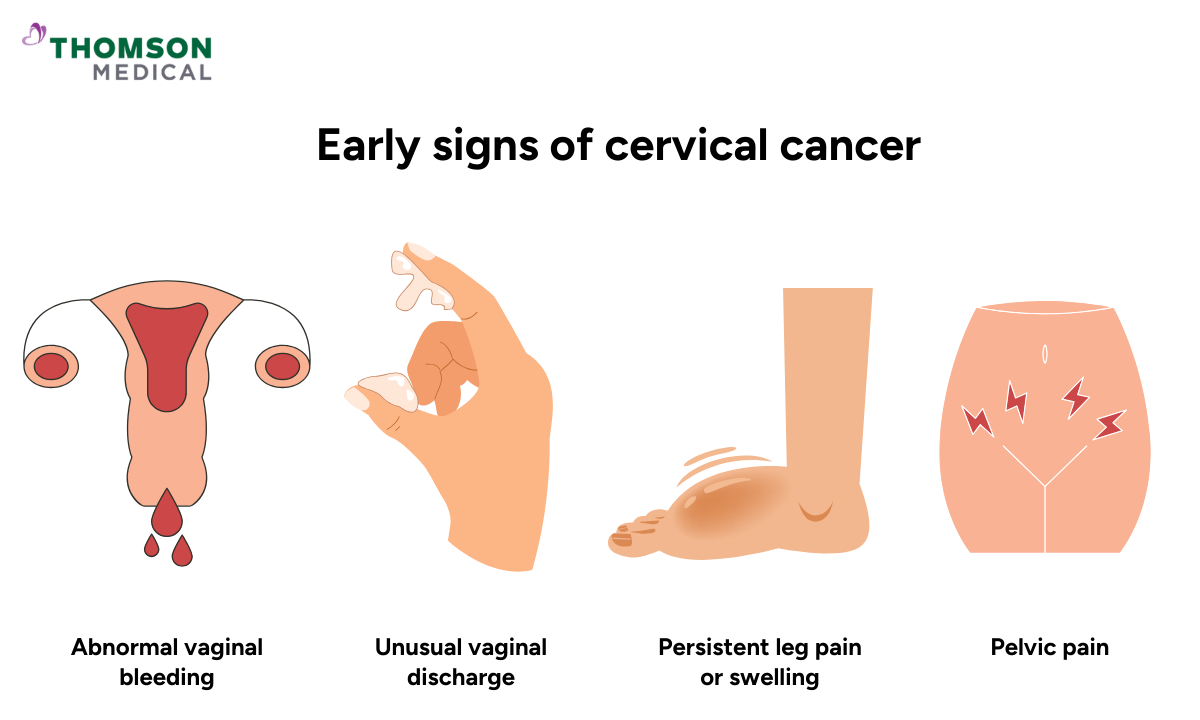
Early-stage cervical cancer often shows no symptoms. That's why your cervical screening is so important.
As cervical cancer develops and progresses, you might notice:
Abnormal vaginal bleeding such as between your periods, after sexual intercourse, or after menopause
Pain during sexual intercourse
Unusual vaginal discharge that's watery, pink, or has an unpleasant smell
Persistent leg pain or swelling
Lower back or pelvic pain
Persistent difficulty urinating or blood in your urine
These symptoms can point to many different conditions, not just cervical cancer. If you notice any of them, see your doctor for a proper check-up.
Our cervical cancer specialists
Loading...
How can I prevent cervical cancer?
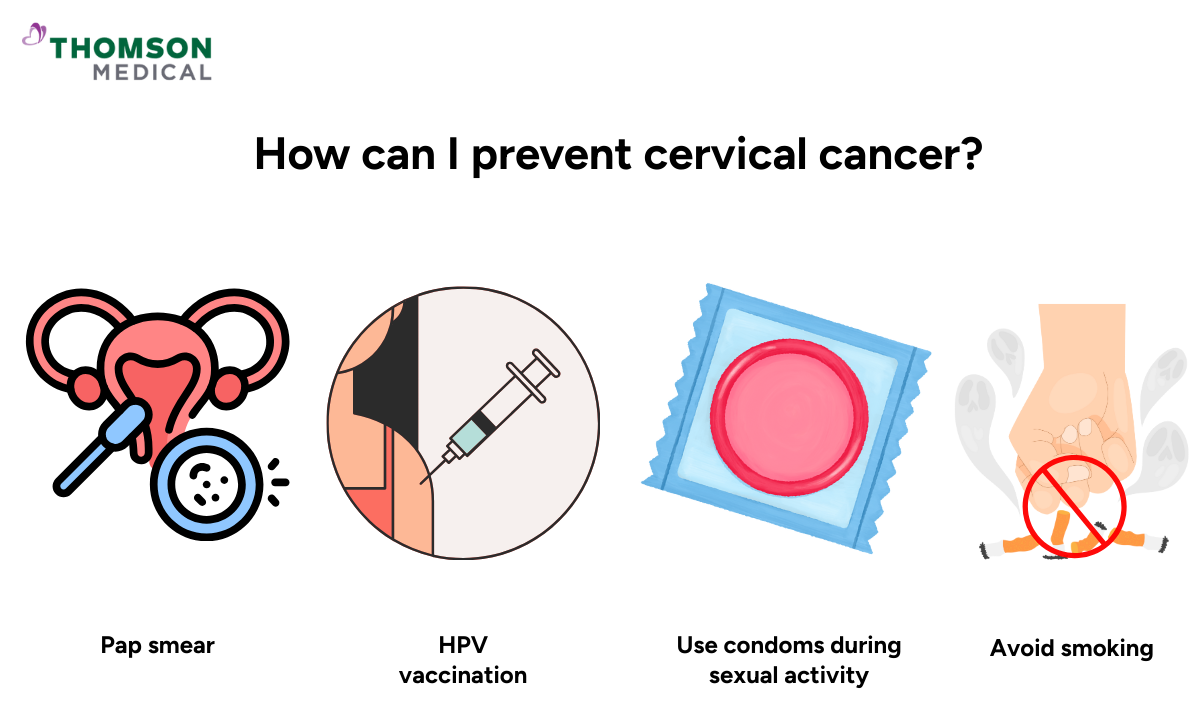
There are several ways you can protect yourself. The most effective approach combines vaccination, regular screening, and some lifestyle choices.
Regular screening tests
Screening helps catch any changes in your cells early, even if you've been vaccinated. Two screening tests work together to monitor your cervical health:
Pap smear or Pap test:
This test collects a small sample of cells from your cervix to check for abnormal changes.
If you're between 21 and 65, you're encouraged to have regular Pap testing as part of your preventive care.
HPV test:
This test identifies whether you have high-risk HPV strains.
It's often performed alongside a Pap test during your screening appointment.
Most women need screening every 3 to 5 years, depending on their age and previous test results. Your doctor will confirm the specific timing that's right for you.
HPV vaccination
The HPV vaccine offers you protection against the HPV types responsible for most cervical cancers.
The vaccine is recommended for kids aged 9 to 14 years. This is because the vaccine works most effectively before you're exposed to the virus through sexual activity. If you missed the vaccine during your teens, you can still get vaccinated up until you're 26.
You could still benefit from the vaccine if you’re between 27 to 45 years old. If you’re in this age group, it may be worth discussing this option with your doctor.
Lifestyle choices that support cervical health
These everyday habits can help lower your risk:
Use condoms during sexual activity
Avoid smoking, as tobacco use can weaken your body's ability to fight off HPV infections
Maintain your overall health through balanced nutrition and enough rest
Attend your screening appointments regularly, even when you feel well
Protecting against cervical cancer starts with the right preventive plan. Request an appointment with Thomson Medical to discuss Pap smear and HPV screening schedules, assess your eligibility for HPV vaccination, and receive personalised guidance on maintaining long-term cervical health.
What happens if something abnormal is found?
As mentioned earlier, these are usually precancerous changes that are highly treatable. Here's what typically happens:
You'll be referred to a specialist (usually a gynaecologist) for further evaluation
Your specialist may recommend further tests like a colposcopy or biopsy help determine exactly what's happening
If needed, imaging tests like MRI scan, PET scans, or CT scans are used to check whether cancer has spread
Your doctor will create a treatment plan tailored to your specific situation
Early detection almost always leads to higher cure rates. Many people go on to live healthy lives after treatment.
What is the treatment for cervical cancer?
Your cervical cancer treatment will depend on several factors, including the stage of the cancer, your overall health, and your future plans, such as whether you want to have children.
Treatment for precancerous changes
If your screening finds precancerous cells, they're very treatable. Here's what your doctor might do:
Cryotherapy:
They'll use extreme cold to freeze and remove those abnormal cells from your cervix.
Laser treatment:
A focused laser beam removes the affected tissue.
Cone biopsy:
Your doctor removes a small section of tissue containing the abnormal cells. This can both diagnose the problem and treat it at the same time.
Treatment for early-stage cervical cancer
If cancer is caught early, treatment might include:
Surgical treatment:
Your surgeon will remove the affected area. How much they need to take out depends on how far the cancer has spread.
If your cancer is very early, they might only need to remove a small part of your cervix, which means you could still have children afterwards.
Radiation therapy:
Your doctor might recommend this after surgery to get rid of any remaining abnormal cells.
Chemotherapy:
This uses medication to kill cancer cells and is sometimes combined with other treatments.
Treatment for advanced-stage cervical cancer
When cancer has spread further, treatment options include:
Chemoradiation:
This combines chemotherapy and radiation therapy, given together to attack the cancer cells more effectively.
Targeted therapy:
These treatments go after specific features of your cancer cells.
Palliative care:
This focuses on managing your symptoms and improving your quality of life.
After a diagnosis of precancerous changes or cervical cancer, timely treatment planning is essential. Request an appointment with Thomson Medical to discuss stage-appropriate options such as cryotherapy, surgery, or chemoradiation with our specialists.
FAQ
Who should get the HPV vaccine?
All children aged 9 to 14 should get the HPV vaccine, both boys and girls. If you missed it as a teen, you can still get it up to age 26. Some adults aged 27 to 45 may benefit too. Chat with your doctor to discuss what's right for your situation.
Do I need screening even if I'm not sexually active?
Your risk is very low if you've never been sexually active. But cervical screening is still recommended once you start or reach age 21. HPV can sometimes spread through other intimate skin-to-skin contact, though this is rare.
Do Pap smears actually detect cancer?
Pap smears find abnormal cells, not cancer itself. They catch cell changes before cancer develops, giving you time to treat them early.
How soon can cervical cancer be detected?
Precancerous changes can be detected years before cancer forms. Sometimes 10 to 20 years before. Regular screening every 3 to 5 years catches these changes early, long before you'd notice any symptoms. Following your recommended screening intervals is important.
Can cervical cancer be cured?
Yes, especially when you found it early. Stage 1 cervical cancer has a 5-year survival rate of over 90%. Even later stages can often be treated successfully. Many women go on to live full, active lives.
What is the 2-week rule for cervical cancer?
If your doctor suspects cancer, you should see a specialist within 2 weeks. This happens when you have worrying symptoms like persistent abnormal vaginal bleeding. Quick checks mean faster treatment if needed.
I've had the HPV vaccine. Do I still need screening?
Yes, you still need cervical screening. The HPV vaccine protects against the most common cancer-causing HPV types, but not all of them. Regular screening tests give you extra protection and remain your best defence against cervical cancer.
The information is intended for general guidance only and should not be considered medical advice. For personalised recommendations and advice based on your unique situation, please consult a specialist at Thomson Medical. Request an appointment with Thomson Medical today.
Reference:
Nabi S, Mimba B, Akunne O. Eliminating Cervical Cancer: The Impact of Screening and Human Papilloma Virus Vaccination. Prev Chronic Dis 2025; 22:250127. DOI: http://dx.doi.org/10.5888/pcd22.250127
National Registry of Diseases Office. (2024). Singapore Cancer Registry annual report 2022. https://www.nrdo.gov.sg/
For more information, contact us:
Thomson Specialists (Women's Health)
Thomson Women's Clinic (TWC)
- Novena:
6592 6686 (Call), 8611 8986 (WA) - Bukit Batok:
6569 0668 (Call), 8686 3525 (WA) - Choa Chu Kang:
6893 1227 (Call), 8282 1796 (WA) Jurong:
6262 8588 (Call), 6262 8588 (WA)- Katong (female doctor):
6970 2272 (Call), 8611 9020 (WA) - Punggol:
6243 6843 (Call), 8811 0328 (WA) - Sembawang: 6753 5228
- Sengkang: 6388 8125
- Serangoon (female doctor): 6382 3313
- Tampines: 6857 6266
- Tiong Bahru: 6276 1525