
.png%3Fbranch%3Dprod&w=3840&q=75)
Pregnancy brings many changes, and noticing symptoms like bleeding or unusual discharge can naturally cause concern. While cervical cancer during pregnancy is uncommon, knowing which signs should be checked can help you feel more reassured.
Learning what is typical during pregnancy and what may need medical review allows you to protect your health and your baby’s wellbeing while avoiding unnecessary worry.
What is cervical cancer?
Cervical cancer develops in your cervix, usually progressing slowly over several years. It begins with small changes in the cells lining your cervix, most often triggered by certain strains of human papillomavirus (HPV) – a common virus transmitted through intimate contact.
Most HPV infections clear naturally on their own. However, when an infection persists, it can cause cells to become precancerous. Without early detection and treatment, these changes may develop into cancer. This is why regular screening matters – it helps catch these changes early, when they're most treatable.
Signs and symptoms of cervical cancer during pregnancy
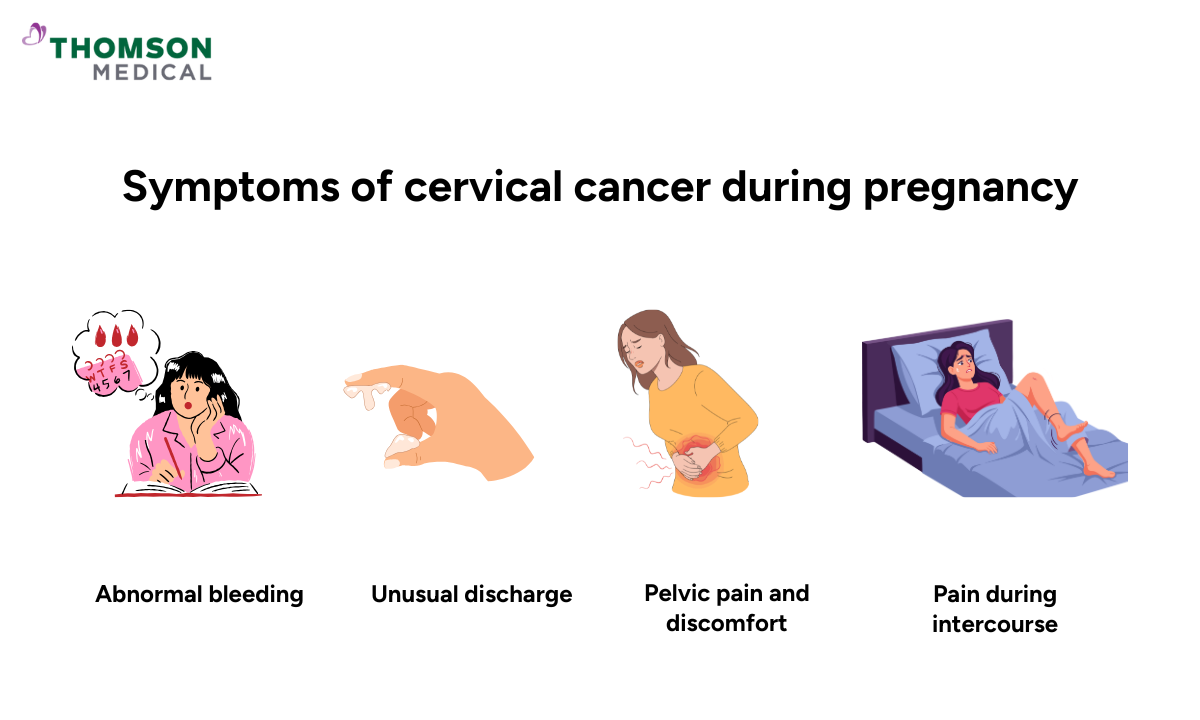
Pregnancy brings many physical changes, and some signs of cervical cancer can mirror typical pregnancy symptoms – making it difficult to know what's normal. Knowing which changes warrant a conversation with your healthcare provider can give you clarity when something feels uncertain.
Abnormal vaginal bleeding
Bleeding during pregnancy often has harmless causes, particularly in the first trimester.
Bleeding associated with cervical cancer tends to occur unexpectedly – after intercourse, at times when you wouldn't normally expect bleeding, or in amounts that differ from typical early pregnancy spotting. What sets it apart is that it doesn't follow the usual patterns you might recognise as pregnancy-related bleeding.
Your cervix becomes more sensitive during pregnancy, so you should discuss with your doctor any unexpected bleeding to identify the cause.
Unusual vaginal discharge
While vaginal discharge naturally increases during pregnancy, cervical cancer can cause discharge that feels noticeably different to you. It may be watery or thin, tinged with blood, or carry an unusual odour.
Changes in discharge can happen for many reasons, including infections. If your discharge feels different from what's normal for you, especially alongside other symptoms, it's worth checking with your healthcare provider.
Pelvic pain and discomfort
Pelvic discomfort is common during pregnancy as your body adjusts to support your growing baby. Pain linked to cervical cancer tends to feel different from typical pregnancy aches – it may linger constantly or feel deeper and heavier, rather than coming and going.
This type of pain often doesn't ease with rest or changing positions. While pelvic pain during pregnancy usually has straightforward causes, ongoing or unusual pain is worth discussing with your doctor.
Pain during intercourse
Pain during intercourse can occur in pregnancy for several benign reasons, including increased sensitivity or changes in blood flow. When cervical cancer is present, the pain may feel sharper, more intense, or deeper in the pelvis.
You might also notice bleeding afterwards or discomfort that lingers well after intercourse has ended. These symptoms can occur because cervical cancer may make your cervix more fragile or prone to irritation. If you're experiencing this type of pain, speaking with your healthcare provider can help identify the cause.
If you're experiencing any of these symptoms and feel unsure whether they need attention, schedule an appointment with Thomson Medical. Our specialists can evaluate your symptoms and ensure both you and your baby receive appropriate care.
How is cervical cancer diagnosed during pregnancy?
If cervical cancer is suspected during pregnancy, you can still undergo diagnostic procedures safely. While it's natural to worry about how tests might affect your baby or your pregnancy, these methods have been carefully studied and are performed with precautions to protect you both.
Pap smear and cervical screening
A Pap smear can safely be performed during pregnancy and is often the first step in detecting cervical abnormalities. Your doctor gently collects a sample of cells from your cervix to check for abnormal or precancerous changes.
An HPV test may be done at the same time to check for high-risk virus types. If your Pap smear shows changes needing closer examination, a colposcopy is usually the next step.
Colposcopy and biopsy safety
A colposcopy uses a special microscope-like device to examine your cervix more closely. This safe procedure helps determine whether abnormal cells are present and how significant they might be.
If needed, a small biopsy may be recommended. While this can cause light spotting, it doesn't harm your baby – it's performed on the outer cervix without affecting your uterus. Your healthcare team removes only the minimum tissue needed for diagnosis, then determines whether treatment can wait until after delivery or if closer monitoring is needed.
If you need cervical screening during pregnancy or have concerns about abnormal test results, schedule an appointment with Thomson Medical. Our obstetricians can perform safe diagnostic procedures and help you understand the next steps for you and your baby.
Cervical cancer treatment during pregnancy
Cervical cancer treatment decisions depend on the stage of the cancer and how far along you are in your pregnancy. Your care team will work to protect both you and your baby while addressing the cancer effectively.
Your treatment approach will usually follow one of these paths:
For early-stage cancers:
Your cancer will often be monitored closely throughout pregnancy
Treatment normally begins after your baby is born, if the cancer isn't progressing quickly
For more advanced cancers:
Treatment may need to begin during pregnancy
Certain surgical options can be performed safely without harming your baby
If urgent treatment is needed later in pregnancy:
Early delivery may be considered so therapy can begin sooner
Your doctor will guide you through these decisions, ensuring the best possible outcome for both you and your baby
Every step forward will be taken with careful consideration of what's safest for you and your growing baby. Your questions and concerns matter throughout this process.
Does cervical cancer affect the baby?
.png?branch=production)
This is often one of the first questions that comes to mind, and it's completely natural to want reassurance about your baby's safety.
Cervical cancer itself doesn't usually spread to or directly harm your baby. The cancer is located in your cervix, which is separate from your baby's protected environment in your uterus.
Most risks to your baby come from how the cancer needs to be managed rather than the cancer itself. Certain treatments or procedures may be postponed until later in your pregnancy or after delivery to keep your baby safe. If treatment must begin during pregnancy, your doctors will try to choose the safest options available.
In some cases, early delivery may be considered if your pregnancy is far enough along and the cancer requires urgent attention. Many women with cervical cancer go on to have healthy pregnancies and healthy babies, especially when the cancer is detected early and monitored closely. You and your baby can both be cared for well.
Cervical cancer specialists in Singapore
Loading...
FAQ
Can I get pregnant with cervical cancer?
Yes, it's possible to become pregnant with early-stage cervical cancer, as symptoms may not appear until the disease is more advanced.
Once diagnosed, your healthcare team will guide you on whether pregnancy is safe to continue and discuss available treatment options. Early-stage disease is sometimes monitored throughout pregnancy, while more advanced cancer may require treatment that affects fertility.
Can cervical cancer symptoms be mistaken for normal pregnancy symptoms?
Yes. Symptoms such as spotting, increased discharge, pelvic pressure, or discomfort during sex can mimic normal pregnancy changes. Because these signs overlap easily, report any unusual or persistent symptoms to your healthcare provider, even if they seem typical.
Can you get pregnant after cervical cancer treatment?
In many cases, pregnancy remains possible after treatment, especially if the cancer was detected early and treated with fertility-sparing procedures.
Here are treatment options and their impact on fertility:
Fertility-sparing treatments such as cone biopsy or trachelectomy can preserve your uterus
More advanced cancers may require hysterectomy or radiation, which do affect fertility
Fertility preservation options can be discussed with your doctor before treatment begins
How common is cervical cancer during pregnancy?
Cervical cancer during pregnancy is rare, occurring in only a small percentage of pregnant individuals. Most cases are detected through routine prenatal cervical screening, which helps identify abnormalities early.
Should I terminate my pregnancy if diagnosed with cervical cancer?
Termination is rarely the first recommendation. Your options depend on the cancer's stage, how quickly it's progressing, and how far along your pregnancy is.
Early-stage cancers can often be safely monitored until after delivery, while more advanced cases may require earlier treatment. Many people are able to continue their pregnancy safely with specialist support.
What happens if I have HPV while pregnant?
HPV is extremely common, and most people with HPV have healthy pregnancies and babies. The virus usually doesn't affect your baby or change the course of your pregnancy.
High-risk HPV can lead to abnormal cervical cells that may require closer monitoring. Treatment for abnormal cells is usually delayed until after birth unless something more urgent is identified.
The information provided is intended for general guidance only and should not be considered medical advice. For personalised recommendations and tailored advice, please consult a specialist at Thomson Medical. Request an appointment with Thomson Medical today.
For more information, contact us:
Thomson Specialists (Women's Health)
Thomson Women's Clinic (TWC)
- Novena:
6592 6686 (Call), 8611 8986 (WA) - Bukit Batok:
6569 0668 (Call), 8686 3525 (WA) - Choa Chu Kang:
6893 1227 (Call), 8282 1796 (WA) Jurong:
6262 8588 (Call), 6262 8588 (WA)- Katong (female doctor):
6970 2272 (Call), 8611 9020 (WA) - Punggol:
6243 6843 (Call), 8811 0328 (WA) - Sembawang: 6753 5228
- Sengkang: 6388 8125
- Serangoon (female doctor): 6382 3313
- Tampines: 6857 6266
- Tiong Bahru: 6276 1525