

Weight and endometrial cancer are connected, and the link runs in a particular direction that’s worth understanding. Fat tissue produces oestrogen, and over years, high oestrogen levels can thicken the womb lining, which may raise the risk of endometrial cancer developing.
That’s mainly about risk over time, though not about any one person’s diagnosis. Cancer develops for many reasons, here’s how weight and endometrial cancer are linked, what may cause your weight to change during and after treatment, and what support is available.
What is endometrial cancer?
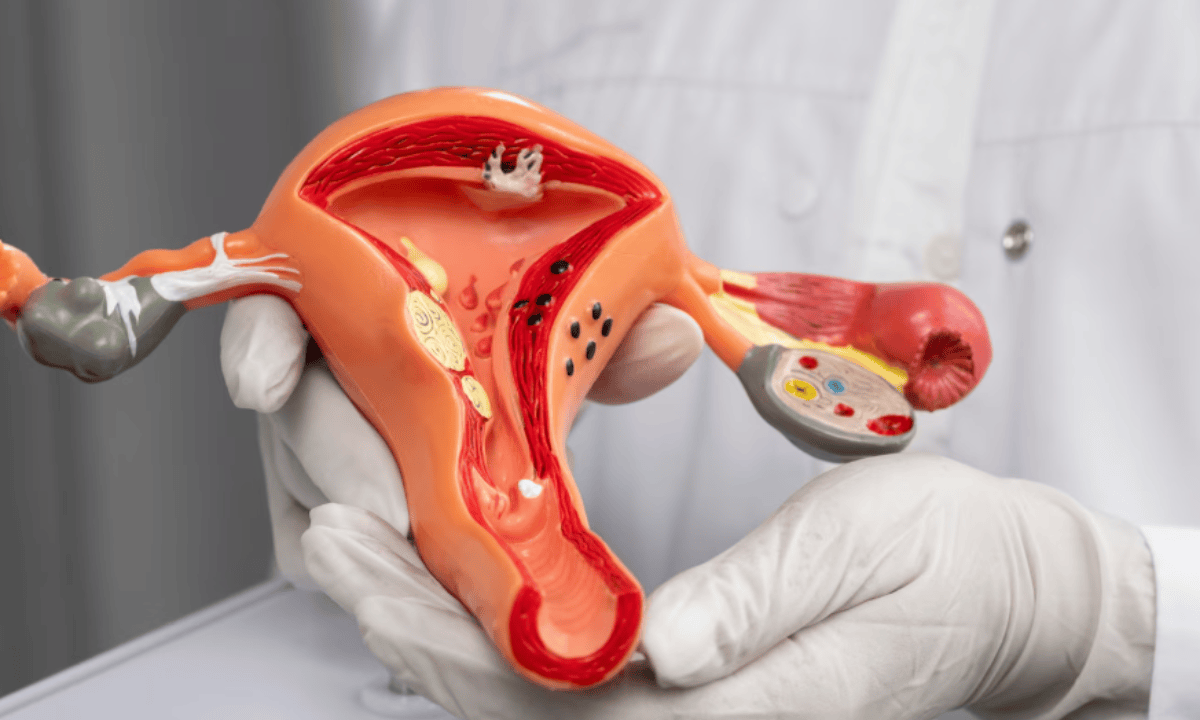
Endometrial cancer is a type of gynaecological cancer that develops in the endometrium, the inner lining of the womb. It is one of the most common gynaecological cancers and typically occurs after menopause, when hormonal changes may lead to longer exposure to oestrogen without enough progesterone to counter its effects.
This condition is known as unopposed oestrogen, which could cause the endometrial lining to become thicker and, over time, increase the risk of abnormal cell growth. However, endometrial cancer may also affect younger women.
Although this cancer is often referred to as uterus or uterine cancer, the two terms are not exactly the same. Uterine cancer is a broader term that describes cancers originating in the uterus, including endometrial cancer and the much rarer uterine sarcoma, which develops in the muscle or supporting tissues of the uterus.
Does endometrial cancer cause weight gain?
Endometrial cancer does not usually cause weight gain directly. However, being overweight may increase the risk of developing endometrial cancer. This means that being obese is more commonly linked to the increased risk of developing the cancer, rather than being a symptom caused by the cancer itself.
So, being overweight, particularly after menopause, is associated with a higher risk of developing endometrial cancer. This relationship is likely to involve several biological processes, including:
Hormonal changes:
Fat tissue is metabolically active and may influence hormone levels. It could convert certain hormones into oestrogen, increasing the body's exposure to this hormone.
When oestrogen is not sufficiently balanced by progesterone, it may stimulate the endometrial lining and contribute to abnormal cell growth. This may be particularly relevant after menopause, when fat tissue becomes an important source of oestrogen.
Chronic inflammation:
In an overweight individual, excess body fat could contribute to chronic, low-grade inflammation.
These persistent inflammations may affect normal cell function and create an environment that supports abnormal cell growth, which may contribute to the development of endometrial cancer.
Insulin resistance and metabolic changes:
Experiencing obesity is often associated with insulin resistance, type 2 diabetes and metabolic syndrome.
Higher insulin levels and related growth signals may encourage endometrial cell growth and contribute to an increased risk of endometrial cancer.
What causes weight gain after an endometrial cancer diagnosis?
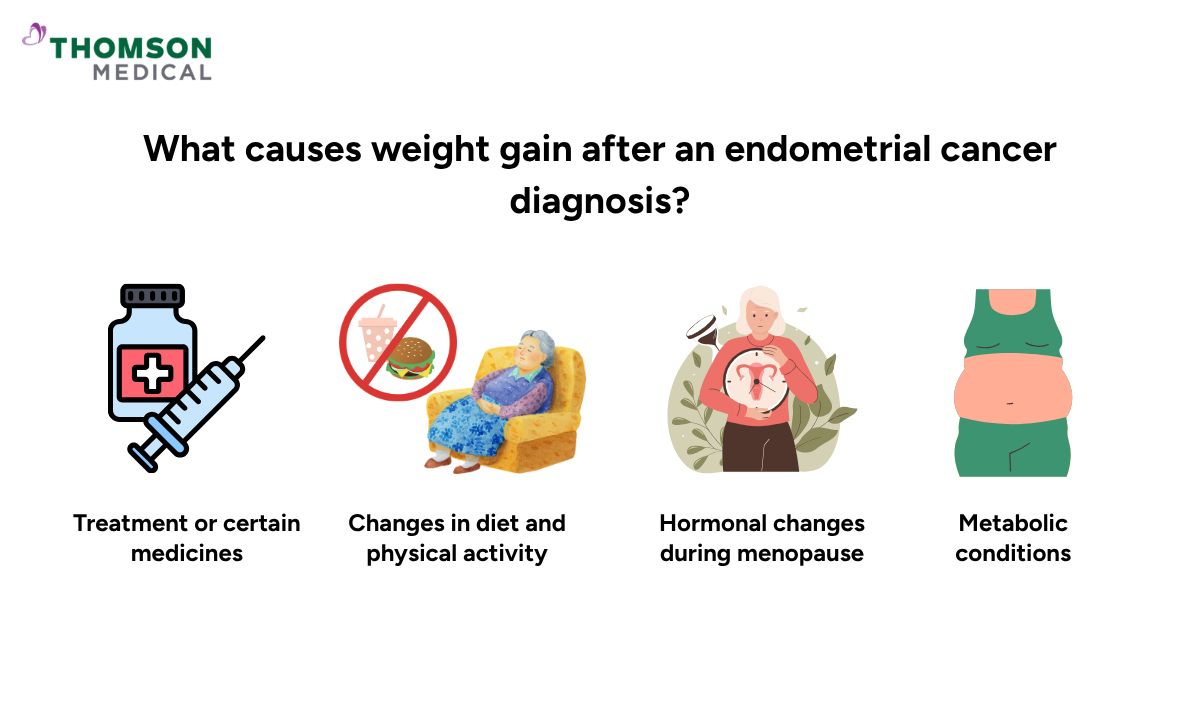
Weight gain after an endometrial cancer diagnosis may sometimes be related to factors other than the cancer itself. Possible causes include:
Treatment or certain medicines:
Some hormonal treatments, including progestins, may increase appetite or cause fluid retention in some women. Other medicines, such as steroids, may also contribute to weight changes.
Changes in diet and physical activity:
Treatment and recovery may affect appetite, eating habits, and lower activity levels, which could contribute to gradual weight gain.
Hormonal changes during menopause:
Natural or treatment-induced menopause may affect body-fat distribution and may contribute to weight gain.
Metabolic conditions:
Some health conditions could make it easier to gain weight or make it harder to lose weight. For example, an underactive thyroid may slow down metabolism and contribute to weight gain.
Polyendocrine metabolic ovarian syndrome (PMOS) could also affect hormone levels, appetite and how the body uses insulin, which may contribute to weight changes.
If you are concerned about weight gain after your diagnosis, speaking with a gynaecological oncologist may help you understand the possible causes and manage your weight safely alongside treatment. Schedule an appointment with Thomson Women's Clinic & Cancer Surgery for personalised medical advice.
Our endometrial cancer specialist
Loading...
Does weight gain affect treatment?
Weight gain does not prevent you from receiving treatment for endometrial cancer. However, being overweight may affect certain aspects of treatment and recovery, depending on your overall health and the type of treatment.
Your specialist will consider your weight alongside factors such as the cancer’s type, grade and stage, whether it has spread, and your general health when developing your treatment plan. The potential considerations based on the available treatments may include:
Surgery:
A hysterectomy, which removes the uterus and cervix, is a common treatment for endometrial cancer.
Having overweight or obesity may increase the risk of certain surgical or anaesthetic complications. Your overall health and any related conditions will therefore be assessed before surgery.
Radiotherapy:
Weight does not usually determine whether radiotherapy could be used. However, changes in your body size or shape may need to be considered when planning the treatment and managing possible side effects.
Chemotherapy:
Being overweight does not necessarily prevent you from receiving chemotherapy.
The choice and dose of medicines may depend on factors such as your type and stage of cancer, kidney and liver function, and overall health.
Hormone therapy:
Some hormone treatments, particularly progestins, may increase appetite or cause fluid retention, which may contribute to weight gain.
These effects may be monitored during treatment, particularly if you are already experiencing changes in weight.
Immunotherapy:
Weight gain does not usually determine whether immunotherapy is suitable. Factors such as the stage and characteristics of your cancer, as well as any previous treatment, are more important when considering this option.
Targeted therapy:
These medicines are chosen based on specific changes or features in the cancer cells, rather than body weight. Your specialist may recommend tests to identify these changes and determine whether targeted therapy is suitable for you.
When to seek medical advice?
Although endometrial cancer does not usually cause weight gain, it may lead to other health issues. It is recommended to speak with your doctor for a medical assessment if you notice any of the following:
Abnormal vaginal bleeding (bleeding between periods, unusually heavy periods, and any bleeding or spotting after menopause).
Vaginal bleeding after menopause (12 months after your last menstrual period).
Abnormal vaginal discharge, especially if it is watery, pink, blood‑stained or has an unpleasant odour.
Persistent lower abdominal or pelvic pain.
Pain during sexual intercourse or urination.
Unexplained weight loss.
If you experience abnormal vaginal bleeding or other symptoms mentioned above, it’s recommended that you consult a doctor. Schedule an appointment with Thomson Women's Clinic & Cancer Surgery for a consultation with a gynaecological oncologist.
How to lower the endometrial cancer risk factor related to weight?
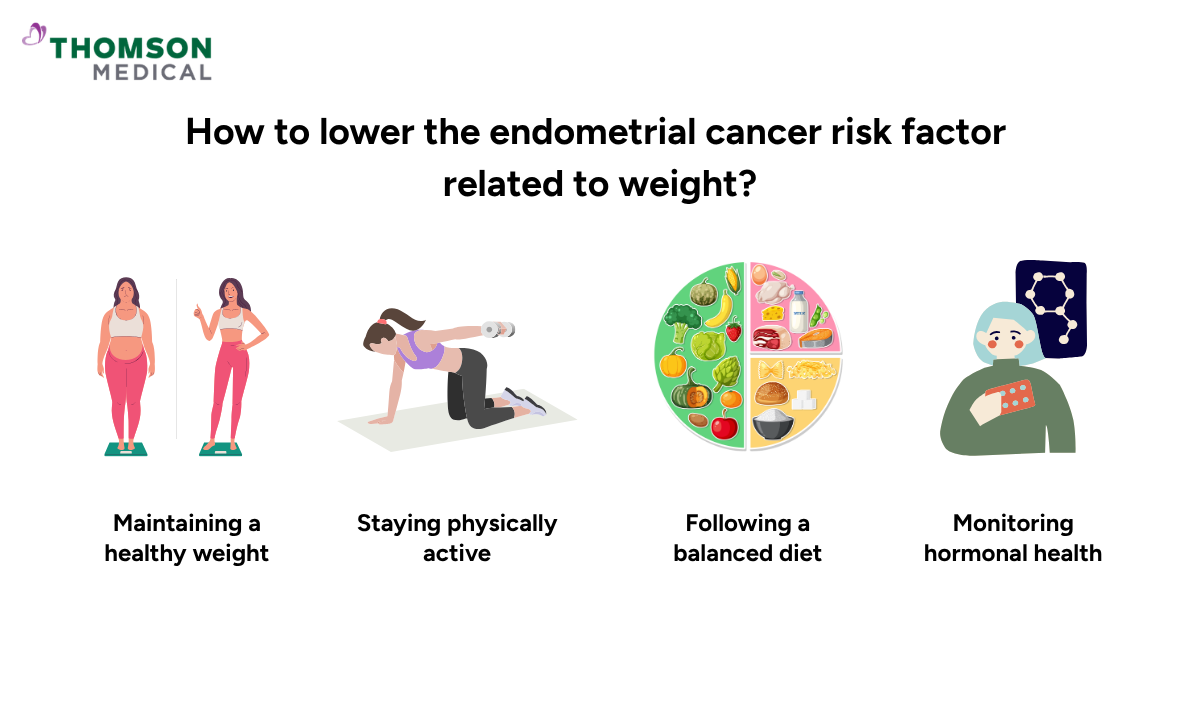
If you are concerned about weight and your risk of endometrial cancer, making healthy lifestyle changes may help reduce some of the associated risk factors. Here are some tips you could try:
Maintaining a healthy weight, as excess body weight may affect hormone levels, particularly oestrogen, which may influence endometrial cancer risk and overall hormonal balance.
Staying physically active, as regular exercise could support overall health, help maintain a healthy weight, and may help reduce inflammation in the body.
Following a balanced diet, including a variety of fruits, vegetables, whole grains, and nutrient-rich foods.
Monitoring hormonal health, especially if you have symptoms such as irregular periods, heavy menstrual bleeding, or conditions such as PMOS.
FAQ
How long is recovery from endometrial cancer?
The recovery period for endometrial cancer treatment varies depending on the stage of cancer and the treatment plan. Surgical treatment, such as hysterectomy, often involves a hospital stay of a few days followed by around 4 to 8 weeks of recovery before you can return to your daily activities. Non-surgical treatments such as chemotherapy are usually given in cycles, often once every 3 to 4 weeks, and may take several cycles to complete.
Overall, the active treatment phase, whether surgery alone or combined with non-surgical treatments, commonly lasts for several months, while follow-up care typically continues for several years. Follow-up visits are usually more frequent during the first 2 to 3 years to monitor your recovery and check for any signs of recurrence.
How quickly can endometrial cancer spread?
How quickly endometrial cancer spreads can vary widely from woman to woman, and there is no fixed timeline for its progression. Factors such as the tumour grade and the cancer type influence the risk and speed of spread. Higher‑grade tumours are generally more aggressive, more likely to spread, and carry a higher risk of spreading to other organs or tissues (metastasis).
How do you know if endometrial cancer has spread?
The symptoms of endometrial cancer spreading can vary depending on where the cancer has grown. If it remains in or near the uterus, you may experience abnormal vaginal bleeding, unusual discharge, pelvic pain or pressure, pain during urination or intercourse, unexplained weight loss, or persistent tiredness.
If the cancer spreads to other parts of the body, symptoms may depend on the affected organ. These can include changes in urination or bowel movements, abdominal pain, persistent cough or shortness of breath, ongoing bone pain, or headaches and changes in balance, speech, or memory.
However, as these symptoms can also have other causes, your doctor may recommend imaging tests or a biopsy to confirm whether the cancer has spread.
What are the possible complications of endometrial cancer?
When diagnosed and treated at an early stage, endometrial cancer generally responds well to treatment. However, if left untreated or diagnosed at a more advanced stage, complications may occur, including:
- Spread of the cancer to nearby organs or distant metastasis to other parts of the body.
- Anaemia, which may develop due to prolonged or heavy vaginal bleeding.
Where is the most likely place for endometrial cancer to spread?
Endometrial cancer is most likely to spread first within the pelvis, especially to nearby pelvic tissues and lymph nodes. Meanwhile, when endometrial cancer has become distant metastasis (the spread of cancer cells from the site of the primary tumour to other organs or tissues), it is most likely to spread to the lungs.
The information provided is intended for general guidance only and should not be considered medical advice. For personalised recommendations and advice based on your individual circumstances, schedule an appointment with Thomson Medical.
For more information, contact us:
Thomson Medical Concierge
- 8.30am - 5.30pm
- WhatsApp: 9147 2051
Need help finding the right specialist or booking for a group?
Our Medical Concierge is here to help you. Simply fill in our form, and we'll check and connect you with the right specialist promptly.
Notice:
The range of services may vary between Thomson clinic locations. Please contact your preferred branch directly to enquire about the current availability.
Get In Touch