

If you have noticed brown discharge, it is understandable to feel concerned, especially if you are unsure why it is happening. You may be wondering whether an ovarian cyst could be the cause or whether it signals something more serious.
Brown discharge is often harmless and usually represents older menstrual blood leaving the body more slowly. However, knowing when this is part of a normal cycle and when it may need medical review can help you respond calmly and confidently.
Is brown discharge normal?
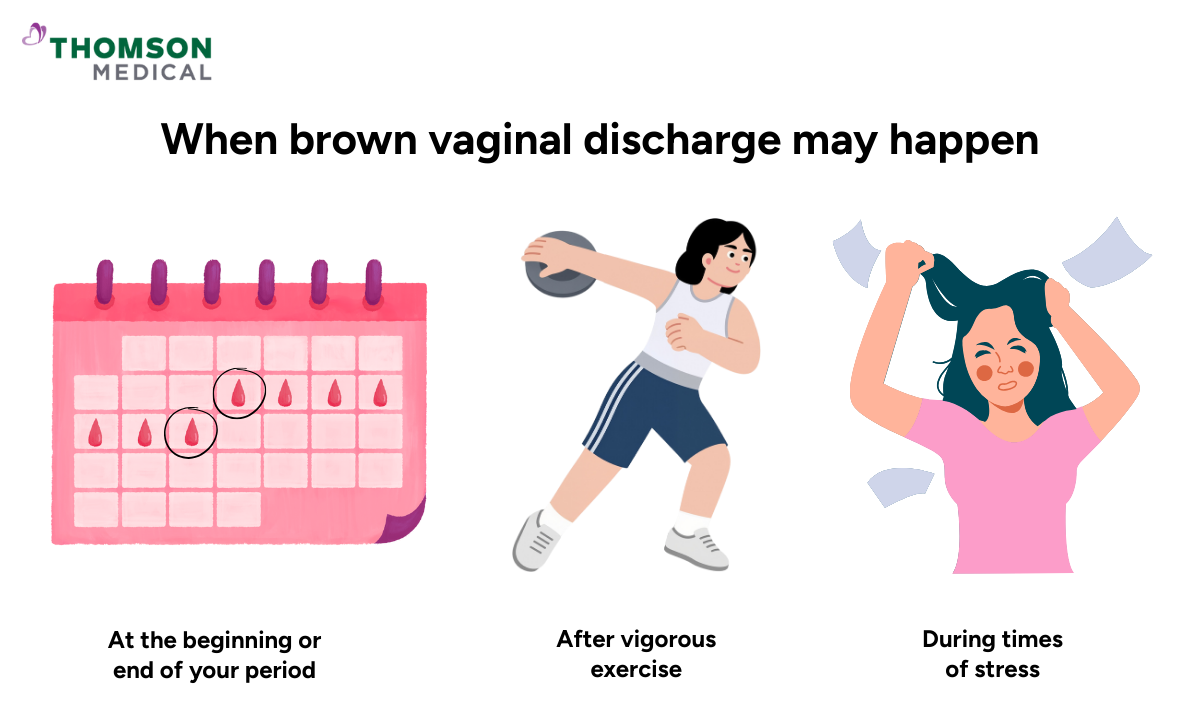
Yes, brown discharge is very common and often completely normal. The brown colour usually means old menstrual blood that took longer to leave the womb. When blood is exposed to oxygen, it turns from red to brown.
This happens regularly as part of your body's natural cycle.
You might notice brown vaginal discharge:
At the beginning or end of your period
Around ovulation (mid-cycle spotting)
After vigorous exercise or physical activity
During times of stress or illness
Brown vaginal discharge that is light, has no bad smell, and lasts a few days is usually not a problem. Your body is simply clearing out older blood at its own pace, which varies from woman to woman.
If your brown discharge fits these patterns, you can feel reassured that your body is working normally. Many women experience this regularly throughout their reproductive years.
When brown discharge might be abnormal
While most brown discharge is harmless, certain patterns suggest you should get it checked.
Brown discharge may indicate a problem if it:
Has a strong or foul smell
Comes with itching, burning, or unusual odour
Happens after sex repeatedly
Occurs after menopause
Comes with fever or severe pain
These signs may point to possible infections, hormone problems, or other conditions that need proper diagnosis. Recognising these warning signs helps you distinguish between what's normal and what needs attention, so you can act with confidence rather than worry.
Our gynaecology specialist
Loading...
Why is my discharge brown?
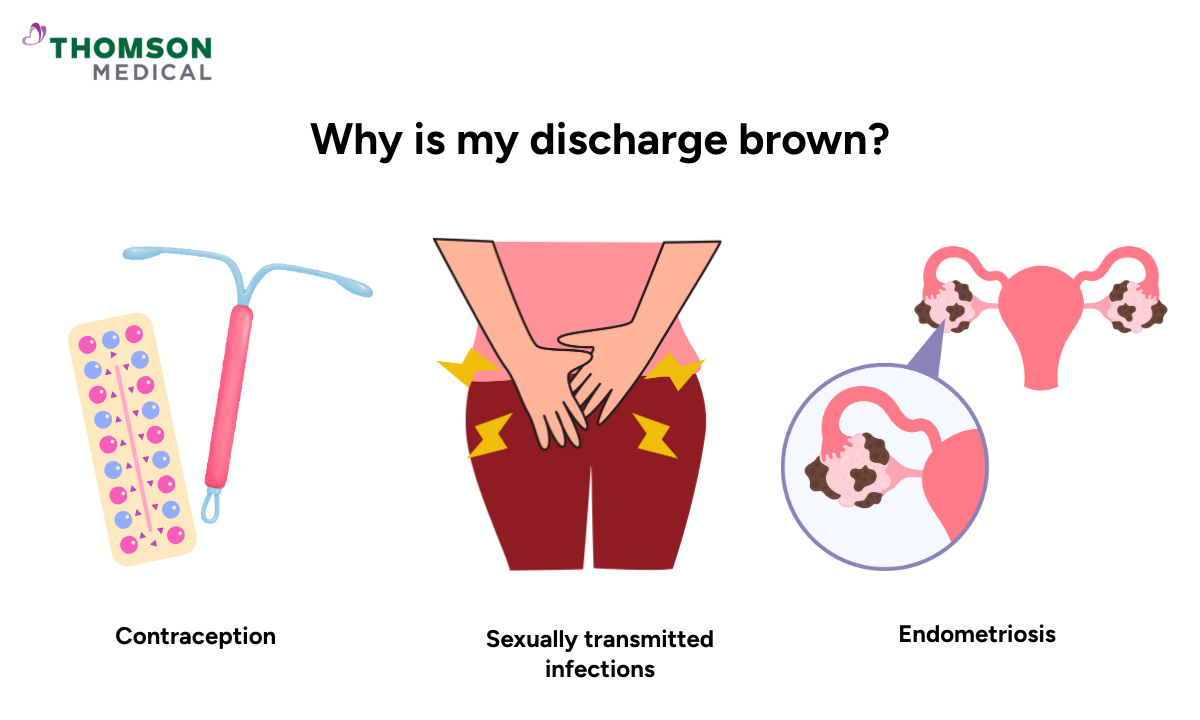
Other than normal variations in your menstrual cycle, brown discharge can be caused by several reasons. Understanding the most common ones can help you work out whether yours is likely normal or needs attention.
Contraception
Hormonal birth control is one of the most common reasons for brown spotting.
If you're using hormonal contraception, you may experience:
Breakthrough bleeding
Brown spotting between periods
Lighter or irregular periods
This is especially common in the first three to six months of starting a new contraceptive method, if birth control pills are missed, or if you're using a low-dose hormonal method. Your body is adjusting to the hormones, and this usually settles down with time.
Sexually transmitted infections
Some sexually transmitted infections (STIs) can cause brown, yellow, or green discharge, bleeding after sex, and pelvic discomfort.
These infections usually also cause:
Pain
Burning
Unusual odour
If you're experiencing these symptoms, medical testing and treatment are important. STIs are very treatable when detected early, so seeking testing is a positive step towards protecting your health.
Pelvic inflammatory disease
Pelvic inflammatory disease (PID) is a bacterial infection of the reproductive organs that requires prompt treatment.
You might experience:
Brown or abnormal discharge
Pelvic or lower belly pain
Fever
Pain during movement
PID requires medical treatment to prevent complications such as scarring or fertility problems. If you think you might have PID, see a doctor as soon as possible.
Uterine cancer
Uterine cancer may cause unusual bleeding or brown or watery discharge. This mostly affects older adults and people after menopause. It is extremely rare in teenagers and young adults.
If you're past menopause and notice any bleeding or brown discharge, this should always be checked by a doctor. While cancer is one possibility, there are many other more common explanations and treatable conditions, like hormone changes or benign (non-cancerous) polyps.
Polycystic ovarian syndrome
Polycystic ovarian syndrome (PCOS) can cause irregular ovulation, hormonal imbalance, and infrequent periods.
Because of this, women with PCOS may notice:
Brown discharge
Long gaps between periods
Unexpected spotting
About 1 in 4 women between puberty and menopause live with this condition. While PCOS can feel challenging, there are effective treatments to help manage symptoms and support your quality of life.
Endometriosis
Endometriosis occurs when tissue similar to the lining of your womb grows outside the womb.
This can cause:
Dark brown spotting
Painful or heavy periods
Pelvic pain outside periods
Not everyone with endometriosis has brown discharge. But, if you have painful periods alongside brown spotting, it's worth discussing endometriosis with your doctor.
Miscarriage
During pregnancy, brown discharge can sometimes be normal. However, it may also be an early sign of miscarriage.
Any bleeding during pregnancy should be evaluated, even if it's brown rather than red. Most of the time there's a reassuring explanation, but getting it looked at gives you peace of mind and proper care if needed.
Brown discharge has many possible causes, most of them treatable. The pattern and accompanying symptoms help point towards the likely reason.
Brown discharge can be harmless, but it can also signal an infection, hormone imbalance, or a condition that needs treatment. Request an appointment at Thomson Medical to get checked properly, identify the cause of your discharge, and receive the right care based on your symptoms.
Does an ovarian cyst cause brown discharge?
Indirectly, yes, but it's not typically the primary symptom you'd notice.
Ovarian cysts can influence hormone levels, delay ovulation, and cause irregular shedding of your womb lining. This can lead to spotting or brown discharge between periods.
Many people with ovarian cysts never have discharge changes at all. However, if you do notice brown discharge and have other symptoms like pelvic pain or bloating, it may be helpful to discuss this with your doctor to understand what's happening in your body.
The hormonal connection
If you have an ovarian cyst and you're noticing brown discharge, the two are often connected through hormones rather than the cyst directly causing bleeding. This is an important distinction that can help ease your concerns.
Brown discharge with ovarian cysts usually happens because:
The cyst affects ovulation
Hormones fluctuate
The womb lining sheds unevenly
Should I be worried?
Brown discharge doesn't mean your cyst is cancerous or dangerous. Most ovarian cysts are benign and temporary. They often form as part of your body's normal monthly cycle and usually resolve on their own.
Understanding this connection can help ease your worries when you notice brown discharge alongside a cyst diagnosis. The discharge is usually just your body responding to temporary hormone shifts, not a sign that something is wrong.
Should I see a doctor?
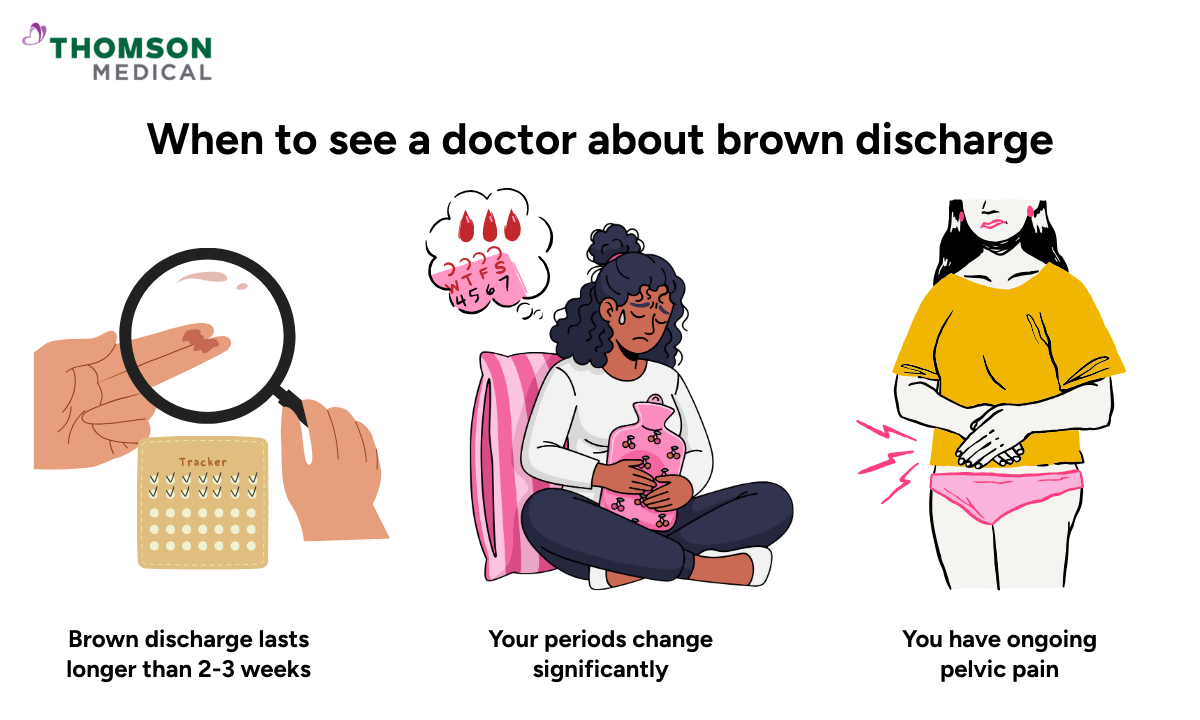
You don't need serious symptoms to justify seeing a doctor. If you're worried or unsure, that's reason enough.
You should consider seeing a doctor if:
Brown discharge lasts longer than two to three weeks
It happens every cycle without clear cause
Your periods change significantly
You have ongoing pelvic pain or bloating
You feel concerned about what's happening
Getting checked doesn't necessarily mean that you have any serious issues. Most abnormal brown discharge has straightforward explanations, and when treatment is needed, catching it early leads to better outcomes.
Persistent or recurring brown discharge deserves a proper medical review, even if your other symptoms feel mild. Request an appointment at Thomson Medical for an assessment and clear guidance on what’s causing the changes and whether treatment is required.
FAQ
What kind of discharge do you have with an ovarian cyst?
Most people have normal vaginal discharge. Some may have light spotting or brown discharge due to hormonal changes. There is no specific discharge that proves a cyst.
Can stress cause brown discharge?
Yes. Stress can delay ovulation, change hormone levels, and cause spotting or brown discharge. This is very common during exams, illness, or emotional stress.
What are the early warning signs of ovarian cysts?
Often there are none. When symptoms appear, they may include mild pelvic discomfort, bloating, and period irregularity. Most ovarian cysts are found accidentally on ultrasound.
Is an ovarian cyst a severe problem?
Usually no. Most ovarian cysts are harmless, go away on their own, and don't affect fertility. Only a small number need treatment.
What is the root cause of ovarian cysts?
The most common cause is normal ovulation. Other causes include hormonal imbalance, PCOS, and endometriosis. Cancer is rare, especially in young people.
Do ovarian cysts go away?
Most of the time, yes. Most ovarian cysts resolve within one to three menstrual cycles, don't need treatment, and are monitored with ultrasound if needed.
The information is intended for general guidance only and should not be considered medical advice. For personalised recommendations and advice based on your unique situation, please consult a specialist at Thomson Medical. Request an appointment with Thomson Medical today.
Reference:
Shukla, A., Rasquin, L. I., & Anastasopoulou, C. (2025, July 7). Polycystic ovarian Syndrome. StatPearls - NCBI Bookshelf. https://www.ncbi.nlm.nih.gov/books/NBK459251/
For more information, contact us:
Thomson Specialists (Women's Health)
Thomson Women's Clinic (TWC)
- Novena:
6592 6686 (Call), 8611 8986 (WA) - Bukit Batok:
6569 0668 (Call), 8686 3525 (WA) - Choa Chu Kang:
6893 1227 (Call), 8282 1796 (WA) - Jurong:
6262 8588 (Call), 6262 8588 (WA) - Katong (female doctor):
6970 2272 (Call), 8611 9020 (WA) - Punggol:
6243 6843 (Call), 8811 0328 (WA) - Sembawang: 6753 5228
- Sengkang: 6388 8125
- Serangoon (female doctor): 6382 3313
- Tampines: 6857 6266
- Tiong Bahru: 6276 1525
Notice
The range of services may vary between TWC/TS locations. Please contact your preferred branch directly to enquire about the current availability.
Request an Appointment