

The HPV vaccine is one of the most widely used vaccines worldwide. It helps protect against certain types of human papillomavirus (HPV) that can cause genital warts and several cancers.
If you’re planning to get the HPV vaccine and feel worried about its safety, that’s completely normal. The good news is that most HPV vaccine reactions are mild and short-lived. Knowing what to expect can help you feel more reassured about getting vaccinated.
What is the HPV vaccine for?
The HPV vaccine helps protect you from certain types of human papillomavirus (HPV) that can lead to serious health problems later in life.
The HPV vaccine can support your health by:
Protecting you from the most common high-risk HPV strains such as HPV types 16 and 18, which are linked to cervical cancer
Helping prevent genital warts, a common and often uncomfortable condition caused by HPV
Reducing your risk of several cancers, including cervical cancer and some head and neck cancers
By receiving the HPV vaccination, you are taking a proactive step to strengthen your immune system to fight off the virus if exposed. It can also provide lasting protection against conditions that are largely preventable.
Is the HPV vaccine safe?
The HPV vaccine has a well-established safety record, supported by decades of clinical research and ongoing global monitoring.
Research and global monitoring both point to a strong safety record for the HPV vaccine:
Before it was made available to the public, it went through large clinical trials to make sure it was safe and effective.
Health authorities around the world, including the CDC and FDA, continue to keep a close eye on it through ongoing safety tracking systems.
So far, no serious safety concerns have been found. Any side effects that have been reported are similar to what you'd expect from other routine vaccines.
The HPV vaccine is recommended by health authorities, including the World Health Organization (WHO) and Singapore's Ministry of Health (MOH), as part of national immunisation schedules.
Are there any long-term side effects?
Studies have found no evidence of long-term side effects directly caused by this vaccination, including conditions like chronic fatigue syndrome (a long-term condition causing extreme tiredness).
To date, large global studies have found no evidence of a link between HPV vaccination and infertility or reproductive problems. Ongoing monitoring by health authorities continues to support the vaccine's safety profile.
If you still have concerns about the vaccine safety, speaking with a doctor can help address your questions. You may arrange a consultation with Thomson Medical to discuss whether HPV vaccination is suitable for you.
What are the common side effects of the HPV vaccine?
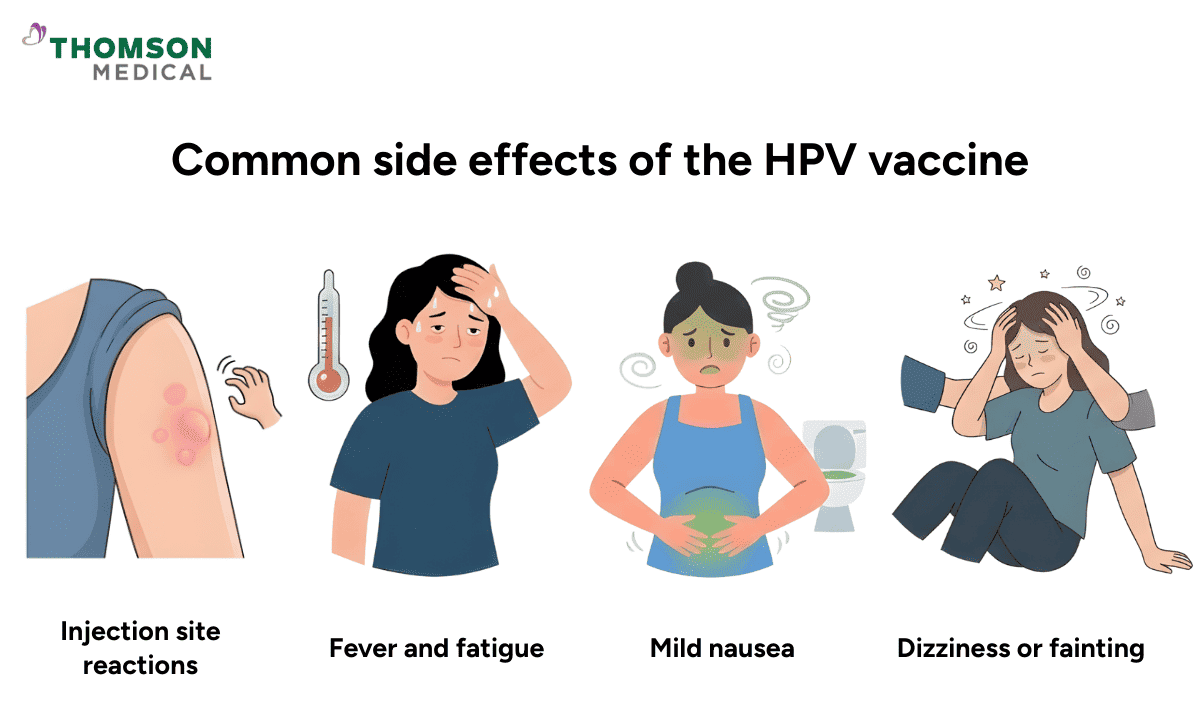
Most people have no side effects or only experience very mild reactions. When they do occur, they are similar to those seen with other routine vaccinations.
Common reactions include:
Soreness, redness, swelling, or itching at the exact vaccination site
A mild fever or a general feeling of fatigue
Mild nausea or an upset stomach
Dizziness or fainting, which can happen more often in teenagers after a vaccination
If you feel dizzy or faint after the injection, your healthcare provider will usually ask you to sit and rest for about 15 minutes after the injection to help prevent it. This helps ensure you feel well before leaving.
How to manage HPV vaccine side effects
If you experience mild symptoms after your appointment, you can manage them at home with a few gentle strategies suggested by your healthcare professional.
Simple steps you can take include:
Arm soreness:
Apply a cool compress to the injected area and gently move your arm to keep the muscle relaxed
Fatigue or mild fever:
Rest and drink plenty of hydrating fluids throughout the day
Headache or body aches:
Take over-the-counter pain relievers as advised by your doctor
By practising the simple home care steps above, you should start to feel more comfortable within a day or two. Once you feel better, you can gradually return to your normal light activities.
When to see a doctor
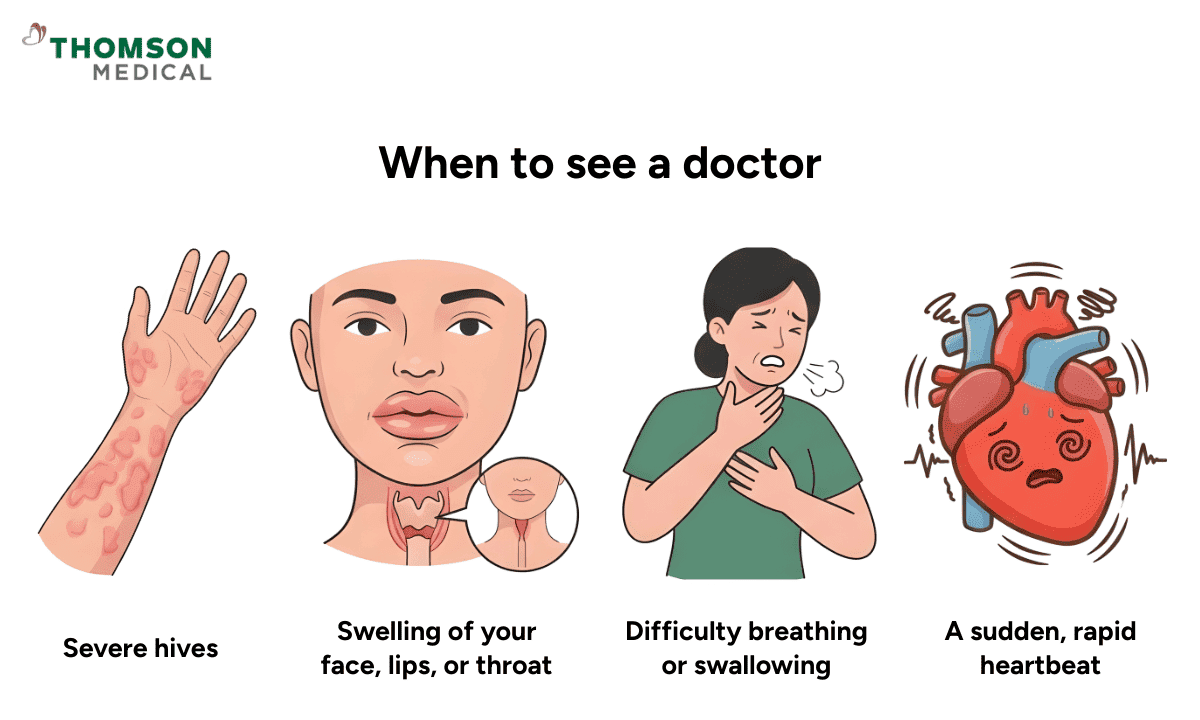
While most symptoms resolve at home, there are certain signs that may require medical care.
Get urgent medical help immediately if you notice signs of a serious allergic reaction (anaphylactic reaction), including:
Severe hives
Swelling of your face, lips, or throat
Difficulty breathing or swallowing
A sudden, rapid heartbeat
These symptoms may signal anaphylaxis, a rare but serious reaction that requires immediate medical attention. If this happens, call emergency services right away.
Symptoms such as heavy vaginal bleeding or unusual vaginal discharge are generally not related to the HPV vaccine. If you experience these symptoms, you should speak with a doctor to check for other possible causes.
Our O&G Specialists
Loading...
FAQ
Can the HPV vaccine be taken during your period?
Yes. Having your period is not a reason to delay your vaccination. Menstruation does not affect how the vaccine works in your body. However, if you have a fever or an active infection, a healthcare provider might suggest waiting until your symptoms improve.
Can the vaccine be taken with other vaccines?
Yes. The HPV vaccine can often be given during the same visit as other routine vaccines, such as tetanus or meningococcal shots. Your healthcare provider will advise you on the best timing for your vaccination schedule.
What if you miss a dose?
If you miss a dose, simply reschedule it as soon as possible. You do not need to restart the series. Your doctor can adjust your dosing schedule and vaccine timeline according to the National Childhood Immunisation Schedule (NCIS) or the National Adult Immunisation Schedule (NAIS).
How long does vaccine protection last?
According to the National Cancer Institute (NCI), evidence shows the vaccine provides strong, long-lasting protection for at least ten years, and possibly longer. Ongoing research continues to monitor long-term effectiveness.
Does HPV affect fertility?
No. The HPV vaccination does not reduce fertility. Preventing diseases caused by the HPV virus can actually help protect future fertility by reducing the need for treatments that may affect reproductive organs.
Is it possible to get HPV after vaccination?
Yes. The vaccine protects against the most harmful types of the HPV virus, but not every strain. This is why routine cervical screening remains important. Doctors use the Pap test (or Pap smear) to check for abnormal cells. They may also use the HPV DNA test to detect the molecular material of the virus and help monitor your health.
What are the side effects of Gardasil 9?
Gardasil 9 is the standard HPV vaccine currently used and protects against nine of the most harmful strains of the human papillomavirus (out of more than 200 known types).
Most people experience no side effects or only mild ones, such as soreness or swelling at the injection site, mild fever, headache, fatigue, nausea, or occasional dizziness. These symptoms are usually temporary and resolve on their own.
In rare cases, a severe allergic reaction such as anaphylaxis may occur and requires immediate medical attention.
The information provided is intended for general guidance only and should not be considered medical advice. For personalised recommendations and tailored advice based on your unique situations, please consult a specialist at Thomson Medical. Request an appointment with Thomson Medical today.
Reference
Amanna, I. J., & Slifka, M. K. (2020). Successful vaccines. Current Topics in Microbiology and Immunology, 428, 1–30. https://doi.org/10.1007/82_2018_102
Centers for Disease Control and Prevention. (2024, August 20). HPV vaccination. https://www.cdc.gov/hpv/vaccines/index.html
McInerney, K. A., Hatch, E. E., Wesselink, A. K., Mikkelsen, E. M., Rothman, K. J., Perkins, R. B., & Wise, L. A. (2017). The Effect of Vaccination Against Human Papillomavirus on Fecundability. Paediatric and perinatal epidemiology, 31(6), 531–536. https://doi.org/10.1111/ppe.12408
Merck & Co., Inc. (n.d.). Safety and side effects of GARDASIL 9 (human papillomavirus 9-valent vaccine, recombinant). https://www.gardasil9.com/patient-pd/what-is-gardasil-9/safety-and-side-effects/
National Cancer Institute. (n.d.). Human papillomavirus (HPV) vaccines. U.S. Department of Health and Human Services. https://www.cancer.gov/about-cancer/causes-prevention/risk/infectious-agents/hpv-vaccine-fact-sheet
Ward, D., Thorsen, N. M., Frisch, M., Valentiner-Branth, P., Mølbak, K., & Hviid, A. (2019). A cluster analysis of serious adverse event reports after human papillomavirus (HPV) vaccination in Danish girls and young women, September 2009 to August 2017. Eurosurveillance, 24(19), 1800380. https://doi.org/10.2807/1560-7917.ES.2019.24.19.1800380
World Health Organization. (2017, July 14). Safety of HPV vaccines. https://www.who.int/groups/global-advisory-committee-on-vaccine-safety/topics/human-papillomavirus-vaccines/safety
For more information, contact us:
Learn More About Our Health Screening Offerings
Notice:
The range of services and tests may vary. Please contact us directly to enquire about the current availability.
Book Your Health Screening