

Right rib cage pain can feel worrying, especially when you are not sure what is causing it. You might notice the discomfort when taking a deep breath, twisting your body, or pressing on the side of your chest.
In many cases, the cause is something simple, such as a muscle strain. However, the right side of your rib cage also protects organs like the liver, gallbladder, kidneys, and part of your lungs. Because several structures sit in this area, understanding your symptoms can help you decide when it may be sensible to seek medical advice.
What organs are under your right rib cage?
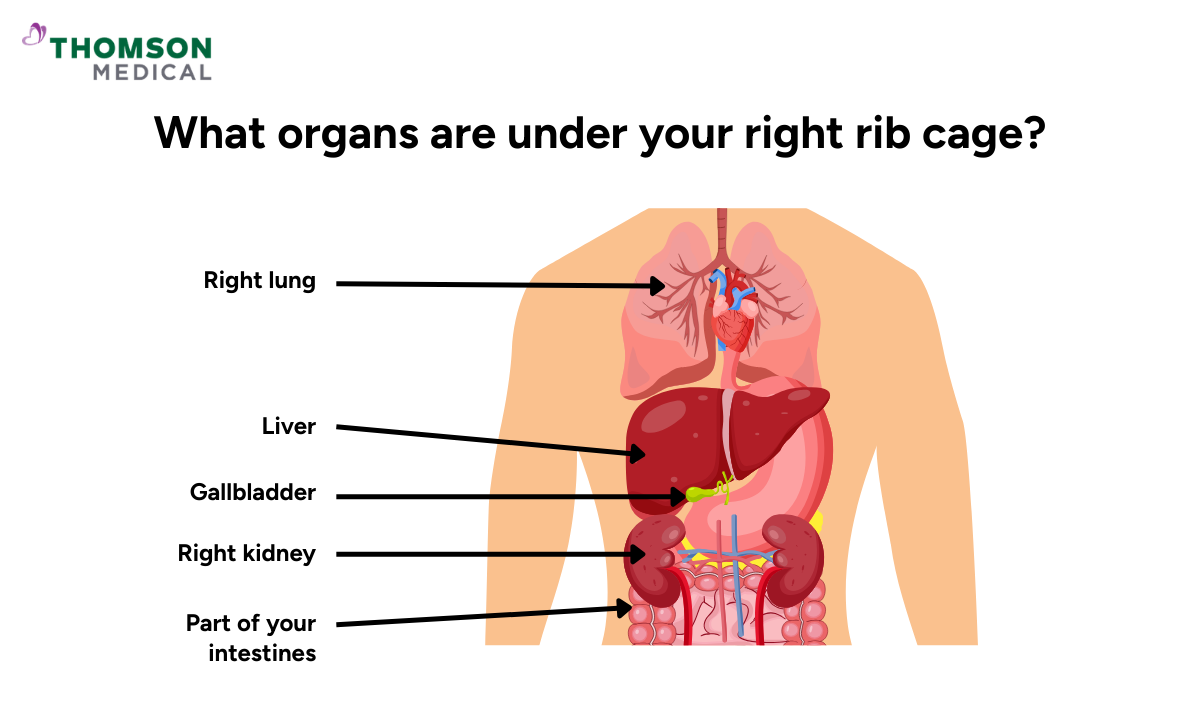
Several important organs sit beneath your right rib cage, which is why pain in this area can sometimes be difficult to assess. These include the liver, gallbladder, right kidney, right lung and its lining, and part of your intestines.
Because different organs can cause pain in similar spots, your doctor will ask you detailed questions about your symptoms. They want to understand exactly where the pain is, how it feels, how long it has been bothering you, and whether you notice any other symptoms.
Where exactly is your pain?
The area where you feel discomfort can offer important clues:
Pain under the ribs at the front often points to the liver, gallbladder, or part of your digestive system.
Along the side of your abdomen may suggest a kidney issue or a muscle strain.
A pain in your back is commonly linked to the kidney or spine.
Upper-right abdominal pain spreading to the shoulder can sometimes be a sign of a gallbladder problem.
You can note down whether your pain is constant or comes and goes, and whether it appears after eating, after lying down, or with movement. These patterns help your doctor narrow down the cause.
Our specialists
Loading...
When should you see a doctor about right rib cage pain?
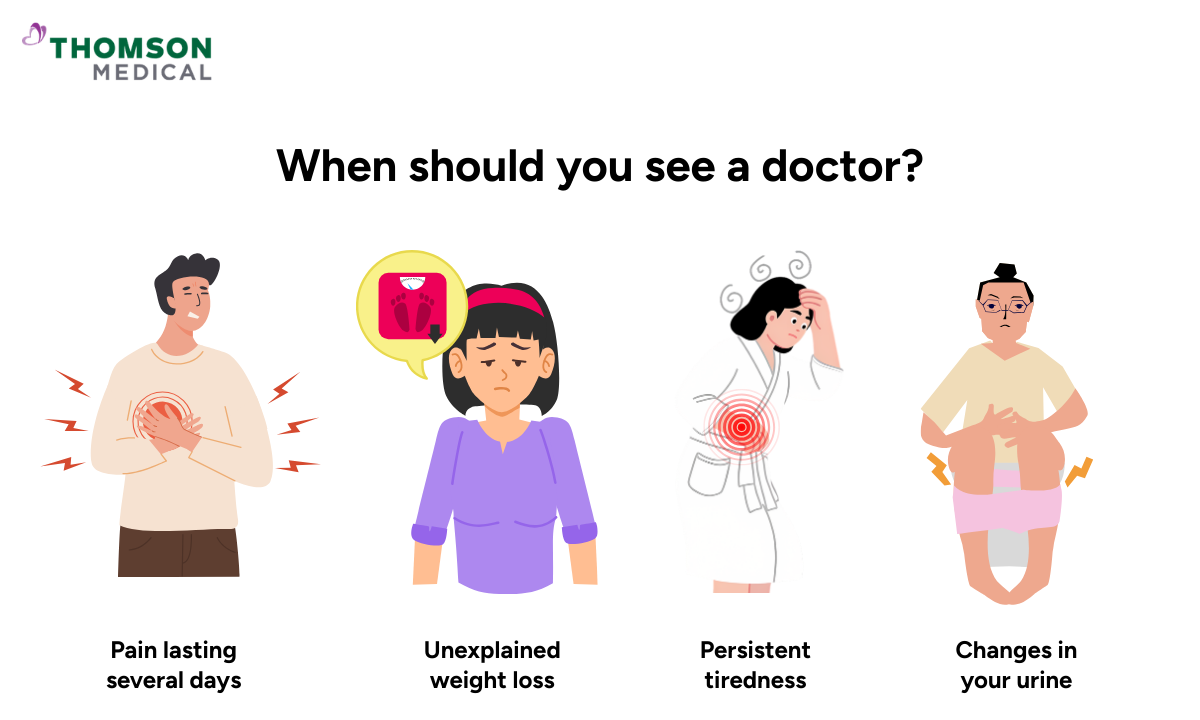
It is not always easy to tell when rib cage pain needs medical attention. In many cases, the discomfort improves with rest.
However, it is sensible to speak with a doctor if certain symptoms appear.
Pain that has lasted more than a few days without improvement
Pain that keeps coming back without a clear reason
Unexplained weight loss
Persistent tiredness or feeling generally unwell alongside the pain
Changes in your urine or bowel habits
New pain during pregnancy that concerns you
Many causes of right rib cage pain can be identified with the right assessment, and understanding what is behind your discomfort helps you and your doctor make informed decisions about your care.
If you have concerns about pain under your right rib cage, request an appointment with Thomson Medical. Our doctors can assess your symptoms in context and help determine the appropriate tests or next steps for your care.
What can cause pain under your right rib cage?
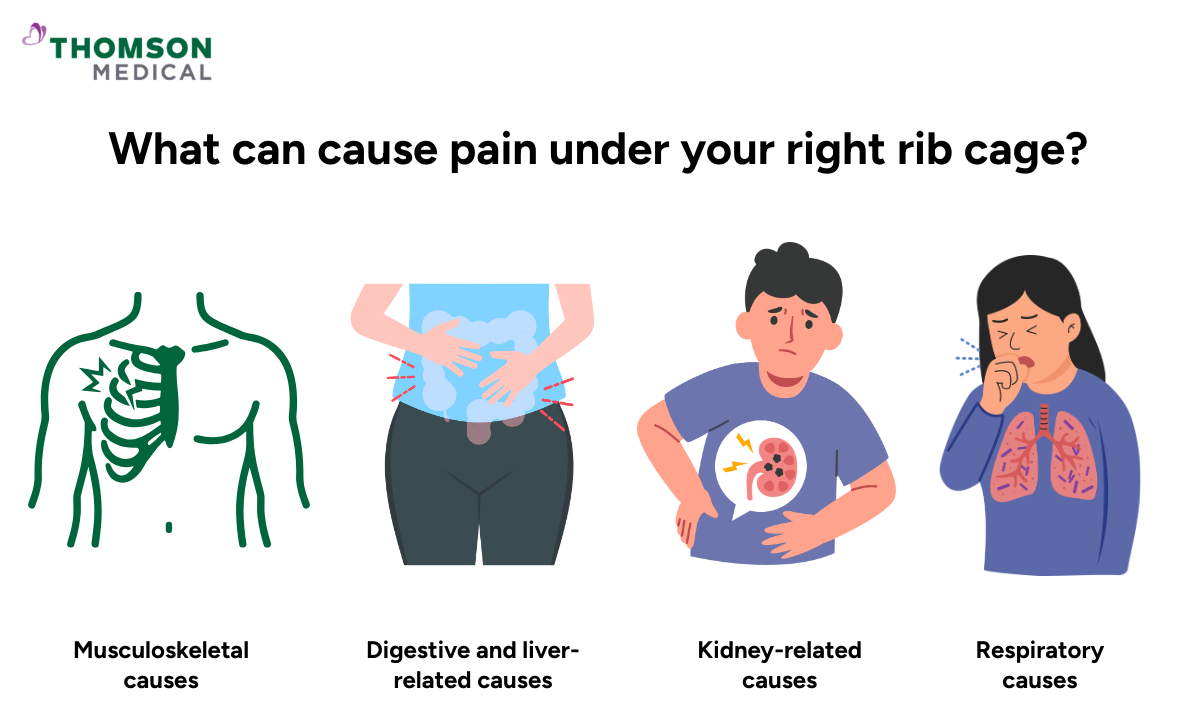
Pain on the right side of the rib cage can have many possible causes. Sometimes it comes from the muscles or joints around the ribs. In other cases, it may be related to organs that sit beneath the rib cage.
Musculoskeletal causes
These are the commonly known reasons people feel rib pain, and they're usually the least worrying.
The most common causes include:
Condition | Common symptoms | Common treatment |
Muscle strain | Pain worsens with movement or pressure | Rest, pain relief, heat or ice |
Costochondritis (inflammation where your ribs meet your breastbone) | Tenderness around the breastbone | Anti-inflammatory medication and rest |
Rib injury | Localised pain and tenderness after impact, like in an accident | Rest, pain relief and avoiding strenuous activity |
One useful clue is that musculoskeletal pain tends to shift or worsen with movement, deep breathing, or direct pressure on the area.
Digestive and liver-related causes
Digestive issues or liver problems can create discomfort in this area, sometimes after meals.
Common digestive and liver-related causes include:
Condition | Common symptoms | Common treatment |
Sudden sharp pain, often after fatty meals | Dietary changes, medication, or keyhole surgery | |
Liver conditions (inflammation, fatty liver, or cysts) | Dull ache or pressure under right ribs | Depends on the condition and is managed by your doctor |
IBS (a condition affecting how your intestines function) | Cramping, bloating, pain that comes and goes | Dietary changes, medication, or stress management |
These causes are important to consider because organ-related pain can sometimes mimic musculoskeletal pain, making it necessary for your doctor to investigate further.
Kidney-related causes
If your pain feels deeper and sits more toward your back or side, your kidneys might be worth considering.
The most likely kidney-related causes are:
Condition | Common symptoms | Common treatment |
Kidney stones | Deep, cramping pain toward the back or side | Hydration, pain relief, or stone removal procedures |
Kidney infection | Deep ache in the back or side | Antibiotics |
Kidney problems are a common source of deeper, back-orientated pain and are often considered when your discomfort is felt toward the side or back rather than the front of your rib cage.
Respiratory causes
When your pain is connected to breathing, your lungs or their surrounding lining may be involved.
Respiratory causes to be aware of include:
Condition | Common symptoms | Common treatment |
Pleurisy (inflammation of the lining around your lungs) | Sharp pain that worsens when breathing | Treating the underlying cause, pain relief |
Pneumonia (infection in your right lung) | Chest pain that worsens with breathing or coughing | Antibiotics or antiviral medication, and rest |
These causes are generally considered when your pain changes with breathing or coughing, helping doctors distinguish respiratory problems from other causes.
Shingles
The shingles virus can cause pain along the right side of your chest before any visible rash appears, which makes it easy to mistake for something else entirely. It's caused by the reactivation of the chickenpox virus, which can lie hidden in your body for decades.
Shingles is worth considering on its own:
Condition | Common symptoms | Common treatment |
Shingles | Burning or tingling pain along the chest | Antiviral medication, ideally started early, along with pain management |
Always speak with your doctor before starting any new treatment, particularly if your pain is persistent or the cause is unclear.
How is right rib cage pain diagnosed?
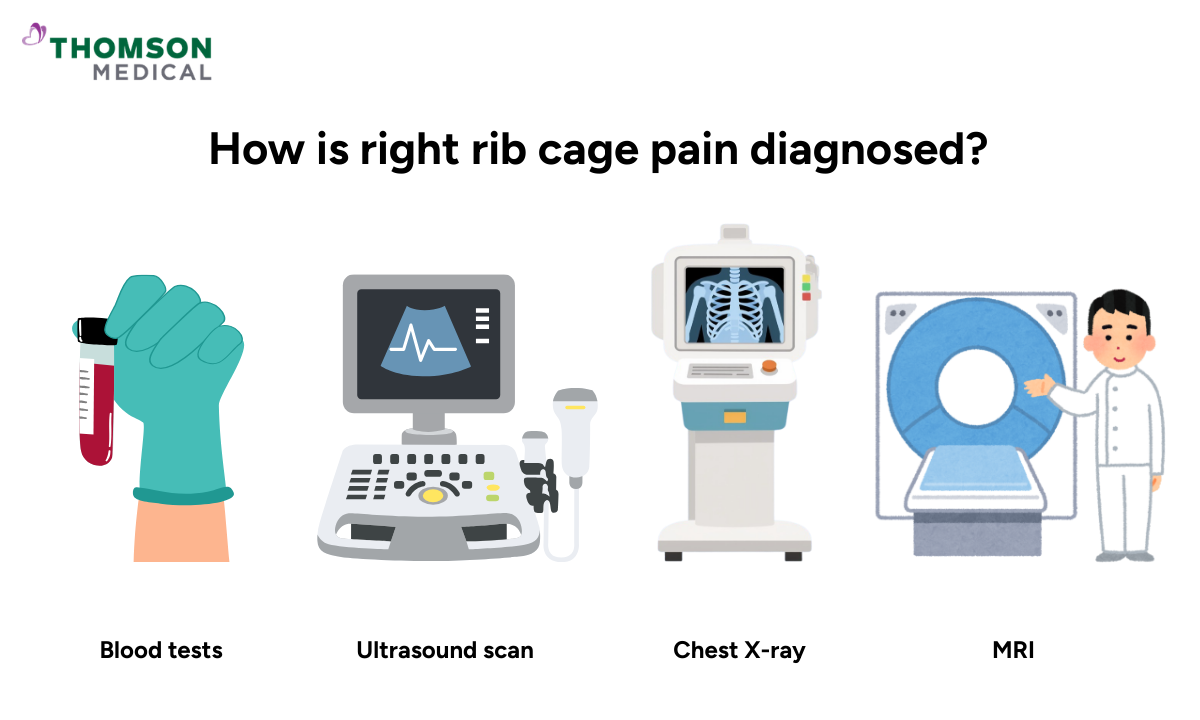
Your doctor will start by asking about your symptoms, medical history, and any other changes you have noticed.
Your doctor may recommend one or more of the following:
Blood tests to check for signs of infection, or to assess how your liver and kidneys are functioning
Urine tests to look for signs of a kidney infection or kidney stones
An ultrasound scan, a common first step when gallstones, liver problems, or kidney issues are suspected
A chest X-ray is useful for checking your lungs and ruling out pneumonia or a rib injury
CT scan or MRI, used when the cause isn't yet clear
Once the right tests are done, your doctor will have a much clearer picture of what's causing your pain and what to do about it.
Right rib cage pain is rarely something to panic about, but it is usually worth paying attention to. Most causes can be identified with the right assessment, and understanding what is behind your discomfort helps you and your doctor make informed decisions about your care.
If your pain is new or persistent or comes with other symptoms, speaking with a doctor is a reasonable next step.
A healthcare provider can advise on which tests, if any, are suitable for your situation. Request an appointment with Thomson Medical to discuss your symptoms, medical history, and overall health so you can understand the cause and explore the best approach to care.
FAQ
Why is my rib cage hurting on my right side?
There are many possible reasons, from a strained muscle to a digestive issue or a kidney problem. The location, nature, and timing of the pain can all offer clues.
Can gas cause pain in the right rib cage?
Yes, it can. Gas trapped in the large intestine can cause significant pressure and discomfort on the right side. This often improves with movement, passing gas, or a bowel movement.
Why does my right rib cage hurt more at night?
Lying down changes the pressure on your organs and muscles. Gallbladder pain, acid reflux, and muscle tension can all feel worse at night.
Can right rib cage pain be related to my heart?
Heart-related pain is more commonly felt on the left side. However, some heart conditions can cause referred pain in unexpected places. If you have any doubt, especially with other symptoms like breathlessness or dizziness, seek medical advice promptly.
Can I treat rib cage pain at home?
Mild pain from muscle strain or gas can often be managed at home with rest, gentle movement, and over-the-counter pain relief.
What does right rib cage pain after eating mean?
Pain that comes on after eating, particularly after a fatty meal, is a common sign of a gallbladder problem. It may also be related to acid reflux or IBS.
The information provided is intended for general guidance only and should not be considered medical advice. For personalised recommendations and tailored advice based on your unique situations, please consult a specialist at Thomson Medical. Request an appointment with Thomson Medical today.
For more information, contact us:
Thomson Medical Concierge
- 8.30am - 5.30pm
- WhatsApp: 9147 2051
Need help finding the right specialist or booking for a group?
Our Medical Concierge is here to help you. Simply fill in our form, and we'll check and connect you with the right specialist promptly.
Notice:
The range of services may vary between Thomson clinic locations. Please contact your preferred branch directly to enquire about the current availability.
Get In Touch