
.png%3Fbranch%3Dprod&w=3840&q=75)
Hearing that you have stage 0 cervical cancer can be unsettling. However, this is the earliest stage possible, which means that abnormal cells have been detected before they could spread or develop into invasive cancer.
With appropriate treatment and monitoring, many of those with this diagnosis go on to recover fully. Learning more about this stage and the steps ahead can help you feel calmer and more confident about your care.
What is stage 0 cervical cancer?
.png?branch=production)
Stage 0 cervical cancer, also known as carcinoma in situ, is the very earliest form of cervical cancer. At this stage, abnormal cells are found only on the surface layer of your cervix and haven't grown deeper into the tissue – which is why it's sometimes called "pre-cancer" or "non-invasive cancer".
If you've just received this diagnosis, it's completely natural to feel worried or uncertain. What's important to know is that stage 0 is usually discovered through routine screening tests like Pap smears or HPV testing, often before any symptoms appear. Finding it at this early stage means you have more options to treat this issue before it progresses any further.
Carcinoma in situ vs. cervical cancer
Knowing the distinction between different stages of cervical changes can help you feel more informed about your diagnosis and what to expect next.
Key differences between stage 0 and stage 1 cervical cancer
With stage 0 cervical cancer, the abnormal cells stay on the surface layer of your cervix without growing deeper. In stage 1, the cells have started to grow into the underlying tissue, though they remain within the cervix.
How these stages are treated can be different. Stage 0 usually involves removing just the abnormal surface cells, while stage 1 may need more extensive procedures like surgery. Your healthcare team will discuss which approach is right for your individual situation.
Risk of cancer progression
Fortunately, many of these abnormal cells can be addressed early on with appropriate removal or monitoring. However, without treatment, precancerous cells or stage 0 cervical cancer may progress over time.
A persistent high-risk HPV infection is the main factor that influences progression, as the virus continues to affect how your cervical cells develop. Your immune system and how soon you receive treatment also play a role.
How is stage 0 cervical cancer diagnosed?
Stage 0 cervical cancer is most often discovered during routine cervical screening, such as a Pap smear or HPV test. These tests can detect abnormal cells on the surface of your cervix.
If your screening shows abnormal cells, your doctor will usually recommend a colposcopy. This allows them to examine your cervix more closely using a special microscope. A small tissue sample (biopsy) may be taken to confirm what's happening and guide the next steps in your care.
Cervical cancer specialists in Singapore
Loading...
Stage 0 cervical cancer treatment options
Treatment for stage 0 cervical cancer focuses on removing or destroying the abnormal cells before they have a chance to develop further. Your doctor will talk through the different approaches with you and help you choose what feels right for your situation.
Common treatment procedures include:
Loop electrosurgical excision procedure (LEEP):
The LEEP procedure involves using a thin wire loop heated by electrical current to remove the abnormal tissue from your cervix.
You might experience mild cramping afterwards, similar to period discomfort, and you can return to normal activities within a few days.
Cone biopsy (conisation):
Your doctor removes a cone-shaped piece of cervical tissue that contains the abnormal cells.
Recovery usually takes a few weeks, and you may experience some spotting or light bleeding during this time.
Laser therapy:
Laser therapy uses focused light energy to destroy abnormal cells on your cervix.
You may notice some watery discharge for a few weeks afterwards as your cervix heals.
These procedures are designed to remove only the affected tissue while keeping as much of your healthy cervix intact as possible. If your abnormal cells are very small and haven't changed, your doctor might suggest careful monitoring instead of immediate treatment.
It's worth knowing that many of these approaches are fertility-sparing, so your future family plan remains possible.
If you're unsure which treatment approach is right for you or have questions about how these procedures might affect your body, schedule an appointment with Thomson Medical. Our doctors can assess your individual situation and help you understand your options in detail.
Preventing progression to invasive cancer
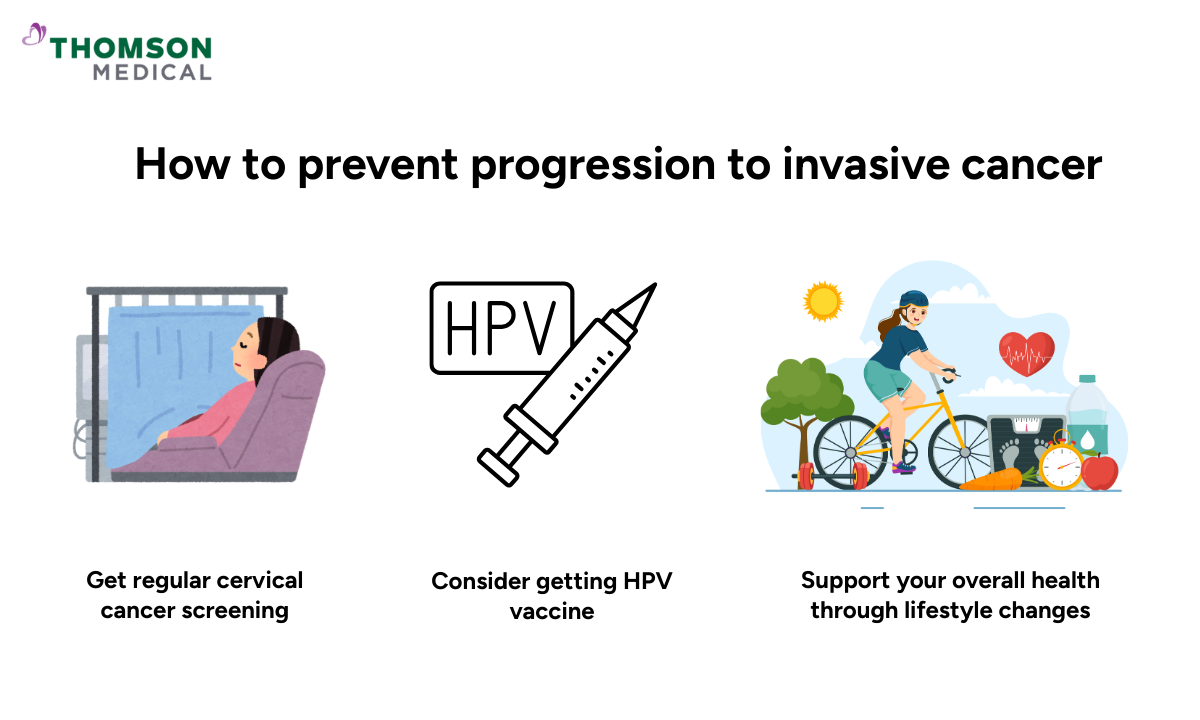
Looking after your cervical health is something you can actively do. There are several practical steps that can help support your wellbeing and catch any changes early.
Importance of regular screening for cervical cancer
Regular cervical screening through Pap smears and HPV testing is one of the most important ways to protect your cervical health. These tests can detect abnormal or precancerous cells at the earliest stages, giving you and your doctor the opportunity to address any changes promptly.
Your follow-up appointments are just as important as your initial screening. They help monitor for any new or returning abnormal cells, ensuring nothing is missed over time. Staying consistent with these check-ups is one of the best things you can do for your long-term cervical health.
HPV vaccination role
The HPV vaccine helps protect you against the HPV types most often linked to cervical cancer, including types 16 and 18. If you haven't been vaccinated yet, it's worth discussing with your doctor whether it might be suitable for you.
The vaccine works best when given before you're exposed to HPV, which is why it's usually recommended during adolescence. However, adults can still benefit from vaccination. Alongside your regular cervical screening, the HPV vaccine is another way to help look after your cervical health.
Lifestyle factors and risk reduction
Your overall wellbeing plays a role in how your body responds to HPV. If you smoke, stopping can help strengthen your immune system. Eating well, staying active, and managing stress all support your body's natural defences.
Using protection such as condoms during sexual activity can lower your risk of HPV transmission, though it's worth noting that HPV can still spread through skin-to-skin contact in areas not covered by a condom. Limiting your number of sexual partners and having open conversations with partners about sexual health also contribute to reducing exposure.
Think of lifestyle changes as ways to support the protective steps you're already taking through vaccination and check-ups.
If you're due for cervical screening or have questions about HPV vaccination, schedule an appointment with Thomson Medical. Our doctors can help you create a preventive care plan tailored to your needs.
FAQ
Is stage 0 cervical cancer considered cancer?
Yes, stage 0 cervical cancer (also called carcinoma in situ) is considered cancer because it involves abnormal cells on the surface of your cervix. However, these cells haven't invaded deeper tissues or spread to other parts of your body. Stage 0 is the earliest form of cervical cancer, and there are treatment options available to address it.
How long does stage 0 cervical cancer treatment take?
Treatment for stage 0 cervical cancer is usually quick and minimally invasive. Procedures like LEEP, cone biopsy, or laser therapy are often done as outpatient procedures, meaning you can go home the same day. Most people are able to resume normal activities within a few days to a couple of weeks, depending on the procedure and how your body heals.
Can I get pregnant after stage 0 cervical cancer treatment?
In many cases, pregnancy is still possible after treatment for stage 0 cervical cancer. Procedures like LEEP or cone biopsy remove only the abnormal tissue while leaving your uterus and most of your cervix intact. Your doctor can discuss your individual situation and any considerations for future conception or pregnancy.
How do you know if you have stage 0 cervical cancer?
Stage 0 cervical cancer usually doesn't cause noticeable symptoms, which is why routine screening is so important. A Pap smear or HPV test may detect abnormal cells, and if needed, a colposcopy with a biopsy can confirm what's happening. Regular screening is your best tool for catching any cervical changes early.
What are the side effects of stage 0 cervical cancer treatment?
Side effects are generally mild and temporary. You may experience light vaginal bleeding, cramping, or discharge for a few days to weeks after your procedure. Occasionally, infection or cervical scarring can occur, which your doctor will monitor during follow-up appointments. Most women recover well, especially with careful treatment and ongoing care.
What are the survival outcomes for stage 0 cervical cancer?
Many women who are treated for stage 0 cervical cancer respond well to treatment. Because the abnormal cells are confined to the surface and haven't invaded deeper tissues, treatment options are available to address them. With early detection and appropriate care, many women go on to live healthy lives.
The information provided is intended for general guidance only and should not be considered medical advice. For personalised recommendations and tailored advice based on your unique situations, please consult a specialist at Thomson Medical. Request an appointment with Thomson Medical today.
For more information, contact us:
Thomson Specialists (Women's Health)
Thomson Women's Clinic (TWC)
- Novena:
6592 6686 (Call), 8611 8986 (WA) - Bukit Batok:
6569 0668 (Call), 8686 3525 (WA) - Choa Chu Kang:
6893 1227 (Call), 8282 1796 (WA) Jurong:
6262 8588 (Call), 6262 8588 (WA)- Katong (female doctor):
6970 2272 (Call), 8611 9020 (WA) - Punggol:
6243 6843 (Call), 8811 0328 (WA) - Sembawang: 6753 5228
- Sengkang: 6388 8125
- Serangoon (female doctor): 6382 3313
- Tampines: 6857 6266
- Tiong Bahru: 6276 1525