

Fibroids are better known for heavy periods and pelvic pressure, but they could sometimes affect vaginal discharge as well. Fibroids that sit within the uterine cavity, or ones that have begun to break down, may produce a watery discharge, and a larger fibroid pressing on the cervix may change the pattern of what you notice.
Discharge changes have many causes, though, and most have nothing to do with fibroids. Here's what fibroids can and cannot explain, what different changes in discharge may indicate, and when it's worth seeing a doctor.
What are uterine fibroids?
Uterine fibroids are non-cancerous growths that develop around or within your uterus (womb). They are made of muscle and fibrous tissue and could range from very small (about the size of a pea) to several centimetres across.
They are most commonly diagnosed during a woman's reproductive years, typically between the ages of 30 and 50. This is because, although the exact cause of fibroids is not fully understood, oestrogen and progesterone – the hormones that regulate your menstrual cycle – play a role in stimulating their growth.
Do uterine fibroids cause watery discharge?
Fibroids do sometimes cause watery discharge, but this tends to occur only in certain cases, depending on the type and behaviour of the fibroid. Most women with fibroids do not experience this symptom.
However, when these growths do cause watery discharge, it is usually due to changes in the uterus that increase fluid production or cause fibroid tissue to gradually break down. Other causes of watery discharge include:
Increased uterine secretions:
Fibroids may stimulate the lining of your uterus to produce more fluid than usual. This may result in a persistent watery or clear discharge.
Fibroid degeneration:
When a fibroid outgrows its blood supply, it begins to break down in a process called degeneration.
This could lead to watery discharge that is sometimes tinged with blood, significant pelvic pain, and occasionally a mild fever.
Distortion of the uterine cavity:
Submucosal fibroids, which grow into your uterine cavity, may irritate the uterine lining and increase fluid production.
Watery discharge is often harmless, but it could sometimes be a sign of fibroid degeneration or changes within the uterine cavity. Request an appointment with Thomson Medical to determine the cause of your symptoms and discuss appropriate treatment options.
What types of discharge may fibroids cause?
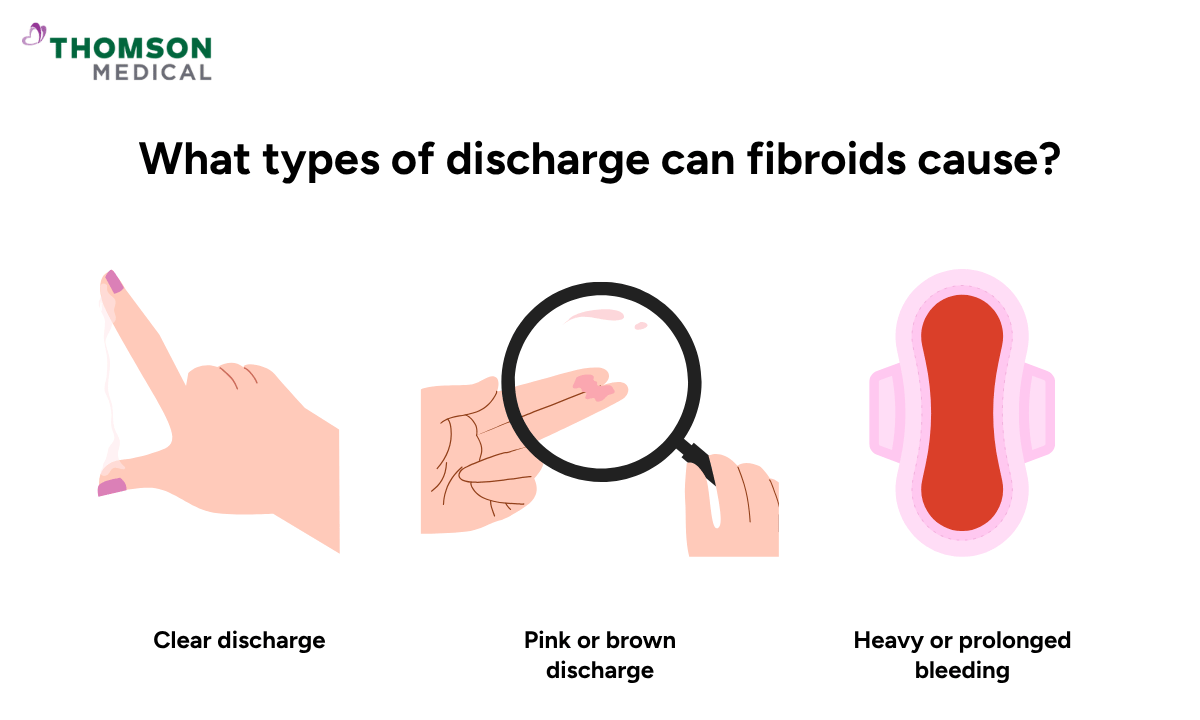
Fibroids could change the appearance of your vaginal fluids in several ways. While you might experience clear, watery discharge, you might notice colour changes or irregular bleeding.
Clear discharge
This is thin and watery and may increase in volume as fibroids grow larger. If it is odourless and painless, it is not usually a cause for concern, but it is still worth mentioning to your doctor at your next appointment.
Pink or brown discharge
This usually contains small amounts of blood. It may appear between periods and is often related to irregular bleeding caused by fibroids. This is commonly linked to hormonal changes or irritation of your uterine lining and is not usually a sign of something serious.
Heavy or prolonged bleeding
This is the most common discharge concern with fibroids. Some women also pass clots or experience spotting between cycles. This could sometimes be mistaken for abnormal discharge when it is actually a form of irregular bleeding.
Changes in discharge are not always due to fibroids. However, persistent discharge, bleeding between periods, or symptoms such as pain and fever should be checked by a doctor.
Our O&G specialists
Loading...
When should you see a doctor?
Watery discharge is not always a cause for concern, but some symptoms may suggest another condition that needs medical attention. Seek medical advice promptly if you notice any of the following:
A foul or unusual smell
Fever
Severe pelvic pain
Heavy bleeding alongside the discharge
Discharge after menopause
Heavy bleeding that leads to anaemia
Rapid enlargement of the abdomen
Watery discharge after menopause should always be evaluated by a doctor. While there are many possible causes, it could occasionally be linked to a more serious condition, including endometrial cancer. Seeing your doctor promptly means any underlying cause may be identified and treated early.
When watery discharge is accompanied by severe pelvic pain or systemic symptoms such as fever, early assessment is important. Request an appointment with Thomson Medical for a full gynaecological evaluation and diagnostic testing if needed.
How are fibroids treated when they cause watery discharge?
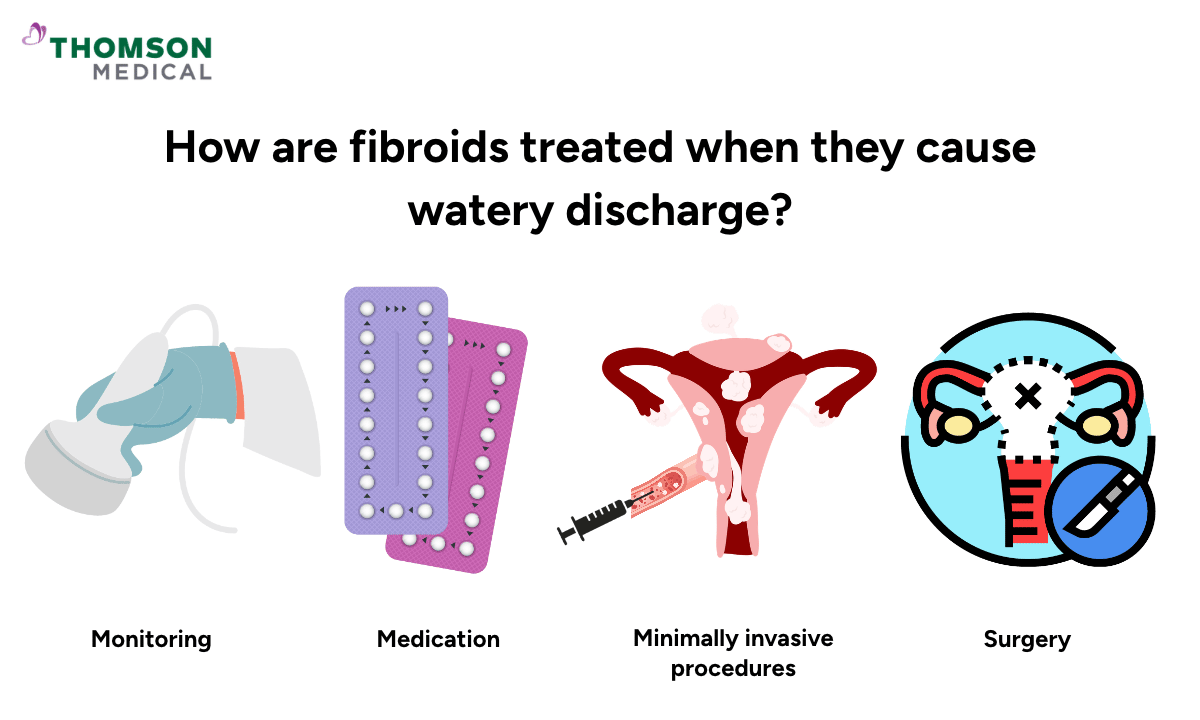
Watery discharge is usually a symptom of the fibroids themselves. This means treatment focuses on managing the fibroids directly.
Monitoring
If your discharge is mild and your fibroids are not causing significant symptoms, your doctor may suggest a period of monitoring before considering any treatment. Follow-up care may include a pelvic examination to assess your uterus and surrounding structures and a pelvic ultrasound to monitor the size, number, and location of your fibroids over time.
Medication
In some cases, medication may be used to help manage the symptoms caused by fibroids or reduce their effects on the uterus. Options may include:
Hormonal treatments to regulate bleeding
Anti-inflammatory pain relief to ease discomfort
GnRH agonists or antagonists, which temporarily lower your oestrogen levels, which may help shrink fibroids
Minimally invasive procedures
If symptoms persist despite medication, your doctor may discuss procedures designed to shrink or destroy fibroid tissue while avoiding major surgery. Common options include:
Uterine fibroid embolisation (UFE): which blocks the blood supply to fibroids and causes them to shrink over time
MRI-guided focused ultrasound: which uses targeted ultrasound energy to destroy fibroid tissue without surgical incisions
These procedures generally involve shorter recovery times than open surgery and could effectively reduce fibroid-related symptoms.
Surgery
Surgery may be recommended when symptoms are severe, fibroids are large, or other treatments have not provided sufficient relief.
Options include:
Myomectomy: which removes fibroids while preserving the uterus
Hysterectomy: which removes the uterus so that fibroids cannot return
Treating or removing the fibroids often helps resolve the discharge, particularly when it is linked to degeneration or distortion of the uterine cavity.
FAQ
What does fibroid discharge look like?
Discharge linked to fibroids is most often clear and watery. It may also be heavier than your usual discharge and is sometimes tinged pink or brown when a little blood is mixed in. It is typically odourless unless an infection is present.
What colour is fibroid discharge?
The colour can vary depending on the cause:
- The most common type is clear or watery discharge, which is often related to increased fluid production from the uterine lining.
- Pink discharge may contain a small amount of fresh blood mixed with fluid and is often linked to irregular bleeding.
- Brown discharge may contain older blood leaving the uterus and may appear between periods.
Can fibroids cause smelly periods?
Fibroids do not usually cause a foul smell on their own. However, they can affect menstrual bleeding and discharge in ways that make odour more noticeable.
- Heavier bleeding:
- Heavier blood flow that stays in place for longer gives bacteria more opportunity to grow, which produces a stronger odour.
- Prolonged periods:
- Fibroids can extend the length of your period. When blood stays in your vaginal canal for a longer time, odour can become more noticeable.
- Associated infection:
- In some cases, fibroids that distort the uterine cavity or undergo degeneration can increase the risk of infection.
- Infection, such as bacterial vaginosis or a sexually transmitted infection, can cause discharge with a strong or unpleasant smell, often alongside fibroid symptoms.
How long does fibroid discharge last?
The duration varies. Some women notice it come and go over weeks or months, while discharge related to fibroid degeneration is often temporary. Persistent or worsening discharge should be evaluated by a doctor.
When should I worry about watery discharge?
Watery discharge should be assessed if it is:
- Occurring after menopause
- Persistent and unexplained
- Accompanied by pain, fever, or pelvic discomfort
- Mixed with blood and unrelated to your menstrual period
Can large fibroids cause excess discharge?
Yes. Larger fibroids, particularly those that distort the uterine cavity, may increase fluid production or cause abnormal bleeding that appears as vaginal discharge.
The information provided is intended for general guidance only and should not be considered medical advice. For personalised recommendations and tailored advice based on your unique conditions, request an appointment with Thomson Medical.
For more information, contact us:
Thomson Specialists (Women's Health)
Thomson Women's Clinic (TWC)
- Novena:
6592 6686 (Call), 8611 8986 (WA) - Bukit Batok:
6569 0668 (Call), 8686 3525 (WA) - Choa Chu Kang:
6893 1227 (Call), 8282 1796 (WA) Jurong:
6262 8588 (Call), 6262 8588 (WA)- Katong (female doctor):
6970 2272 (Call), 8611 9020 (WA) - Punggol:
6243 6843 (Call), 8811 0328 (WA) - Sembawang: 6753 5228
- Sengkang: 6388 8125
- Serangoon (female doctor): 6382 3313
- Tampines: 6857 6266
- Tiong Bahru: 6276 1525