
.png%3Fbranch%3Dprod&w=3840&q=75)
If you have just had a positive pregnancy test after in vitro fertilisation (IVF), you may be feeling a mix of hope, excitement, and anxiety. After everything you've been through to reach this point, it's natural to wonder when the pregnancy will be stable. While the risks never completely disappear, knowing the key milestones of early pregnancy may help you feel more confident as each week passes.
What does “safe” mean in an IVF pregnancy?
.png?branch=production)
In an IVF pregnancy, being “safe” does not mean being risk-free. Rather, it means that your pregnancy is progressing as expected at this stage and that the risk of miscarriage has decreased.
As your pregnancy develops, your doctor will monitor several signs:
Rising hCG levels, a pregnancy hormone that usually increases quickly in the early weeks
A gestational sac forming, which is usually the first sign of pregnancy you may see on an ultrasound scan
A yolk sac, followed by a foetal pole, which are early signs that your baby is developing
A heartbeat, which is a reassuring sign that your pregnancy is developing
Steady growth on your ultrasound scans over time
How IVF pregnancies are monitored
Careful monitoring helps your doctor confirm that your pregnancy is developing as expected and to identify any concerns early.
In the early weeks, you may have:
Blood tests to track hCG levels
An early ultrasound, often performed between 5 and 7 weeks, to confirm your pregnancy's location and development
Further appointments to review your symptoms and assess your progress
As your pregnancy progresses and these early milestones are reached, your care will generally follow the same pattern as any other pregnancy. However, additional scans or appointments may be recommended if there are specific risk factors.
After how many weeks is an IVF pregnancy considered safe?
Although there's no single week when a pregnancy becomes certain, your risk may reduce as each week passes. Knowing what's happening at each stage could help reassure you during the early weeks.
Weeks 4 to 5
Your pregnancy test is positive, and your hCG levels should be rising. A gestational sac may be visible on an early scan. It's still very early, and it is normal not to see everything clearly on a scan at this stage.
Weeks 5 to 6
A yolk sac appears, and sometimes an early foetal pole may be visible. These are encouraging signs that the pregnancy is developing as it should.
Weeks 6 to 7
This is often the first important milestone. If a heartbeat is detected at this point, the risk of miscarriage drops considerably.
Weeks 8 to 10
As the embryo grows steadily at this stage, the heartbeat becomes stronger and more consistent, so you may feel more reassured.
Weeks 10 to 12
The placenta begins to take over hormone production from the progesterone medication. As it does, the risk of miscarriage reduces.
After 12 weeks
You're entering the second trimester, and the risk of miscarriage tends to be lower after 12 weeks.
Reaching milestones such as seeing a heartbeat or entering the second trimester may be reassuring, but a consultation with a doctor could help to monitor the pregnancy's progress. Request an appointment with Thomson Medical.
Our fertility doctors in Singapore
Loading...
Why are the early weeks more delicate after IVF?
The first trimester, especially weeks 4 to 10, is still a key stage of your pregnancy. Although IVF helps you conceive, the pregnancy itself follows the same path as a natural conception.
During these early weeks:
The embryo is still implanting in your womb
The placenta is just beginning to form
Your body still depends on progesterone medication to support the pregnancy
Any underlying fertility conditions that led you to IVF may also influence these early weeks
A multiple pregnancy, if more than one embryo was transferred, may carry extra risks
As the placenta takes over hormone production, the risk of complications usually reduces. This usually happens towards the end of the first trimester, which is why reaching this point is considered a reassuring milestone.
What may affect IVF pregnancy safety?
.png?branch=production)
Pregnancy milestones give your doctor a clear picture of how your pregnancy is progressing. However, several factors could also affect your risk of complications.
Progesterone support
Progesterone helps maintain the uterine lining during early pregnancy while the placenta develops. Your doctor will advise how long you'll need progesterone support and monitor your progress.
Your age and health
The risk of miscarriage increases after the age of 35. Conditions such as diabetes or high blood pressure may also require closer monitoring throughout your pregnancy.
Embryo quality
Embryos that have been genetically tested through preimplantation genetic testing (PGT) tend to carry a lower risk of miscarriage.
Number of embryos transferred
A twin or multiple pregnancy comes with a higher chance of complications, including preterm birth and low birth weight; your doctor will monitor this carefully.
Uterine health
Fibroids, polyps, or issues with the uterine lining could affect how well a pregnancy develops. If any of these were identified before your IVF cycle, your doctor will take them into account as part of your care.
These factors help your doctor assess your risk and tailor your care. Many women with one or more of these risk factors still go on to have healthy pregnancies.
Warning signs to watch for
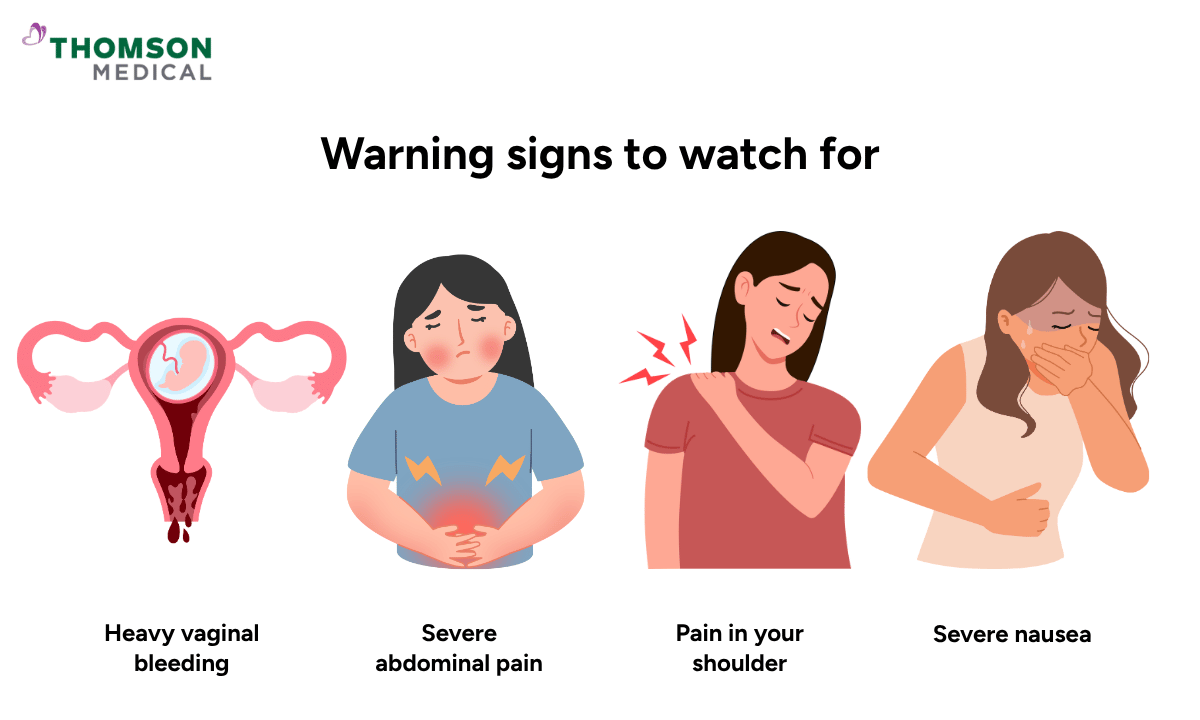
Most IVF pregnancies progress normally. However, some symptoms should be checked immediately to rule out complications.
Contact your doctor if you notice:
Severe abdominal pain or cramping
Pain in your shoulder, which may sometimes point to an ectopic pregnancy
A sudden disappearance of pregnancy symptoms
Persistent or severe nausea and vomiting
Seeking help early gives your doctor the best chance of identifying and managing any complications.
Every IVF pregnancy is unique, and the right monitoring plan depends on your individual circumstances. Request an appointment with Thomson Medical for a consultation with a pregnancy specialist.
FAQ
After how many weeks is an IVF pregnancy considered safe?
Most doctors consider the risk of miscarriage to be much lower after 12 weeks of pregnancy. By this point, the placenta has largely taken over hormone production, the first trimester is ending, and the risk is considerably lower than in the early weeks. Once a foetal heartbeat is confirmed on ultrasound, many women feel more confident about their pregnancy's progress.
Is an IVF pregnancy more risky than a natural pregnancy?
IVF pregnancies may carry a slightly higher risk of certain complications. However, much of this is linked to factors such as maternal age, underlying infertility, or existing health conditions rather than the IVF process itself. Many IVF pregnancies progress normally and result in healthy babies.
Can I exercise or travel during an IVF pregnancy?
In most cases, yes. Light to moderate exercise is generally safe, and travel is usually possible once your pregnancy is progressing well. Your doctor may advise avoiding high-impact activities or making temporary adjustments based on your individual circumstances.
When is the most critical period after IVF?
The first trimester, particularly between weeks 4 and 10, is considered the most delicate period. This is when implantation occurs and the baby's major organs begin to develop.
Are there extra precautions needed during IVF pregnancy?
Most women are advised to take fertility medications exactly as prescribed, attend all scheduled appointments, and avoid heavy lifting or intense activity during the early weeks of pregnancy.
Can complications still happen after the first trimester?
Yes. Reaching the second trimester significantly reduces the risk of miscarriage, but complications can still occur later in pregnancy. These may include gestational diabetes, high blood pressure, preterm birth, or placental problems.
The information provided is intended for general guidance only and should not be considered medical advice. For personalised recommendations and tailored advice based on your unique conditions, request an appointment with Thomson Medical.
For more information, contact us:
Thomson Fertility Centre
- Paragon: 6252 7766
- Novena: 6399 3758, 8811 0358 (WA)