

The sharp, cramping pain in your lower right abdomen that came out of nowhere, and now you can't stop wondering what's causing it. It's unsettling not knowing whether to push through or go to your doctor.
Appendicitis is one of the most common abdominal emergencies, and while it can sound alarming, it's very treatable when caught early.
Understanding what appendicitis looks like and what to do about it can help you make that call with confidence.
What is appendicitis?

Your appendix is a small, finger-shaped pouch sitting in the lower right side of your abdomen. Most of the time, it’s quietly there and doesn’t cause any trouble. But when it becomes inflamed, it causes a condition called appendicitis.
Appendicitis affects people of all ages, from children to adults in their 30s and beyond. Being informed is the first step to responding well.
What causes appendicitis?
Most of the time, appendicitis starts with a blockage. The most common causes include a buildup of hardened stool, mucus, or even a small infection blocking the opening of your appendix. When this happens, bacteria can multiply inside, which causes swelling, pressure, and eventually pain.
In some cases, no clear cause is identified, and appendicitis can occur without obvious explanation. This is not uncommon, and it's usually not related to anything you ate, did, or avoided. What matters is recognising the signs early and seeking care promptly.
Symptoms of appendicitis
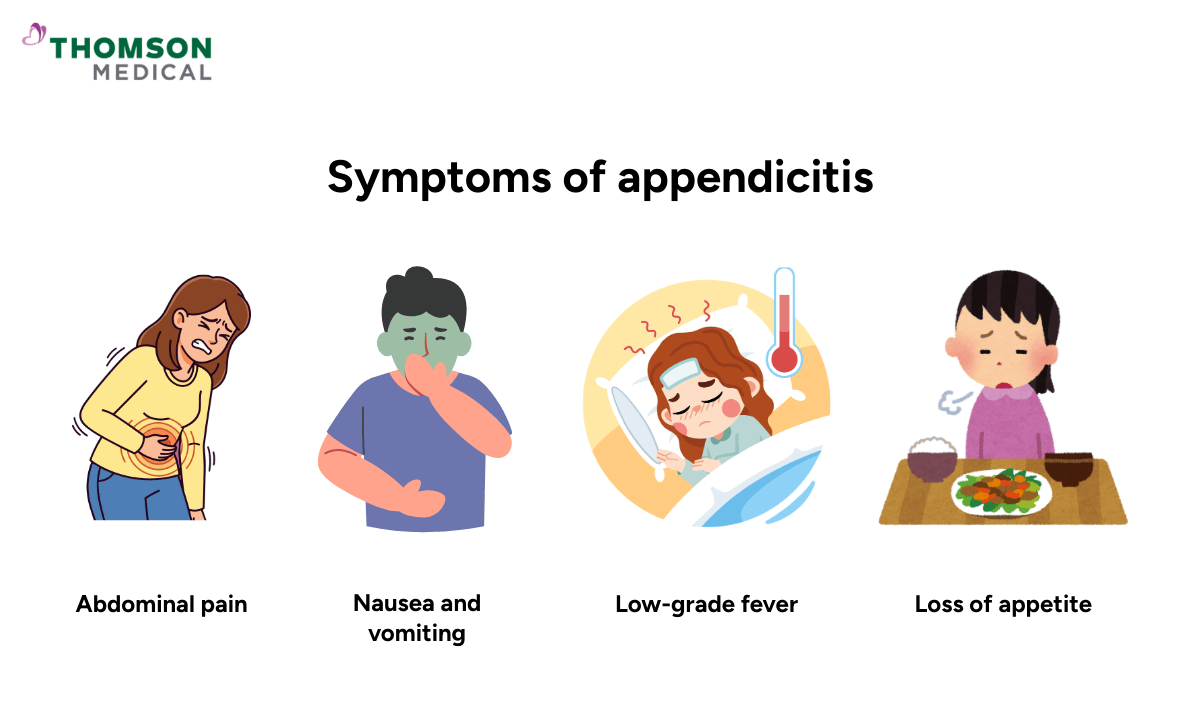
When appendicitis happens, pain is usually the first sign. But not all abdominal pain points to appendicitis.
In fact, appendicitis pain has distinctive patterns that can help you know when it's time to seek care.
You may notice:
Pain that starts around your belly button, then shifts to the lower right abdomen over several hours
The pain worsens when you move, cough, or press on that area
Nausea and sometimes vomiting
Low-grade fever
Loss of appetite (you don't feel like eating)
The lower-right pain is the key sign of appendicitis. When you press on that area and release quickly, you may notice a sudden sharp pain. This is called rebound tenderness, which means the lining around your appendix is irritated and inflamed. It’s often a sign that your body may need immediate medical attention.
That said, not everyone experiences appendicitis the same way:
In children:
The symptoms can be harder to pinpoint and may look more like general stomach upset.
In pregnant women:
The pain may feel higher up, as the appendix shifts position during pregnancy.
In older adults:
Symptoms can be more subtle and easy to overlook.
If the pain feels different from anything you've experienced before or keeps getting worse rather than easing off, please don't wait for it to pass. Seeing your doctor will give you the clarity and the peace of mind you need.
If you're experiencing any of these symptoms, schedule an appointment with Thomson Medical for a thorough evaluation.
Our urgent care specialist
Loading...
When you need immediate attention
If you have persistent pain in your lower right abdomen, especially alongside any of these symptoms, seek immediate medical care immediately. Try not to eat or drink while you’re waiting, as surgery may be needed later.
Go to the emergency department if:
The pain is severe and getting worse by the hour
Your abdomen feels rigid or board-like
You have a high fever (above 38°C)
The pain suddenly improves, then returns even more intensely.
If you notice any of these signs, don't wait to see if things improve on their own. Appendicitis isn't something to monitor overnight, and seeking care early can help prevent complications and support a smoother, faster recovery.
How is appendicitis diagnosed?
If your doctor suspects appendicitis, they'll work through a straightforward process to diagnose it.
Here’s what you can expect:
Physical exam:
Your doctor will gently press on specific areas of your abdomen to check for tenderness.
They'll ask about your symptoms, when the pain started, and whether it's been moving or changing.
Blood and urine tests:
A blood test checks your white blood cell count. If you have a high count, it may mean your body is fighting an infection.
A urine test helps rule out conditions like kidney stones or a urinary tract infection, which can feel similar to appendicitis.
Imaging:
An ultrasound is usually the first imaging test and is particularly common for children and pregnant women.
A CT scan may follow for adults, giving a more detailed view.
The process is usually quick and not painful. Your doctor will explain what each result means as they go, so you're never left guessing.
Treatment options for appendicitis

There are options available, and your doctor will help you understand what is suitable for your situation.
Surgery (Appendectomy)
Surgery is the most common treatment for appendicitis. Most cases are done laparoscopically. This means your doctor makes small incisions and uses a tiny camera with specialised instruments to gently remove the appendix.
Recovery time varies, but many people go home within a day or two and are back to normal activities within one to two weeks.
In some cases, particularly if the appendix has already ruptured, your doctor may need to perform open surgery instead. This involves a slightly larger incision, and recovery may take a little longer. Your doctor will explain what to expect and support you every step of the way.
Antibiotics
In some mild cases, antibiotics may be enough to manage the inflammation without immediate surgery. Many people do well with this approach.
That said, there’s a chance appendicitis may return within a year, and surgery could still be needed later. Your doctor will discuss this with you openly so you can make an informed decision together.
Appendicitis can feel frightening when you are in the middle of it, but most people come through treatment well and return to their normal lives sooner than they expect. What matters most is not waiting. The earlier you seek care, the smoother your recovery is likely to be. If something feels off, trust your instinct and get it checked.
If you're concerned about sudden or worsening abdominal pain, schedule an appointment with Thomson Medical. Our specialists are here to evaluate your symptoms and guide you towards the right care.
FAQ
Can appendicitis resolve on its own?
In rare cases, mild appendicitis may settle without treatment. But there's no way to know which cases will, and the risk of rupture is real. Waiting it out at home isn't a safe strategy. If you're experiencing symptoms, it's best to get checked.
How long can appendix pain last?
Appendicitis pain typically worsens over 6–72 hours. It doesn't come and go the way gas pain or indigestion does. If your pain has been steadily getting worse for more than a few hours, see your doctor soon.
Is appendix removal a major surgery?
Laparoscopic appendectomy is considered a minor-to-moderate procedure. Most people are up and moving the next day and back to normal activities within 1-2 weeks. Open surgery takes longer to recover from, but even then, most people do well.
Can I test for appendicitis at home?
Unfortunately, there's no reliable home test. If you're experiencing symptoms, it’s always safer to get checked with your doctor.
What can be mistaken for appendix pain?
Conditions that can feel similar in location include:
Crohn's disease
In women, ectopic pregnancy and pelvic inflammatory disease can also cause similar symptoms and are important to check for.
What foods make appendicitis worse?
No specific food causes appendicitis or makes it worse once it's already inflamed. That said, if you suspect appendicitis, it's best to avoid eating or drinking until you've been checked. If surgery is needed, having an empty stomach is important for anaesthesia.
The information provided is intended for general guidance only and should not be considered medical advice. For personalised recommendations and advice based on your unique situation, please consult a specialist at Thomson Medical. Request an appointment with Thomson Medical today.
For more information, contact us:
Thomson Medical Concierge
- 8.30am - 5.30pm
- WhatsApp: 9147 2051
Need help finding the right specialist or booking for a group?
Our Medical Concierge is here to help you. Simply fill in our form, and we'll check and connect you with the right specialist promptly.
Notice:
The range of services may vary between Thomson clinic locations. Please contact your preferred branch directly to enquire about the current availability.
Get In Touch