
.png%3Fbranch%3Dprod&w=3840&q=75)
If your doctor has recommended a procedure to treat abnormal cervical cells, it is completely natural to have questions. You may be wondering how effective it really is and whether the abnormal cells could come back, especially when your health and future wellbeing are involved.
Loop Electrosurgical Excision Procedure (LEEP) is a well-established treatment used to remove precancerous changes in the cervix. Understanding how effective it is, what the procedure involves, and what to expect afterward can help you feel more informed and confident as you make decisions about your cervical health.
What is a LEEP procedure and why is it performed?
LEEP works by gently removing abnormal cells from your cervix using a thin, heated wire loop. The procedure usually takes 10 to 20 minutes in your doctor's clinic and is often less overwhelming than you might expect.
Your doctor may suggest LEEP if you have moderate to severe cervical dysplasia (abnormal cell changes in your cervix) found during a Pap smear or colposcopy. While these cellular changes aren't cancer, treating them now helps prevent them from progressing further and gives you peace of mind.
The tissue removed during your procedure is examined in a laboratory. This confirms your diagnosis and verifies that all the abnormal cells have been successfully cleared.
How effective is the LEEP procedure?
When facing treatment for abnormal cervical cells, it's natural to want reassurance that it will work. The encouraging news is that LEEP has proven highly effective, which is why it's become a trusted option for treating cervical dysplasia.
Success rates for treating abnormal cervical cells
Most women who have LEEP won't need any further treatment. The procedure successfully clears abnormal cervical tissue in 90-95% of cases, so a single treatment is usually all that's needed.
LEEP works especially well for moderate to severe abnormalities (CIN 2 and CIN 3). Even for low-grade changes, the success rates remain encouraging.
With regular follow-up care – usually beginning with a screening at 6 months and then annually – most women's cervical tissue returns to normal health, allowing them to resume their usual screening routine.
Factors that affect LEEP effectiveness
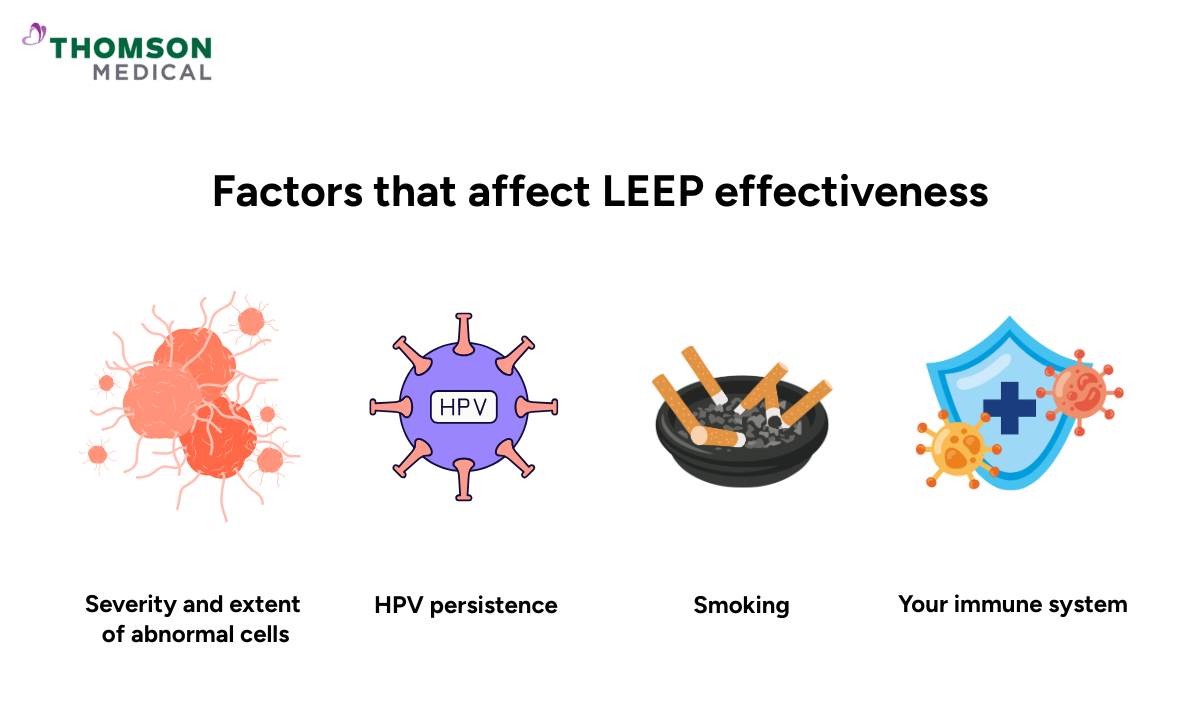
While LEEP works well for most women, a few factors can influence your individual outcome, such as:
Severity and extent of abnormality:
High-grade lesions normally respond very well to treatment.
Abnormal cells in a smaller area are easier to remove completely than those spread across a larger section of your cervix or extending deeper into the cervical canal.
HPV persistence:
If the human papillomavirus (HPV) infection that caused the abnormal cells remains active after treatment, there's a higher chance the cells might return. Your body's ability to clear the virus plays an important role in long-term success.
Smoking:
Women who smoke tend to have lower success rates, as tobacco use can weaken your immune system's ability to clear HPV and support proper healing.
Your immune system:
A healthy immune system helps your body clear any remaining HPV and prevent new abnormalities from developing, which is why overall wellness matters during recovery.
Your doctor will discuss these factors with you and may suggest lifestyle adjustments that could support your treatment outcome.
If you're concerned about any of these factors or want to understand how they might apply to your situation, schedule an appointment with Thomson Medical. Our healthcare specialists can assess your individual circumstances and discuss what you can do to support your treatment outcome.
Can abnormal cells come back after LEEP?
While LEEP is highly effective, there's a small chance that abnormal cells can return. This doesn't mean the procedure has failed – it usually means new abnormal cells have developed, often because HPV is still present in your body.
What to expect after treatment
Abnormal cells return in approximately 5-10% of women after LEEP, with most recurrences occurring within the first two years.
This is why regular follow-up appointments are so important – they allow your doctor to catch any changes early, when they're easiest to address. Your monitoring schedule will be tailored to your individual situation and laboratory results.
HPV persistence after LEEP
LEEP removes the abnormal cervical cells, but it doesn't eliminate HPV from your body. If the virus remains active, it can cause new abnormal cells to develop over time.
Your immune system usually clears HPV naturally. However, if high-risk strains like HPV 16 and 18 persist, you may need closer monitoring or additional treatment down the track. Your doctor may also recommend HPV testing during follow-up visits to check whether the virus has cleared.
Even if abnormal cells do return, catching them early through regular monitoring means they can be treated effectively before they progress. Staying committed to your follow-up schedule gives you the best chance of maintaining cervical health long-term.
Our obstetrics & gynaecology specialist
Loading...
LEEP Healing: Expected Outcomes and Potential Complications
After your procedure, you might find yourself wondering how to tell if everything is healing well. Understanding what to look for can offer reassurance during your recovery.
Expected Outcomes after a LEEP procedure
You're likely on the right track if you notice:
Normal Pap smear and negative HPV test results at your follow-up visits
No abnormal cells found at the edges of the removed tissue (confirmed by your laboratory results)
Regular menstrual cycles and no unusual vaginal discharge or bleeding once the initial healing period is complete
These positive signs suggest your cervix is healing well and the abnormal cells have been successfully cleared.
Potential Complications of a LEEP procedure that may need follow-up
While these signs don't necessarily mean your treatment hasn't worked, they do warrant a conversation with your doctor:
Abnormal Pap smear or positive HPV test results during follow-up
Abnormal cells detected at the tissue margins in your laboratory report
Unusual discharge, bleeding, or pelvic pain that continues beyond the normal healing period
If you notice any of these symptoms, try not to worry. Your doctor may simply recommend closer monitoring or, occasionally, additional treatment to keep your cervix healthy.
If you are unsure whether your recovery is progressing as it should, schedule an appointment with Thomson Medical. Our doctors can assess your symptoms, review your results, and give you the clarity you need about your healing progress.
Does LEEP affect future pregnancy and fertility?
.png?branch=production)
If you're hoping to have children, it's natural to wonder how LEEP might affect your fertility or pregnancy. The good news is that LEEP doesn't affect your ability to get pregnant, meaning that most women can conceive and carry healthy pregnancies after the procedure.
The procedure only removes a small portion of cervical tissue and doesn't affect your ovaries, uterus, or fallopian tubes – the organs essential for conception.
However, there is a slightly increased risk of preterm birth, particularly if a larger amount of tissue was removed. In rare cases, the procedure can weaken the cervix, which may need monitoring during pregnancy.
If you're planning to become pregnant after LEEP, let your obstetrician know about your procedure. With this knowledge, they can tailor your prenatal care to ensure you receive the right support. Your healthcare team will be there to assist you every step of the way, helping you feel confident and cared for throughout your pregnancy journey.
FAQ
Can I still have abnormal Pap smears after a LEEP procedure?
Yes, it's possible to have abnormal Pap smears after LEEP, particularly in the first few months as your cervix heals. If abnormalities persist or return later, it usually means new abnormal cells have developed, often due to ongoing HPV infection. Regular follow-up testing helps catch any changes early.
Will I need another LEEP procedure if abnormal cells return?
Not necessarily. If abnormal cells return, your doctor will assess the severity and recommend the most appropriate treatment, which could be another LEEP, cryotherapy, or simply closer monitoring if the changes are minor.
Does LEEP weaken the cervix permanently?
LEEP removes only a small portion of cervical tissue, and for most women, the cervix remains strong enough to function normally. In rare cases where a large amount of tissue is removed, there may be some weakening that requires monitoring during pregnancy.
How long does it take to recover from a LEEP procedure?
Most women recover within 2 to 4 weeks. You may experience mild cramping and watery discharge during this time. Your cervix continues to heal internally for up to 6 weeks.
Can LEEP cause early labour in future pregnancies?
There's a slightly increased risk of preterm birth after LEEP, but most women carry their pregnancies to term. Your obstetrician can monitor your cervix during pregnancy and provide interventions if needed to reduce this risk.
What's the difference between LEEP and other cervical treatments?
LEEP uses an electrically heated wire loop to remove abnormal tissue, while cryotherapy freezes abnormal cells and cone biopsy removes a larger, cone-shaped section of the cervix. LEEP is often preferred because it's quick, effective, and provides tissue for laboratory analysis.
The information provided is intended for general guidance only and should not be considered medical advice. For personalised recommendations based on your medical conditions, request an appointment with Thomson Medical.
Citations
Khunnarong, J., Bunyasontikul, N., & Tangjitgamol, S. (2021). Treatment outcomes of patients with cervical intraepithelial neoplasia or invasive carcinoma who underwent loop electrosurgical excision procedure. World Journal of Oncology, 12(4), 111–118. https://doi.org/10.14740/wjon1391
For more information, contact us:
Thomson Specialists (Women's Health)
Thomson Women's Clinic (TWC)
- Novena:
6592 6686 (Call), 8611 8986 (WA) - Bukit Batok:
6569 0668 (Call), 8686 3525 (WA) - Choa Chu Kang:
6893 1227 (Call), 8282 1796 (WA) - Jurong:
6262 8588 (Call), 6262 8588 (WA) - Katong (female doctor):
6970 2272 (Call), 8611 9020 (WA) - Punggol:
6243 6843 (Call), 8811 0328 (WA) - Sembawang: 6753 5228
- Sengkang: 6388 8125
- Serangoon (female doctor): 6382 3313
- Tampines: 6857 6266
- Tiong Bahru: 6276 1525
Notice
The range of services may vary between TWC/TS locations. Please contact your preferred branch directly to enquire about the current availability.
Request an Appointment