

After a hysterectomy, it is natural to wonder what is happening inside your body as you recover. Internal stitches are placed deep inside your pelvis during surgery, where you cannot see or feel them. Not being able to check on them can sometimes make the healing process feel uncertain.
Most people recover well, and internal stitches heal without problems. Knowing what is normal, what to watch for, and when to reach out to your doctor can make those early weeks at home feel much more manageable.
What are internal stitches used for?
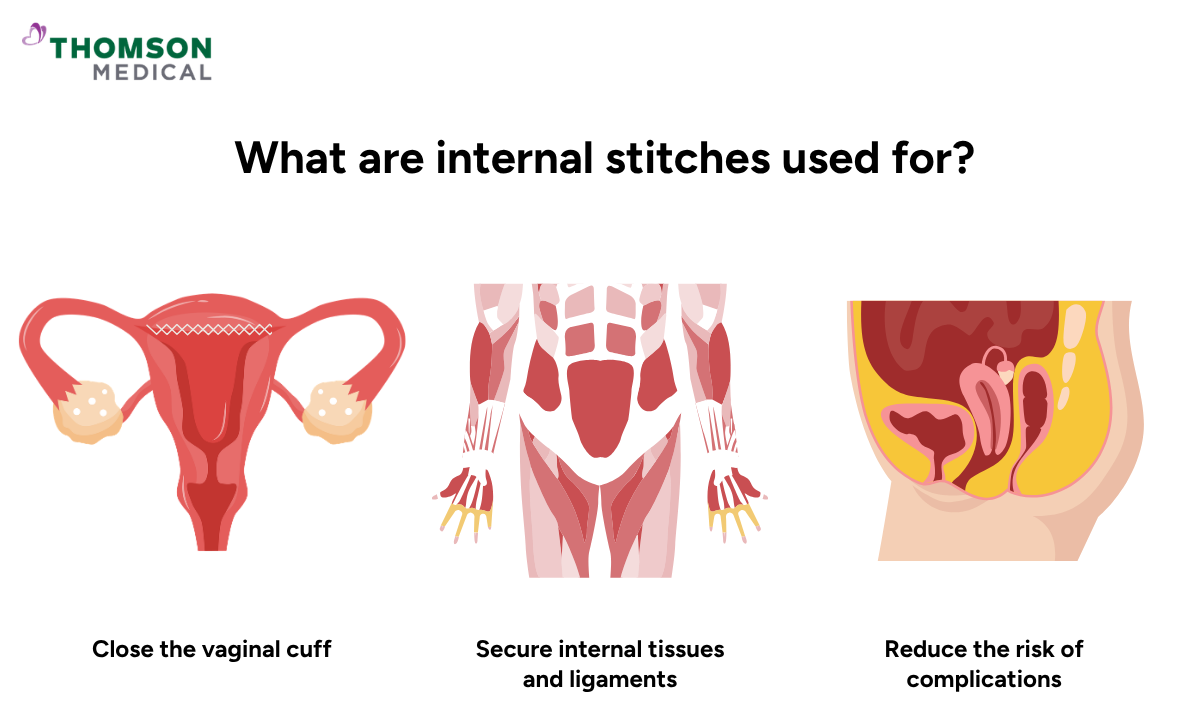
When your surgeon performs a hysterectomy, they place stitches deep inside your pelvis to support healing.
Each stitch serves a specific purpose:
Close the vaginal cuff (the top of the vagina once the uterus has been removed)
Secure internal tissues and ligaments in their positions
Control bleeding during and after surgery
Keep tissues properly aligned so they heal well
Reduce the risk of complications such as organ prolapse
The placement of these stitches determines not just how well the wound heals but how well your pelvic structures function in the months that follow.
Types of internal stitches
Not all internal stitches are the same, and the type your surgeon uses depends on your situation and the type of your surgery.
Dissolvable stitches
Most internal stitches used in a hysterectomy are dissolvable, also called absorbable stitches. They are made from materials your body can naturally break down over time, which means you do not need a separate appointment to have them removed.
They are designed to remain strong long enough for your tissues to knit back together and then gradually dissolve as your healing progresses.
Non-dissolvable stitches
They are less commonly used and usually reserved for surgical incisions that need additional support. Unlike dissolvable stitches, they do not break down on their own, which means they will need to be removed by a healthcare professional once the wound has healed. Your doctor will let you know when to come in for removal, which is typically a quick and straightforward appointment.
If you are unsure which type of stitches were used in your surgery, your surgical team can explain this before you leave hospital.
Our hysterectomy surgeons in Singapore
Loading...
How long do internal stitches take to heal?
Healing after a hysterectomy is a gradual process, and it happens in stages that you may not always be aware of.
Here is a general healing timeline of what is taking place inside your body over time:
Timeframe | What is happening |
Weeks 1 to 2 | Stitches hold tissues firmly and the inflammation begins to settle |
Weeks 3 to 6 | Tissues start to strengthen and the stitches begin dissolving |
Weeks 6 to 12 | Most dissolvable stitches are fully absorbed |
Up to 6 months | Internal tissue strength continues to develop |
Even after your stitches have dissolved, internal healing carries on for several months. Your doctors usually recommend waiting about six weeks before lifting, having sex, or returning to intense exercise.
Factors that can affect your healing
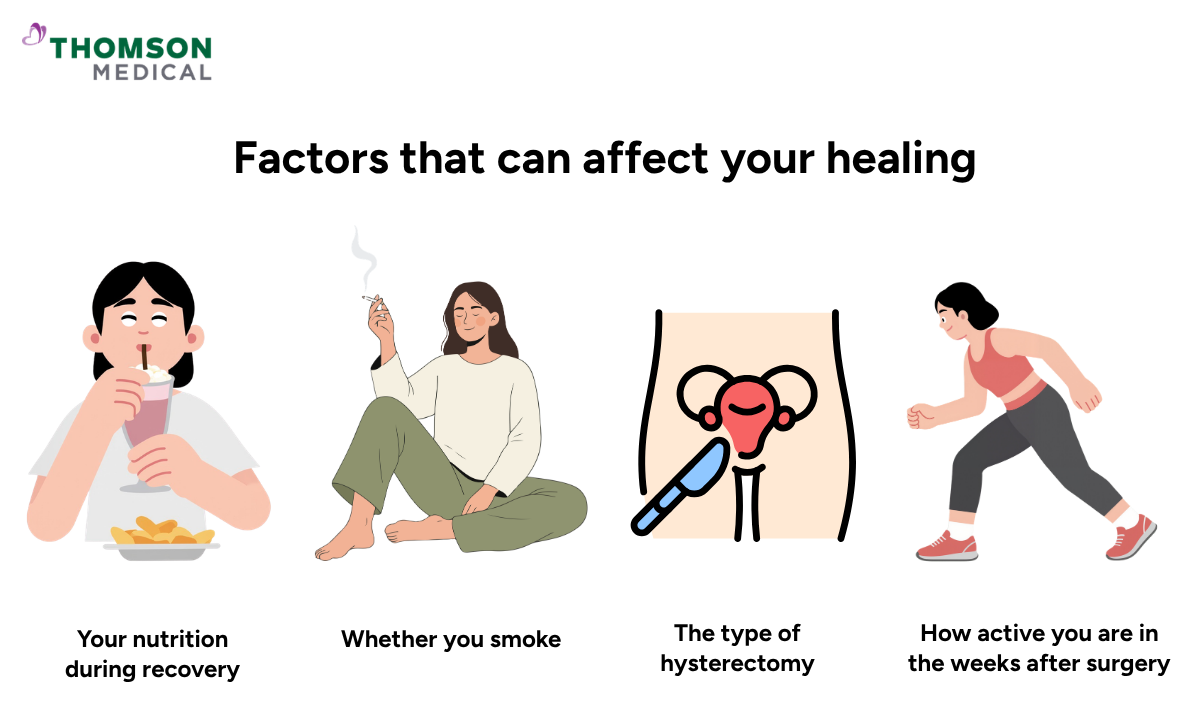
Everyone heals at their own pace, and several factors can influence how smoothly your internal stitches heal.
Your healing can be affected by:
Your age
Your nutrition during recovery
Whether you smoke
The type of hysterectomy you had, whether abdominal, vaginal, or laparoscopic
Any infection or inflammation during healing
How active you are in the weeks after surgery
Health conditions such as diabetes or anaemia
Among these, smoking can have a noticeable impact. It reduces blood flow, slows collagen production, and increases the risk of stitch problems. If you smoke, letting your surgical team know allows them to offer appropriate support during your recovery.
These factors can influence the pace of your recovery, but they don’t determine the outcome. Many women with these considerations go on to recover well with the right support and care.
What to expect during hysterectomy healing
Recovery looks and feels different for everyone, but knowing what is normal can help you feel more at ease during those early weeks at home.
Normal sensations
As your stitches dissolve, it is normal to feel new sensations deep in your pelvis.
You may experience:
Mild pelvic aching or soreness
A tugging or pulling feeling deep inside
Occasional sharp twinges
Sensitivity when you move or change position
These sensations are your body's response to internal healing, and they ease as the weeks pass.
Light bleeding or discharge
You may notice some light vaginal bleeding or spotting in the first few weeks. The discharge might be pink, light red, or brown in colour and should gradually decrease over time.
Pelvic pressure and discomfort
You may notice a sense of fullness or pressure in the pelvic area, especially when sitting or standing for longer periods. This often improves naturally as swelling reduces and the stitches dissolve.
What to expect during hysterectomy healing can feel different for everyone. Request an appointment with Thomson Medical for personalised advice on managing sensations, discharge, and pelvic discomfort safely during your recovery time.
How to care for your internal stitches after hysterectomy
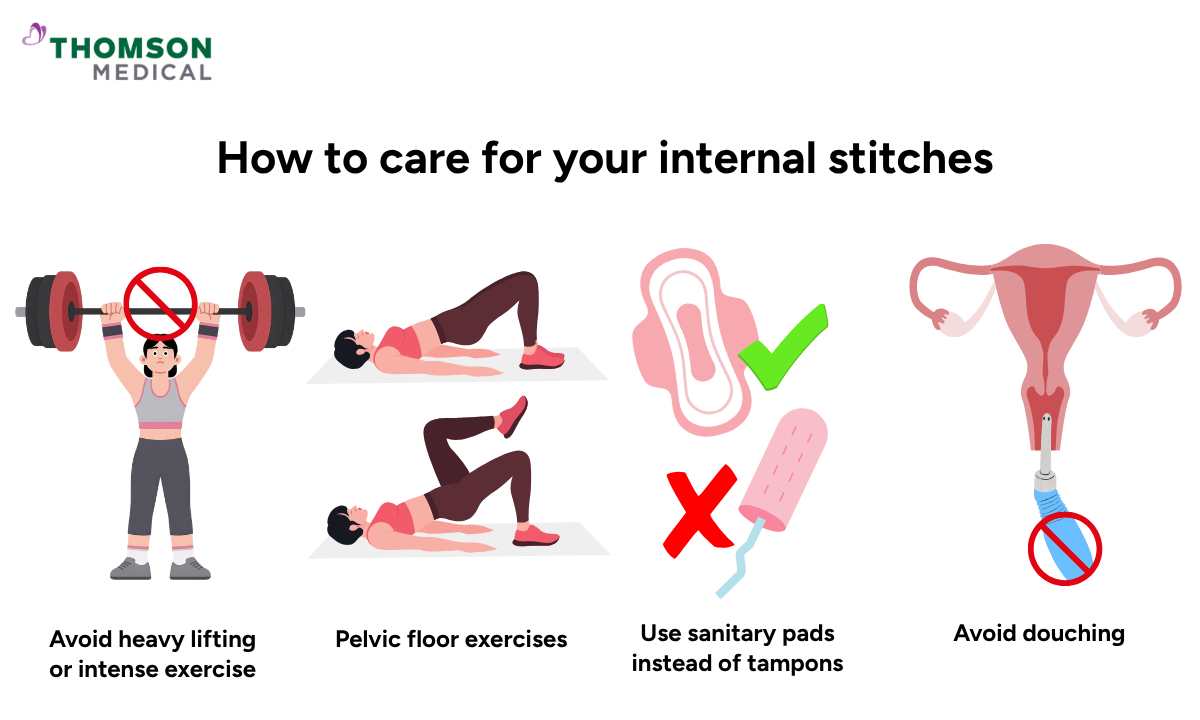
You won’t be able to see or touch your internal stitches, but taking care of yourself after surgery supports their healing and ensures a smoother recovery.
Activity to avoid
In the early weeks of recovery, certain movements place unnecessary strain on internal stitches and surrounding tissue.
Even on days when you feel well, you are advised to avoid:
Heavy lifting or intense exercise
Straining on the toilet
Twisting, pushing, or sudden movements
Ignoring tiredness and overdoing things
Your body uses a lot of energy to heal internally, even if you cannot feel it happening. Resting is an important part of your recovery and helps your body repair itself.
Exercise
Returning to physical activity after a hysterectomy requires a gradual, structured approach.
You may start with:
Gentle walking, gradually increasing your distance and pace as you feel able
Pelvic floor exercises, such as kegels, started gently in the early weeks of recovery
Deep belly breathing while lying on your back, to gently engage your core and help reconnect with the pelvic area after surgery
Listen to your body and stop if anything causes pain, pulling, or more bleeding or discharge. These are signs your body is not ready yet, and that is completely normal.
Hygiene and comfort
Keeping the external area clean and comfortable reduces the risk of infection while your body heals internally.
To support your recovery at home:
Use sanitary pads instead of tampons
Avoid douching to protect the natural healing environment
Keep the area clean and dry
Shower as usual, but avoid baths at first
Wash hands thoroughly before and after any wound care
Most of these precautions are temporary. As your internal healing progresses, your doctor will advise when it is safe to gradually ease these activity restrictions.
When internal stitches may cause problems
Most internal stitches heal without issues, but occasionally they can cause complications. Understanding the signs of potential problems can help you recognise when something may need attention.
Signs of infection
Infection can sometimes occur after surgery. Knowing what to look for means you can seek advice promptly if something does not feel right.
Common signs include:
Fever or chills that come on suddenly
Worsening pelvic pain
Increasing redness or swelling
Burning sensation when you urinate
These symptoms do not always confirm an infection, but they are your body's way of signalling that something needs attention.
If stitches are not dissolving as expected
Dissolvable stitches usually break down without issue, but sometimes they take longer than expected or cause some irritation.
You might notice:
Spotting or vaginal discharge that continues longer than expected
An internal poking or scratching sensation
Discomfort that persists beyond several months
In most cases, delayed dissolving or mild irritation resolves without treatment. Your doctor may want to monitor it, and in some cases, remove any remaining stitch material during a routine check-up.
When to contact your doctor
While minor discomfort is normal, certain symptoms may need medical attention.
Please contact your doctor if you experience:
Heavy vaginal bleeding
Severe pelvic or abdominal pain
Signs of infection
A sudden increase in the amount of discharge
Pain during bowel movements or urination
Symptoms that are not improving, or that seem to be getting worse over time
When you reach out to your doctor, try to describe when the symptom began, how it has changed, and if anything makes it better or worse. This helps them understand your situation more clearly and respond to you with the right care.
If your symptoms are worsening or not improving after surgery, request an appointment with Thomson Medical. Our specialists can evaluate your situation and help you take the appropriate steps for your recovery.
FAQ
How long do dissolvable stitches last inside the body?
Most dissolve within 4 to 12 weeks, though this varies depending on the material used and how effectively your body heals.
Can internal stitches reopen?
It is uncommon, but possible. Straining, heavy lifting, or having sex too early are the most common causes. Following your post-surgical guidelines and advice from your doctor may reduce this risk.
Can sex cause internal stitches to tear?
Yes. Resuming sexual activity too soon places pressure on the vaginal cuff before it has fully healed. Most doctors recommend waiting 6 to 8 weeks, or until you have been cleared at a follow-up appointment.
Does coughing or sneezing affect the stitches?
Occasional coughing or sneezing is unlikely to cause harm. If you have a persistent cough, try supporting your abdomen with your hands when you cough or sneeze to reduce pressure.
Are internal stitches painful?
The stitches themselves are not painful. However, the surrounding tissue can cause soreness, pressure, or mild discomfort as it heals.
Do internal stitches dissolve at different rates?
Yes. Different suture materials break down at different speeds, and healing varies from person to person.
What happens if internal stitches do not dissolve?
Your doctor may trim or remove any remaining suture material during a routine examination. This is straightforward and nothing to worry about.
The information provided is intended for general guidance only and should not be considered medical advice. For personalised recommendations and advice based on your unique situation, please consult a specialist at Thomson Medical. Request an appointment with Thomson Medical today.
For more information, contact us:
Thomson Specialists (Women's Health)
Thomson Women's Clinic (TWC)
- Novena:
6592 6686 (Call), 8611 8986 (WA) - Bukit Batok:
6569 0668 (Call), 8686 3525 (WA) - Choa Chu Kang:
6893 1227 (Call), 8282 1796 (WA) Jurong:
6262 8588 (Call), 6262 8588 (WA)- Katong (female doctor):
6970 2272 (Call), 8611 9020 (WA) - Punggol:
6243 6843 (Call), 8811 0328 (WA) - Sembawang: 6753 5228
- Sengkang: 6388 8125
- Serangoon (female doctor): 6382 3313
- Tampines: 6857 6266
- Tiong Bahru: 6276 1525