

If you have reached menopause, you may be wondering if motherhood is still possible. Although your ovaries no longer release eggs, your doctor may provide targeted hormonal support during the in vitro fertilisation (IVF) procedure to prepare your womb for a pregnancy.
However, as pregnancy at this stage carries additional health risks, your doctor will guide you through your options to ensure your safety.
What is menopause?
Menopause is a natural part of ageing that marks the end of your reproductive years. It’s confirmed once you have had no periods for 12 months in a row and usually happens between the ages of 45 and 55.
During this time, your ovaries stop releasing eggs, which means natural conception is no longer possible. As your ovarian function stops, your body’s oestrogen and progesterone hormone levels also decline significantly. This hormonal shift could cause common symptoms such as hot flushes, night sweats, and vaginal dryness.
What is IVF?
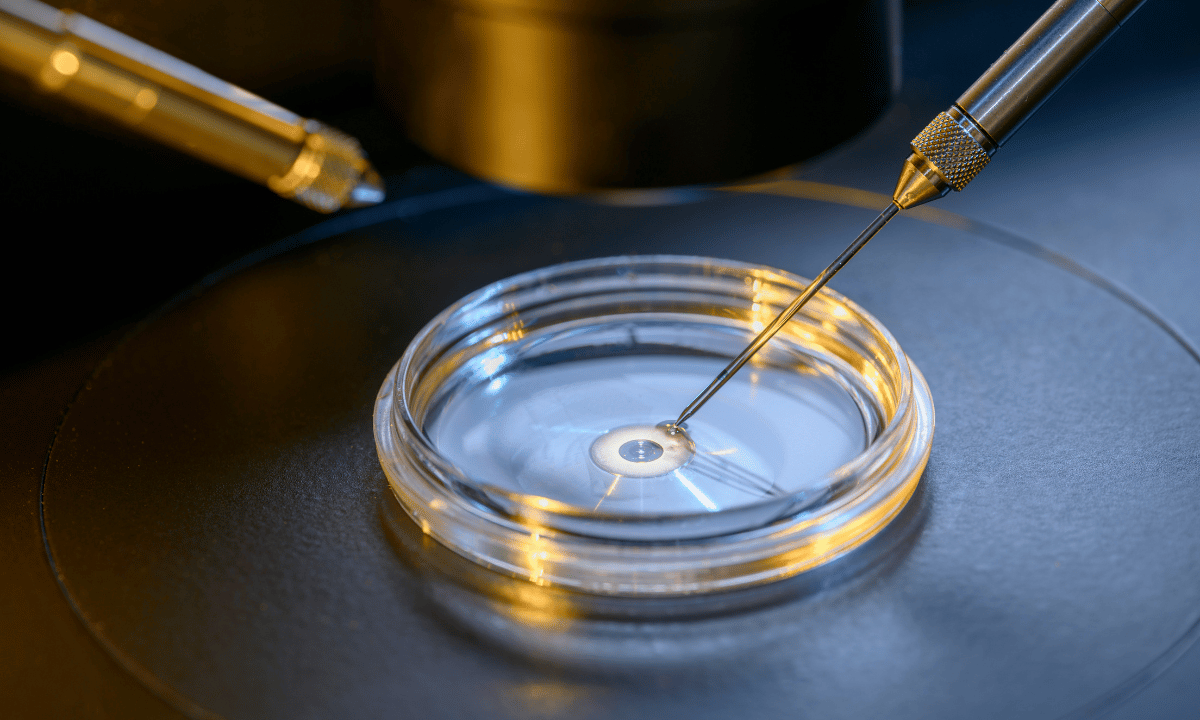
IVF is a fertility treatment that collects eggs from your ovaries and combines them with sperm in a laboratory. Once an embryo forms, your doctor will transfer it to the uterus (womb) to establish a pregnancy, and any remaining embryos could be frozen for future use.
Is IVF possible after menopause?
It’s possible to undergo IVF treatment after menopause using donor eggs or your own previously frozen eggs or embryos, alongside hormone therapy to support the pregnancy.
The main requirement is a healthy womb that may respond to the hormone preparation process. Before treatment begins, your specialist will check your womb and your overall health. In some cases, additional hormonal preparation may be needed if the womb lining does not respond as expected.
Risks and challenges of IVF after menopause
Although pregnancy using IVF after menopause is possible, it’s considered to be a high-risk pregnancy, and your doctor will discuss these risks with you in detail before treatment begins.
Risk to the mother
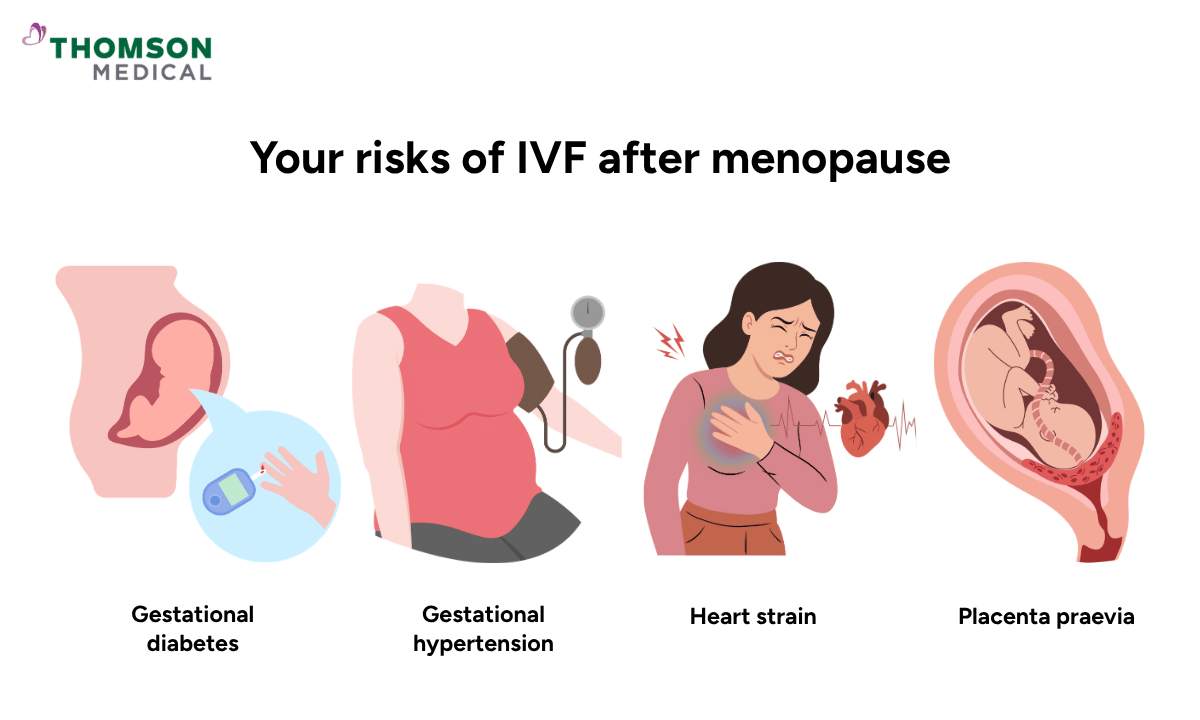
Having a baby when you are older carries a higher risk of certain complications. These may include:
Gestational hypertension, high blood pressure that develops during pregnancy
Heart strain
Placenta praevia, a condition where the placenta partially or completely covers the cervical opening
Caesarean delivery
Preterm birth
Low birth weight
Risks to the baby
There is also a higher chance of chromosomal abnormalities in the baby, which is why your doctor will recommend closer antenatal care, including screening tests to check your baby's development.
Success rates and what influences them
Using donor eggs or previously frozen embryos could improve the chances of a successful pregnancy after menopause. Things that may affect your chances include:
Your age:
While the overall success rates of IVF for women using their own eggs decline after the age of 40, using healthy donor eggs from a younger woman or your own previously frozen eggs may help to improve your chances.
In these cases, success rates often range from around 40% to 50% per cycle.
Your womb's health:
A healthy womb with a well-prepared lining provides the ideal environment for an embryo to successfully implant and grow.
Your overall health:
Any existing metabolic or cardiovascular conditions will be taken into account when assessing whether treatment is appropriate for you.
Although success rates could vary from woman to woman, a consultation with a doctor may provide a clearer picture of your chances. Request an appointment with Thomson Medical, where a doctor could assess your suitability for IVF and the use of donor eggs.
Our fertility doctors in Singapore
Loading...
The IVF process after menopause
The process involves several steps, which your doctor will tailor to your individual needs and circumstances.
Medical evaluation
Before treatment begins, your doctor will carry out a thorough assessment. This includes:
A pelvic ultrasound to assess your womb
Blood tests to check your hormonal and general health
A check of your heart and metabolic health
Preparing the lining of the womb
Your womb lining needs to be prepared before an embryo could be transferred. Your doctor may prescribe oestrogen and progesterone supplements to thicken and prepare the lining so it is ready for an embryo to implant.
Egg or embryo source
You and your doctor will discuss the most suitable source of eggs or embryos. Your options are donor eggs or your own previously frozen eggs or embryos. In Singapore, egg donation must be altruistic, meaning donors cannot be paid.
Embryo transfer
Your doctor will use ultrasound guidance to gently transfer the embryo into your womb, typically recommending a single embryo transfer to minimise the health risks associated with carrying multiple babies.
Hormonal support and monitoring
Once the embryo has implanted, you will require ongoing hormonal support to sustain your pregnancy. Throughout your pregnancy, an O&G specialist would care for you.
What to prepare for IVF after menopause
Making health and lifestyle adjustments at least 3 to 6 months before treatment begins may help support your body's response to IVF.
Physical health
.png?branch=production)
Some lifestyle adjustments help support your womb health, hormonal balance, and overall readiness for treatment. These include:
Consume a balanced diet rich in protein, vitamins, and minerals to support your hormonal balance.
Maintain a healthy weight to improve how your body responds to the hormone treatments.
Exercise regularly at a moderate intensity to support cardiovascular and metabolic health.
Aim for 7-9 hours of sleep each night to support hormonal balance.
Limit caffeine intake and avoid alcohol to protect your reproductive health.
Stop smoking, as it may affect uterine lining function and overall treatment outcomes.
Mental wellbeing
Emotional wellbeing matters as much as physical preparation during this stage. Mindfulness, meditation, or speaking to a counsellor may help you manage stress during this period. Maintaining a support network of trusted family members, friends, or a professional counsellor could help manage the emotional demands of treatment.
Financial planning
IVF treatment is a significant financial commitment. Discussing costs with your clinic early may help you understand what is included and whether any financial support is available.
Preparing for IVF after menopause involves careful planning, personalised assessment, and ongoing support. Request an appointment with Thomson Medical, where a fertility specialist could help to discuss your treatment options and evaluate your womb health.
FAQ
Can a woman with menopause do IVF?
Yes, women who have gone through menopause may still be able to have IVF using donor eggs, provided they are in good overall health and have a healthy womb capable of supporting a pregnancy.
Is there an age limit for IVF after menopause?
There is no universal age limit for IVF. IVF outcomes are generally better in women under 35, as both egg quantity and quality tend to be higher at younger ages. However, IVF success rates decline notably after the age of 40 because both egg quantity and quality decrease with age.
Pregnancy after the age of 50 to 55 is generally discouraged due to the higher risk of complications for both mother and baby. Suitability for IVF is determined by your overall health, womb condition, and a thorough fertility assessment with your specialist.
What are the disadvantages of IVF?
IVF can be physically, emotionally, and financially demanding. It also carries possible risks, including medication side effects, ovarian hyperstimulation syndrome (OHSS), multiple pregnancy if more than one embryo is transferred and the possibility that treatment may not be successful.
Can I use my own eggs for IVF if I have already gone through menopause?
No, you might not be able to use your current eggs because menopause indicates that your ovaries have stopped releasing them. To undergo IVF after menopause, you must use either your own eggs that you successfully froze previously before menopause or healthy eggs provided by an altruistic donor.
The information provided is intended for general guidance only and should not be considered medical advice. For personalised recommendations and tailored advice based on your unique conditions, request an appointment with Thomson Medical.
For more information, contact us:
Thomson Fertility Centre
- Paragon: 6252 7766
- Novena: 6399 3758, 8811 0358 (WA)