

Minimally invasive surgery is an approach rather than a single procedure. Instead of a large incision, the surgeon works through several small ones using a camera and specialised instruments, or in some cases through a natural body opening, leaving no external incisions at all.
It’s used across a wide range of procedures, though not every operation or every patient is suited to it. Here’s how minimally invasive surgery works, the form it takes, including laparoscopic, hysteroscopic and robotic approaches, and what determines whether it’s appropriate in a given case.
What is minimally invasive surgery?
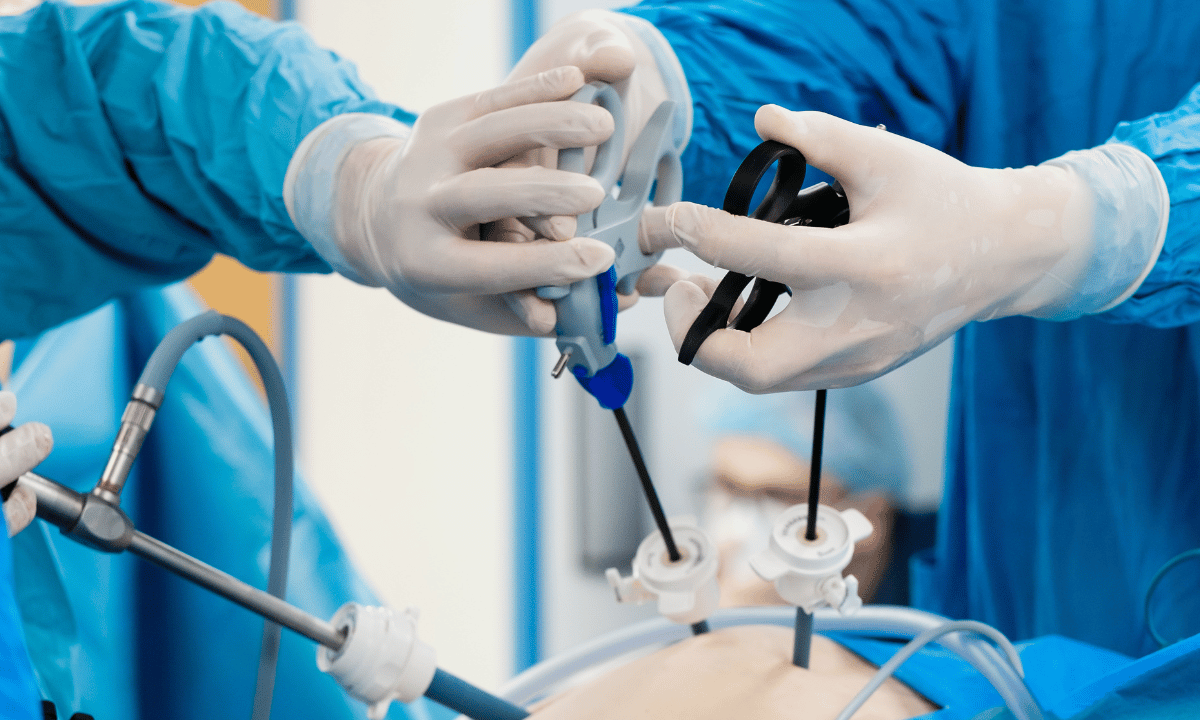
A minimally invasive surgery, also known as keyhole surgery, is a surgical approach where a surgeon performs an operation through small incisions, a small puncture site, or a natural body opening.
During the procedure, the surgeon inserts a tiny camera and specialised instruments through these incisions or openings. The camera sends images of the surgical area to a monitor, which helps them carry out the procedure.
Depending on the procedure, the surgeon may use a camera-equipped scope, specialised instruments, or image-guided catheters to access and treat the area.
What are the differences between minimally invasive and open surgery?
The difference between the two types of surgery mainly lies in how your surgeon reaches the area that needs treatment.
During a traditional open surgery, your surgeon makes a large incision to access and view the surgical area directly. Depending on the procedure, they may need to move or separate the surrounding skin, muscle, and other tissues to create enough space to operate safely.
On the other hand, minimally invasive surgery uses several small incisions and specialised instruments. This approach causes less disruption to surrounding tissue and may offer potential benefits, including:
Smaller scars
Less pain
Shorter hospital stay
Lower risk of surgical site infections
Reduced blood loss
A shorter or smoother post-operative recovery
When is minimally invasive surgery suitable for you?
Minimally invasive surgery may be suitable when the condition could be reached and treated through small incisions or a natural body opening. Before advising on whether this surgery is suitable, your doctor will consider:
Your diagnosis and treatment goal
The location, size, and complexity of your condition
Any previous surgery or treatment
Your general health
Additionally, your doctor will assess the urgency of your condition before recommending this keyhole surgery.
If you're unsure whether minimally invasive surgery is right for you, schedule an appointment with Thomson Medical. A doctor could help to assess your condition and help to explain which surgical approach would be suitable for you.
Our surgeon in Singapore
Loading...
Minimally invasive surgery approaches
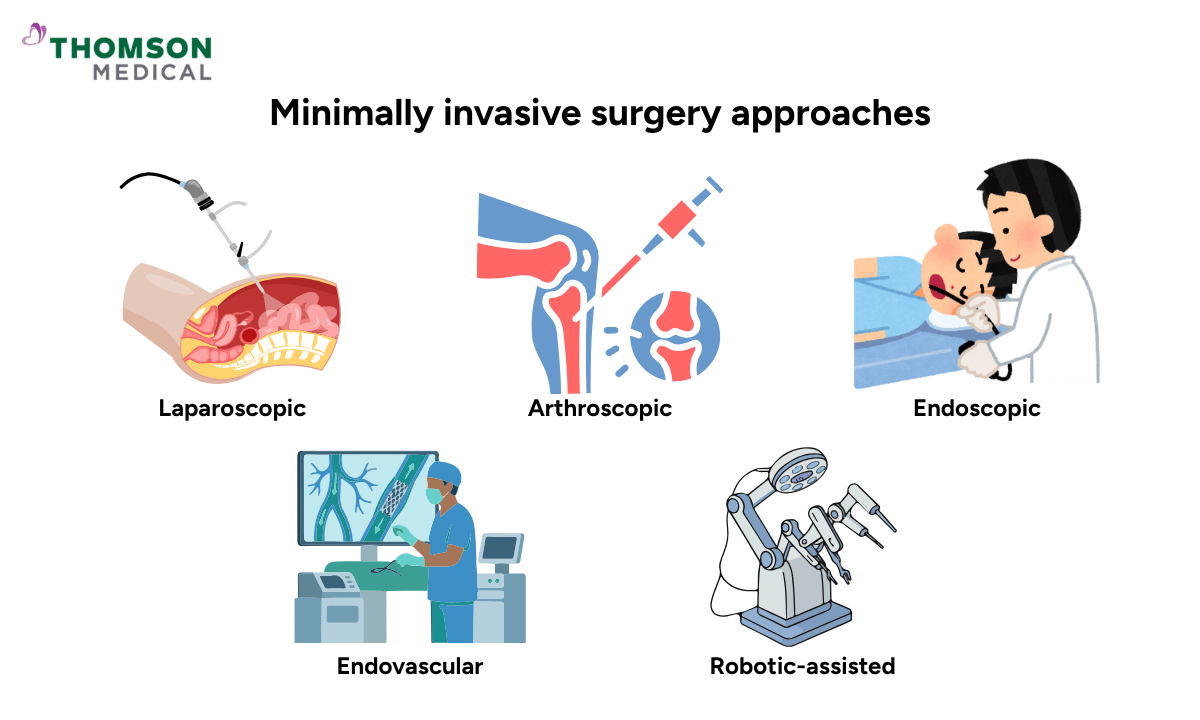
There are several minimally invasive surgery approaches, and they differ according to the part of the body being treated, how the surgeon reaches it, and the equipment used during the procedure.
Laparoscopic
In laparoscopic surgery, the surgeon operates on the abdomen or pelvis through several small incisions using a laparoscope and other surgical instruments.
Laparoscopic techniques may be used for selected conditions involving the gallbladder, appendix, stomach, bowel, liver, pancreas, or female reproductive organs.
Arthroscopic
Arthroscopic surgery uses an arthroscope and specialised instruments inserted through small cuts around a joint. Surgeons may use it to diagnose and treat selected joint conditions.
Surgeons commonly use arthroscopy to assess or treat conditions affecting the:
Knee
Shoulder
Hip
Ankle
Wrist
Elbow
Endoscopic
Endoscopic procedures use an endoscope – a long, thin, flexible or rigid tube equipped with a light and a camera – that is passed through a natural body opening, such as the mouth, nose, urethra, or vagina. Depending on the procedure, doctors may use it to examine an area, take a tissue sample (biopsy), or carry out treatment.
Endoscopic techniques may be performed for conditions in the digestive tract, airways, bladder and urinary tract, uterus (womb), and ear, nose, and throat (ENT) structures.
Endovascular
Endovascular procedures treat selected blood-vessel conditions from inside the vessel. To perform this minimally invasive surgery, a surgeon guides a catheter through a small puncture site, often in the groin, wrist or arm, using X-ray imaging and sometimes contrast dye to guide the tool.
They may perform endovascular procedures to treat narrowed or blocked arteries, aneurysms (weakened or widened areas in a blood vessel), and other vein conditions.
Robotic-assisted
Robot-assisted surgery is a technology-assisted form of minimally invasive surgery. When performing this procedure, your surgeon sits at a nearby console to control robotic arms that hold a camera and specialised surgical instruments inserted through small incisions.
Depending on the procedure and your surgeon's expertise, robotic surgery may be considered for selected conditions involving the prostate, urinary tract, womb, ovaries, bowel, rectum, chest, or abdomen.
Other minimally invasive approaches
Besides the approaches mentioned above, doctors may also perform other minimally invasive approaches depending on the part of the body being treated.
Hysteroscopy:
Hysteroscopic surgery is performed to examine or treat conditions inside the womb using a hysteroscope that is inserted through the vagina and cervix into the womb.
Cystoscopy:
Cystoscopic surgery is used to diagnose or treat conditions affecting the urethra and the bladder. Your doctor performs it by passing a cystoscope (which is a thin and lighted instrument with a camera or lens) through the urethra and into the bladder.
Bronchoscopy:
Bronchoscopic procedures use a bronchoscope passed through the mouth or nose and down the windpipe to examine the airways inside the lungs.
The bronchoscope provides images of the airways and allows your doctor to collect samples, remove an obstruction, or carry out selected treatments.
Transoral surgery:
Transoral surgery could be performed for certain areas of the mouth, throat, and upper airway by inserting an endoscope or other specialised instruments into the mouth to access the treatment area.
What conditions could be treated with minimally invasive surgery?

Minimally invasive surgery can be performed for a wide range of conditions, which include:
Abdominal and digestive
Doctors perform minimally invasive surgery for selected conditions affecting the abdomen and digestive system, including:
Gallstones and gallbladder inflammation
Gastrointestinal polyps
Gastro-oesophageal reflux disease (GERD), a condition where stomach acid repeatedly flows back into the oesophagus
Achalasia, a condition where the oesophagus cannot move food into the stomach properly
Additionally, doctors may also perform a minimally invasive approach for hernia repair.
Orthopaedic and musculoskeletal
Arthroscopic and other minimally invasive orthopaedic techniques may be used for selected joints, bones, and spinal conditions, including:
Knee ligament injuries
Selected cartilage injuries
Shoulder instability
Hip impingement and selected labral tears
Selected ankle, wrist, and elbow conditions
Bunions and other toe abnormalities
Doctors may also perform a minimally invasive approach for spinal surgery to treat conditions such as spinal disc problems, spinal stenosis, spinal tumours, or scoliosis.
Heart and blood vessels
Minimally invasive surgery may be considered for selected heart and blood-vessel conditions, including:
Coronary artery disease
Heart-valve disease
Aortic aneurysms
Narrowed or blocked arteries
Certain heart rhythm disorders, such as atrial fibrillation (an irregular and often rapid heartbeat caused by abnormal electrical signals in the heart)
Selected structural heart conditions, such as an abnormality in the atrial septum (the wall that separates the heart’s two upper chambers)
Doctors could also perform minimally invasive surgery for selected varicose veins – enlarged, swollen, and often twisted veins that are visible just beneath the skin – and other conditions affecting the veins.
Gynaecological
Minimally invasive gynaecological procedures may be used for selected conditions affecting the womb, fallopian tubes, ovaries, and pelvis, such as:
Endometriosis
Ovarian cysts and selected ovarian masses
Adenomyosis, a condition where the tissue from the lining of the womb grows into its muscular wall
Chronic pelvic pain, when an underlying condition requiring surgery has been identified
Depending on the condition and procedure required, the approach may be laparoscopic, hysteroscopic, or robot-assisted. Transvaginal natural-orifice surgery may also be considered where appropriate.
Urinary
Doctors could perform minimally invasive surgery for conditions affecting the kidneys, ureters, bladder, prostate, and urinary tract, including:
Bladder stones
Bladder tumours
Enlarged prostate
Prostate cancers
Some urinary-tract obstructions
The procedure may involve cystoscopy, ureteroscopy, laparoscopy, or robot-assisted surgery, depending on the condition and its location.
Chest, airway, and ENT
Minimally invasive techniques may also be used for selected chest, airway, ear, nose and throat conditions, including:
Lung cancers
Conditions affecting the pleura – the lining around the lungs
Airway narrowing or blockage
Growths or cancers in the mouth and throat
Depending on the condition, the approach may involve thoracoscopy, bronchoscopy, endoscopy, or transoral surgery.
Cost of minimally invasive surgery in Singapore
Minimally invasive surgery costs in Singapore may vary based on your condition, the surgery approach, and whether you choose a public or private hospital. Generally, the costs of this procedure may be around SGD 1,000-7,250 in public hospitals and SGD 7,500-70,200 in private hospitals.
To offset the total cost of minimally invasive surgery, there are several schemes in Singapore that can help. These include MediSave, MediShield Life, and Integrated Shield Plans. Each offers different levels of coverage for your minimally invasive surgery, depending on your eligibility and insurance arrangements.
MediSave:
Depending on the procedure’s classification under the Table of Surgical Procedures (TOSP), an eligible minimally invasive procedure may be claimable through MediSave.
The surgical withdrawal limit ranges from SGD 240 to SGD 5,290, excluding applicable hospitalisation or day-surgery charges.
MediShield Life:
MediShield Life covers a portion of the surgical and hospitalisation costs for minimally invasive surgery with claim limits up to SGD 3,900.
Integrated shield plan:
You may use integrated shield plans (IPs), which are optional private insurance plans that sit on top of your national medical insurance (MediShield Life) and may offer additional coverage to private hospitals or higher ward classes.
However, you will still need to pay some money out of pocket as a co-payment.
Please note that these are estimated costs based on the information available at the time of writing, and they may have changed since then. These costs may also vary depending on the required treatment, hospital, and location of care.
If you are considering having a minimally invasive surgery, contact our medical concierge team at Thomson Medical, who could discuss your specific situation with you and provide personalised cost guidance.
Potential risks of minimally invasive surgery
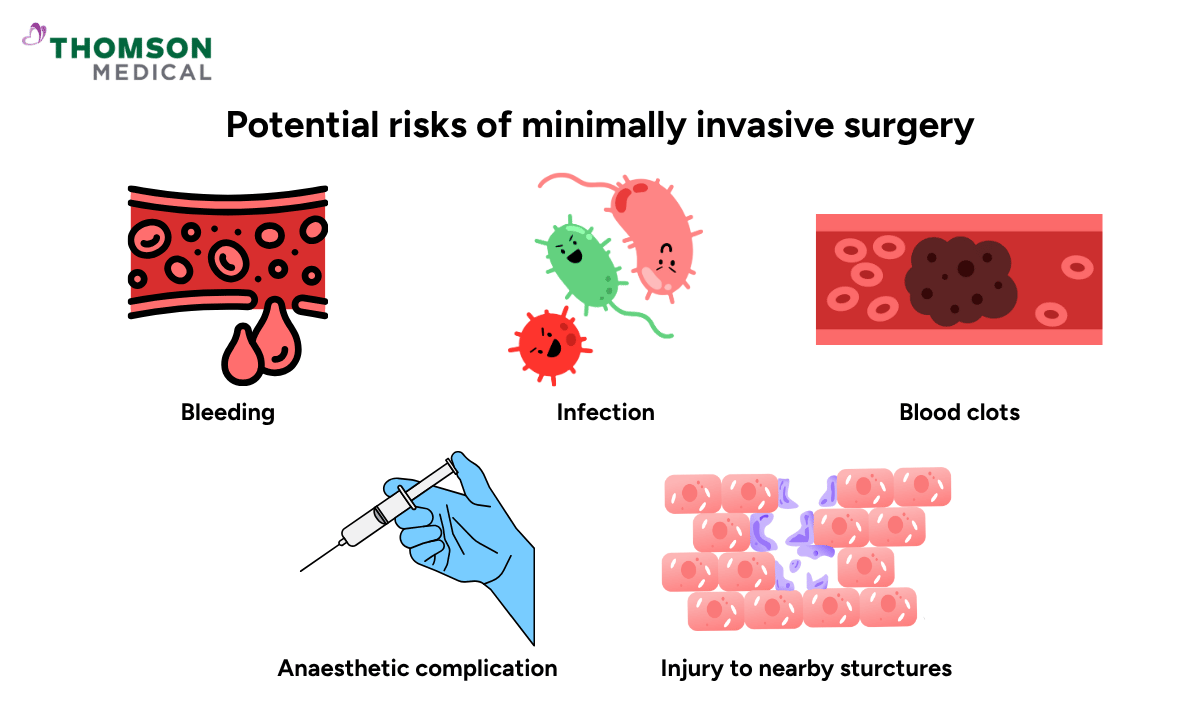
Although minimally invasive surgery is performed through small incisions or a natural body opening, just like any other medical procedure, it has several potential risks and complications. These include:
Bleeding: may occur during or after surgery, which in some cases may require a blood transfusion or a further procedure.
Infection: may develop at the incision site or within the operated area.
Blood clots: may occur from the surgery and reduced movement after the procedure.
Anaesthetic complications: such as allergic reactions, breathing problems, nausea, and vomiting.
Injury to nearby structures: may occur as the surgery is performed close to organs, blood vessels, nerves, and other tissues.
Pain, bruising, or swelling: these are common short-term effects as your body heals after surgery.
Delayed healing or wound problems: may happen because small incisions can still bleed, open, heal slowly, or develop scar-related problems.
Additionally, each operation also has specific risks related to the organ or condition being treated.
In some cases, a procedure that begins as minimally invasive surgery may require conversion to open surgery. This may be required if there is:
Unexpected bleeding
Poor visibility
Extensive scar tissue from previous surgery
A complication that requires wider access
The decision to convert to open surgery is made by your doctor for safety reasons and does not necessarily indicate a failure of the minimally invasive procedure.
FAQ
Is minimally invasive surgery safer than open surgery?
Minimally invasive surgery is not automatically safer than open surgery. While it may offer smoother recovery and less pain, it carries its own risks and is not suitable for everyone. In some complex cases, open surgery may provide a safer and more effective approach.
Does minimally invasive surgery have limitations?
Just like other medical procedures, minimally invasive surgery has its own limitations. For example, it can limit the surgeon’s access and working space, which may make it harder to manage extensive scar tissue, heavy bleeding, a large mass or widespread disease.
It may also be unsuitable for people with certain heart, lung or bleeding conditions.
Are there permanent side effects of minimally invasive surgery?
Most side effects after minimally invasive surgery are temporary. However, there is a risk of long-term effects if complications occur or if the procedure involves removing or making permanent alterations to an organ or tissue.
For instance, some operations may result in changes to bowel habits following bowel or gallbladder surgery or to urination or sexual function following prostate or bladder surgery.
How do you choose between a public and private hospital for minimally invasive surgery in Singapore?
When choosing between a public and private hospital, consider the specific procedure you need, your doctor’s recommendation, your insurance cover, and your budget. To help with budgeting, you can ask your doctor, clinic, or hospital for the cost estimate.
You may also want to consider hospital location and waiting times, which can vary by the hospital type, speciality, and urgency of care.
The information provided is intended for general guidance only and should not be considered medical advice. For personalised advice based on your unique conditions, schedule an appointment with Thomson Medical.
For more information, contact us:
Thomson Medical Concierge
- 8.30am - 5.30pm
- WhatsApp: 9147 2051
Need help finding the right specialist or booking for a group?
Our Medical Concierge is here to help you. Simply fill in our form, and we'll check and connect you with the right specialist promptly.
Notice:
The range of services may vary between Thomson clinic locations. Please contact your preferred branch directly to enquire about the current availability.
Get In Touch