

After a hysterectomy, you may find yourself wondering: "Do I still need Pap smear tests?"
It's natural to feel uncertain, especially when screening has been part of your routine for years.
The answer isn’t the same for everyone. It depends on the type of hysterectomy you had and the reason behind it. Some women can stop routine screening, but some still benefit from continued monitoring.
Knowing exactly where you stand and what tests still apply to you can help you move forward with clarity rather than uncertainty.
What is a Pap smear?
A Pap smear is a routine screening tool that checks for abnormal cells in your cervix – the lower part of your uterus that connects to the vagina. During the test, your doctor gently collects cells from your cervix and then sends them to a lab for analysis.
The main goal of a Pap smear is to catch early signs of cervical cancer or precancerous changes before they have a chance to develop further. This allows your doctor to address these changes quickly and effectively.
Do you still need a Pap smear test after a hysterectomy?
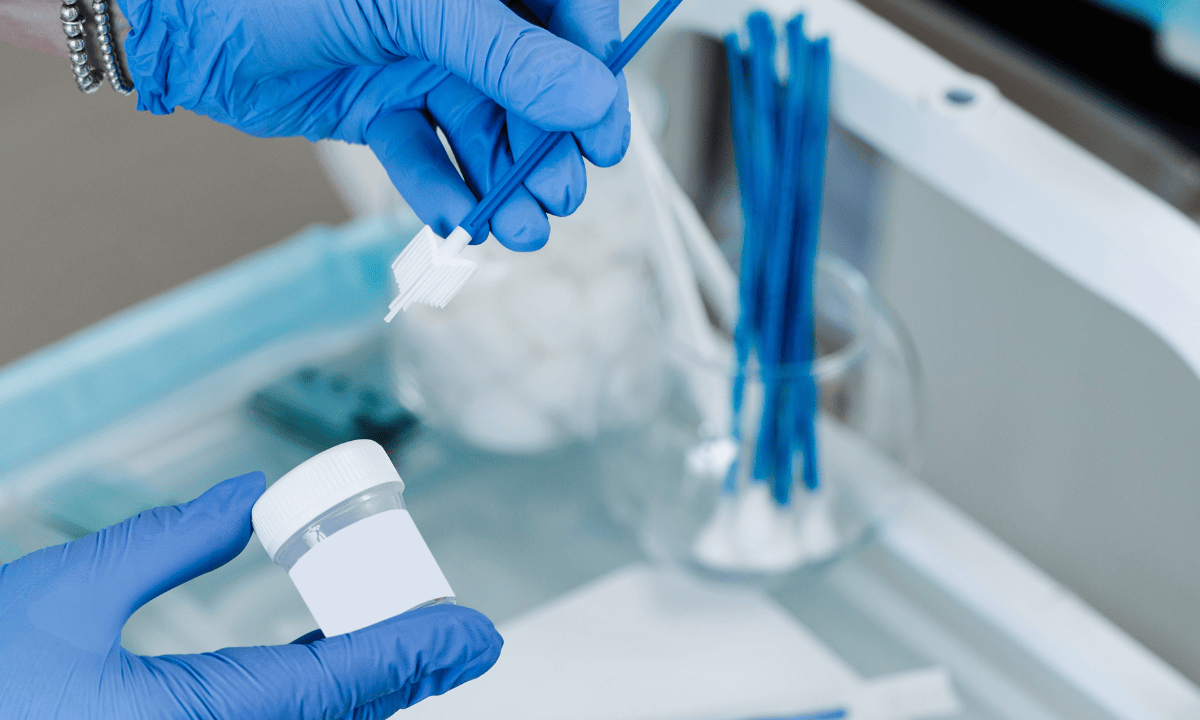
The answer depends on the type of hysterectomy you had, because not all hysterectomies are the same. The key factor that determines whether you still need regular Pap smears is whether your cervix was removed during surgery.
Total hysterectomy
If you had a total hysterectomy, both your uterus and cervix were removed. When your cervix is fully removed for a benign (non-cancerous) condition, you are no longer at risk of cervical cancer. For that reason, routine Pap smears are usually not necessary.
That said, if your hysterectomy was done due to a cancerous or precancerous condition, your doctor may still recommend screening as part of your care, though the test will be different.
Subtotal (partial) hysterectomy
If you had a subtotal or partial hysterectomy, your uterus was removed, but your cervix was left in place. In this case, regular cervical screening is still recommended.
The cervix is still there, which means the risk of cervical cell changes is still there, too. Continuing your Pap smear schedule helps detect any changes early, when they are most manageable.
If you're unsure which type of hysterectomy you had or whether you need to continue cervical screening, schedule an appointment with Thomson Medical. Our specialist will review your surgical history and advise you on the right screening plan for your needs.
Gynaecologists at Thomson Medical
Loading...
What kind of screening replaces a Pap smear after a total hysterectomy?
If your hysterectomy was related to a cancerous or precancerous condition, screening doesn't end. Instead of a Pap smear, your doctor may recommend a vault smear.
What is a vault smear?
A vault smear is a Pap smear adapted for your body after surgery. Instead of collecting cells from your cervix, this test collects cells from your vaginal cuff (the top of the vagina, which is stitched closed after a total hysterectomy).
It helps detect abnormal changes in that area, especially vaginal intraepithelial neoplasia (VAIN). This is a precancerous condition that is rare but can develop in women with certain risk histories.
So who actually needs one?
If you have undergone a hysterectomy for benign conditions, vault smears are not part of routine follow-up.
You’re more likely to need a vault smear if:
Your hysterectomy was done due to cervical cancer or high-grade precancerous changes
You have a history of abnormal Pap smears or HPV-positive results before surgery
You have a weakened immune system, such as from HIV or long-term medication use
Your doctor will review your history and let you know whether vault smears are part of your recommended care plan. Every woman’s situation is different, so if you have any concerns, don’t hesitate to bring them up at your appointment.
How often should you be screened after a hysterectomy?
There is no single answer. Your screening schedule is built around your history, your risk factors, and your specific surgery. Here is what you can expect under Singapore guidelines:
If you had a subtotal hysterectomy:
Your Pap smear screening continues as normal, usually every three to five years.
If your hysterectomy was related to cervical cancer or high-grade precancerous changes:
Your doctor may recommend vault smears at least yearly for the first five years, then every two years after that. How long follow-up continues will depend on their assessment.
If you have other risk factors:
A history of HPV or a weakened immune system may mean more frequent check-ups, regardless of the type of hysterectomy you had.
Your doctor will advise you on the screening schedule that makes sense for you. More frequent testing may sound worrying, but it is simply a way to keep track of your health and give you and your doctor the information needed to act quickly if anything changes.
Signs you should get checked even without routine Pap smears
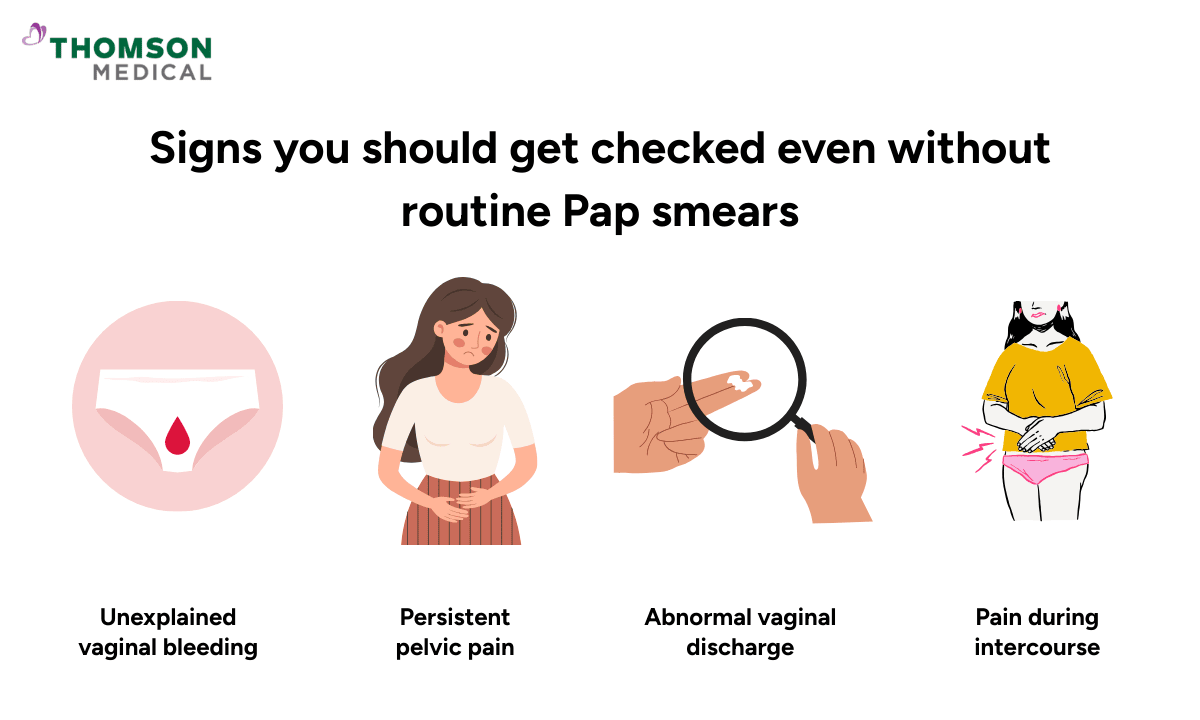
Even without routine Pap smears, it is worth staying alert to symptoms that may warrant a gynaecological review. Knowing what to look out for can help you seek care at the right time.
If you notice any of these signs, it’s a good idea to see your doctor:
Unexplained vaginal bleeding, especially if you've gone through menopause
Bleeding after intercourse
Persistent pelvic pain
Abnormal vaginal discharge with unusual colour, smell, or consistency
Pain during intercourse
These symptoms don’t necessarily mean something serious, but they’re worth getting checked with your doctor. Depending on what you’re experiencing, they may recommend a physical examination, imaging, or targeted testing to figure out the cause behind them and get you the right care.
When something feels off, you deserve a clear answer. Schedule an appointment with Thomson Medical, and our specialists will help you understand what your body is telling you.
FAQ
How often do you need to see a gynaecologist after a hysterectomy?
Even if you no longer need Pap smears, visiting your gynaecologist is still important, particularly if your ovaries were retained or if you're managing menopause symptoms.
How often depends on your age, health history, and how you're feeling. Your doctor can recommend the right schedule for you.
Can you still get cervical cancer if you have had a complete hysterectomy?
If your cervix has been fully removed for benign reasons, your risk of cervical cancer is extremely low. However, vaginal cancer, though rare, is still possible.
What causes an abnormal Pap smear after a hysterectomy?
Abnormal results may be caused by:
HPV infection
Vaginal atrophy (low oestrogen)
Inflammation or infection
Previous cervical disease
That said, not all abnormal results indicate cancer. Your doctor will explain your result and guide you through the next steps.
How long does it take to fully heal internally from a hysterectomy?
Visible recovery usually takes around 6-8 weeks. But full internal healing that restores tissue strength can take 3-6 months. Pap smears are generally delayed until healing is complete.
Do I need a vault smear after a hysterectomy?
Vault smears are typically recommended only if the hysterectomy was performed due to cervical cancer or high-grade precancerous changes. If surgery was for a benign condition and your prior screening history was normal, vault smears are not usually part of your follow-up.
Is there an alternative to a Pap smear?
In some cases, HPV testing alone or visual examinations may be used. The appropriate approach depends on your medical history and current guidelines.
The information provided is intended for general guidance only and should not be considered medical advice. For personalised recommendations and tailored advice based on your unique situations, request an appointment with Thomson Medical today.
References:
Low, J. J. H., Ismail-Pratt, I., Ho, T. H., Lim, T., Ravichandran, N., Wong, W. L., Lim, L. M., Kanneganti, A., Ng, L. P., Oon, L. L. E., Chew, S. H., Ong, D., Wang, J., & Ong, A. L. (2024). Management guidelines for cervical screening & preinvasive disease of the cervix (3rd ed.). National Cervical Cancer Screening Programme Operations Committee. https://sccps.org/wp-content/uploads/2025/07/Management-Guidelines-for-Cervical-Screening-Preinvasive-Disease-of-the-Cervix-3rd-Edition.pdf
For more information, contact us:
Thomson Specialists (Women's Health)
Thomson Women's Clinic (TWC)
- Novena:
6592 6686 (Call), 8611 8986 (WA) - Bukit Batok:
6569 0668 (Call), 8686 3525 (WA) - Choa Chu Kang:
6893 1227 (Call), 8282 1796 (WA) - Jurong:
6262 8588 (Call), 6262 8588 (WA) - Katong (female doctor):
6970 2272 (Call), 8611 9020 (WA) - Punggol:
6243 6843 (Call), 8811 0328 (WA) - Sembawang: 6753 5228
- Sengkang: 6388 8125
- Serangoon (female doctor): 6382 3313
- Tampines: 6857 6266
- Tiong Bahru: 6276 1525
Notice
The range of services may vary between TWC/TS locations. Please contact your preferred branch directly to enquire about the current availability.
Request an Appointment