

If feeding your newborn has felt more challenging than expected, you are not alone. Some parents notice difficulties with latching, frequent feeding without clear satisfaction, or discomfort during breastfeeding, which can lead to understandable worry.
One possible reason is tongue tie, a condition where the band of tissue under the tongue is shorter or tighter than usual, limiting tongue movement. While this can affect feeding for some babies, many families find effective ways to manage it with the right guidance and support.
Understanding the signs of tongue tie, how it may influence feeding, and what assessment or treatment options are available can help you feel more confident as you support your baby’s growth and feeding journey.
What is tongue tie in babies?
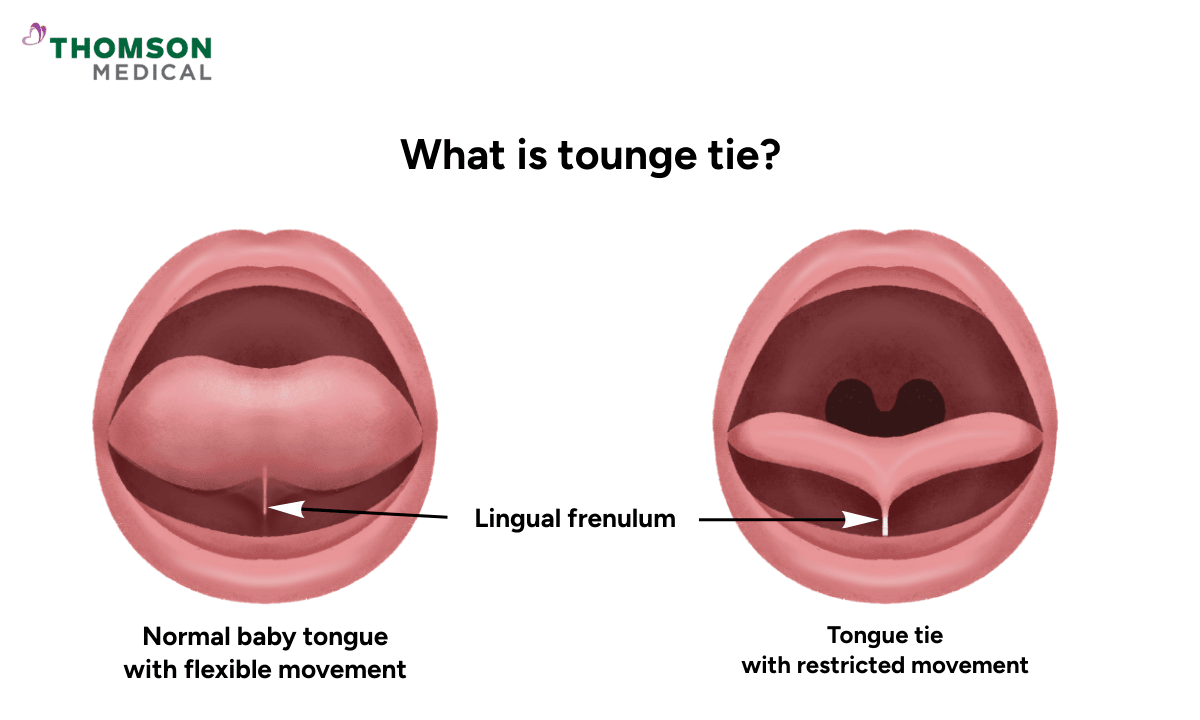
Tongue tie, also called ankyloglossia, happens when the tissue under your baby's tongue (the lingual frenulum) is shorter, thicker, or tighter than usual. This restricts how much the tongue can move.
Common cause
Tongue ties develop during early pregnancy, while your baby's mouth is forming. The exact cause is not fully understood, but it seems to be a natural variation in how babies develop and sometimes runs in families.
Tongue ties have nothing to do with what you ate, how you lived, any medications you took, or anything else you did while pregnant.
Signs and symptoms
Tongue ties look different in every baby. You might notice signs in your baby, in how breastfeeding feels for you, or both.
Signs in your baby
Your baby's tongue needs to move freely to latch well and get milk easily from your breast.
Restricted tongue movement can cause:
Trouble latching or staying latched
Clicking sounds while feeding
Long or frequent feeds but still seems unsatisfied
Poor weight gain or slow weight gain
Fussiness during or after feeds
Prefers bottle feeding over breastfeeding
Signs you may notice
When your baby can't latch deeply, more pressure ends up on your nipple instead of spreading across your breast tissue.
You might experience:
Flattened or misshapen nipples after feeds
Frequent clogged milk ducts or mastitis
Feeling like your breasts aren't emptying properly
Worries about low milk supply
If you notice one or more of these signs, it doesn't mean your baby definitely has tongue tie, but they're worth paying attention to when deciding whether to get an assessment.
When to seek medical advice
Tongue ties affect babies differently. Some babies feed well, while others struggle more with feeding. If you're worried about this condition, getting an assessment can give you answers and peace of mind.
You might want to talk to a healthcare professional if your baby:
Isn't gaining weight as expected
Has very few wet diapers, which could mean they're not getting enough fluids
Is causing nipple pain that continues even after you've worked on latch positioning
Refuses to feed or gets tired quickly during feeds
These signs don't always mean something's wrong, but they can help you figure out if you need extra help.
Depending on where you live and your care team, this condition can be checked by:
Lactation nurse or lactation consultant
Paediatrician
ENT specialist
Another clinician with specific training in tongue ties and infant feeding
During the visit, they'll check how your baby's tongue moves, see how feeding is going, and track your baby's growth. They might watch a feed and talk with you about what you're experiencing and what you're hoping to achieve with feeding. The assessment is usually quick and gentle, and most babies tolerate it well.
If you’re concerned about tongue tie, our specialists at Thomson Paediatric Centre can help assess and support you with personalised feeding guidance. Request an appointment today.
Our Paediatricians
Loading...
Can you continue breastfeeding?

It's natural to worry that tongue ties mean you need to stop breastfeeding. In most cases, you can keep going. With the right breastfeeding support or treatment, many babies with tongue tie can still breastfeed comfortably.
At the same time, using formula or expressed milk is also a valid and caring choice if it helps your baby grow and takes pressure off you. Some families supplement for a while as they work on breastfeeding, while others use a mix of feeding methods that works for them.
There's no one right way to feed your baby. Whether you continue breastfeeding, combine feeding methods, or choose formula, you are meeting your baby’s needs in a meaningful way.
Treatment option
Not all tongue ties need treatment. Many babies adapt and feed well without anything being done, especially with good positioning and feeding help.
Your lactation consultant or paediatrician might suggest tongue tie release if:
Feeding difficulties continue even with breastfeeding help
Your baby isn't gaining weight as expected
You're still experiencing nipple pain
Your baby isn't transferring milk well
Whether to treat this condition is a personal decision. Your lactation consultant and paediatrician will talk you through your options, and together, you can decide what feels right for you and your baby.
What is tongue tie release?
Tongue tie release (also called frenotomy) is a small procedure where the tight tissue under your baby's tongue is snipped to help it move more freely.
This procedure is usually quick and done at the clinic. Many babies can feed right after, and you might notice feeding gets easier and more comfortable over the next few weeks.
Complications of tongue tie release don't happen often, but they can include bleeding, discomfort, or changes to feeding, so your paediatric surgeon will talk through the risks and benefits with you beforehand.
Considering tongue tie treatment for your baby? Our specialist is here to help you explore treatment options and decide what feels right for you and your baby. Request a consultant with Thomson Paediatric Centre.
Feeding support strategies for you and your baby
Whether you're waiting for an assessment, have been told treatment isn't needed, or are continuing to breastfeed after a tongue tie release, gentle feeding support can help. Small changes can improve comfort, milk transfer, and how feeding feels overall.
You can try:
Use nipple creams or hydrogel pads to soothe soreness
Check positioning and deep latch with help from a lactation consultant
Switch up feeding positions and take short breaks to ease pressure on sore spots
Use gentle breast compressions during feeds to help milk flow easier
Consider expressing milk if your baby isn't feeding well at the breast
Use paced bottle-feeding techniques if your baby is bottle-fed.
Breastfeeding with a tongue tie can feel more challenging, especially in the early weeks when you are still getting to know your baby and your body.
It is natural to have questions, worries, or mixed feelings along the way. What matters most is that your baby is nourished, growing, and cared for, and that you feel supported in your feeding choices.
FAQ
How to tell if a baby is tongue tied?
Your baby may experience:
Have trouble latching
Make clicking sounds while feeding
Feed for a long time
Cause nipple pain for mother
A healthcare professional can confirm the diagnosis with an exam.
Will my baby's tongue tie go away?
This condition usually does not go away on its own, but not all babies need treatment. Many babies feed well without surgical intervention.
What happens if my baby does not have a tongue tie surgical cut?
Some babies have no problems, while others may have feeding difficulties, nipple pain, or low milk transfer. Your doctor can help you decide if treatment is needed.
Will a paediatrician perform tongue tie division?
Some paediatricians perform surgical cuts, but they are often done by trained specialists such as paediatric surgeons, ENT doctors, or dentists with expertise in tongue ties.
Is tongue tie surgery painful for babies?
Tongue tie division is a quick procedure. Babies may cry briefly, but discomfort is usually mild and short-lived, and feeding often improves soon after.
Can tongue ties cause speech difficulty?
Most children with tongue tie develop normal speech. In some cases, severe tongue tie may affect certain sounds, but speech therapy or treatment can help if needed.
The information provided is intended for general guidance only and should not be considered medical advice. For personalised recommendations and tailored advice based on your unique situations, please consult a specialist at Thomson Medical. Request an appointment with Thomson Medical today.