

If your wife just had, or is about to have, a hysterectomy, it might be a difficult time for you too. Maybe you're Googling at midnight trying to figure out what to expect. Maybe you're worried about saying the wrong thing, doing too much, or not doing enough.
That mix of worry and not knowing where to start is completely normal. But understanding what lies ahead for her body, her emotions, and your relationship can turn that uncertainty into the confidence to actually show up for her.
What is a hysterectomy?
A hysterectomy is a surgical procedure to remove the uterus (womb). Depending on your wife’s condition and needs, doctors may also recommend removing other reproductive organs at the same time.
It’s worth knowing that not all hysterectomies are the same.
There are several types of hysterectomy, including:
Total hysterectomy:
The uterus and cervix are removed.
Subtotal (supracervical) hysterectomy:
The uterus is removed, but the cervix is preserved.
Radical hysterectomy:
The uterus, cervix, upper portion of the vagina, and surrounding tissues are removed. This is usually recommended for gynaecological cancers.
Hysterectomy with bilateral or unilateral salpingo-oophorectomy:
The uterus is removed along with one or both ovaries and fallopian tubes.
The surgical approach also varies. It can be done through abdominal, vaginal, laparoscopic and robotic techniques. Each method has its own recovery timeline and effects on how your wife will feel in the weeks ahead.
Knowing the type she had helps you understand what her body is going through so you can support her along the way.
How a hysterectomy affects your wife

A hysterectomy is a major surgery, and its effects go beyond the operating room. In the weeks and months that follow, your wife may experience changes, both physical and emotional, that can feel overwhelming at times.
Understanding what she may be going through helps you know how to show up for her in meaningful ways.
Physical effects
In the first few weeks, your wife may feel more tired and uncomfortable than usual. During this time, she may need as much rest as possible to recover.
Some other changes she may experience include:
Pain and fatigue
Vaginal bleeding or discharge
Temporary or permanent hormonal changes, particularly if her ovaries are removed
Vasomotor symptoms such as hot flashes or night sweats
Vaginal dryness or changes in tissue elasticity
Altered urinary or bowel function, which usually settles over time
Every woman recovers differently. Your wife may have good days and harder ones. Either way, knowing you are by her side makes the journey easier.
Psychological and emotional effects
The emotional side of recovery is just as important as the physical.
Your wife may go through a range of feelings after surgery, including:
Mood changes:
She may feel more anxious, low, or emotionally sensitive than usual, especially in the early weeks.
Grief over fertility loss:
Even when a hysterectomy is the right decision, it is natural to mourn the loss of the ability to conceive. These feelings deserve space and acknowledgement.
Shifts in body image or identity:
She may have questions about how surgery has changed her sense of femininity, her relationship with her body, or how she feels about ageing.
Concerns about sexual wellbeing:
Worries about intimacy and sexual function are common and valid.
These responses are a normal part of her healing process. They can be shaped by hormonal shifts after surgery, the emotional weight of the procedure itself, and her mental health history.
It’s okay if you don’t have all the answers. Staying present while she moves through it and listening to her feelings without judgement can mean a lot to her.
When should your wife seek medical attention after a hysterectomy?
A hysterectomy is generally a safe procedure. But as her partner and her main support at home, knowing which signs warrant prompt medical attention can help you act quickly when it matters most.
Reach out to her doctor if you notice:
Fever exceeding 38°C (100.4°F)
Heavy vaginal bleeding (e.g. soaking through more than one pad per hour)
Vaginal discharge with an unusual or unpleasant smell
Increasing abdominal or pelvic pain
Signs of wound infection, such as redness, warmth, swelling, or any discharge around the wound site
Difficulty urinating, pain when urinating, or changes in bowel function
Persistent or worsening depressive symptoms
Some discomfort is expected, but pain that's getting worse instead of better is not. If something feels off, it’s worth checking with her care team for clarity and peace of mind.
If you notice any of these signs in your wife, schedule an appointment with Thomson Medical. Our specialist will assess her condition and help advise on the right next steps.
Gynaecologists at Thomson Medical
Loading...
Advice for husbands after a hysterectomy: ways to support your wife during recovery
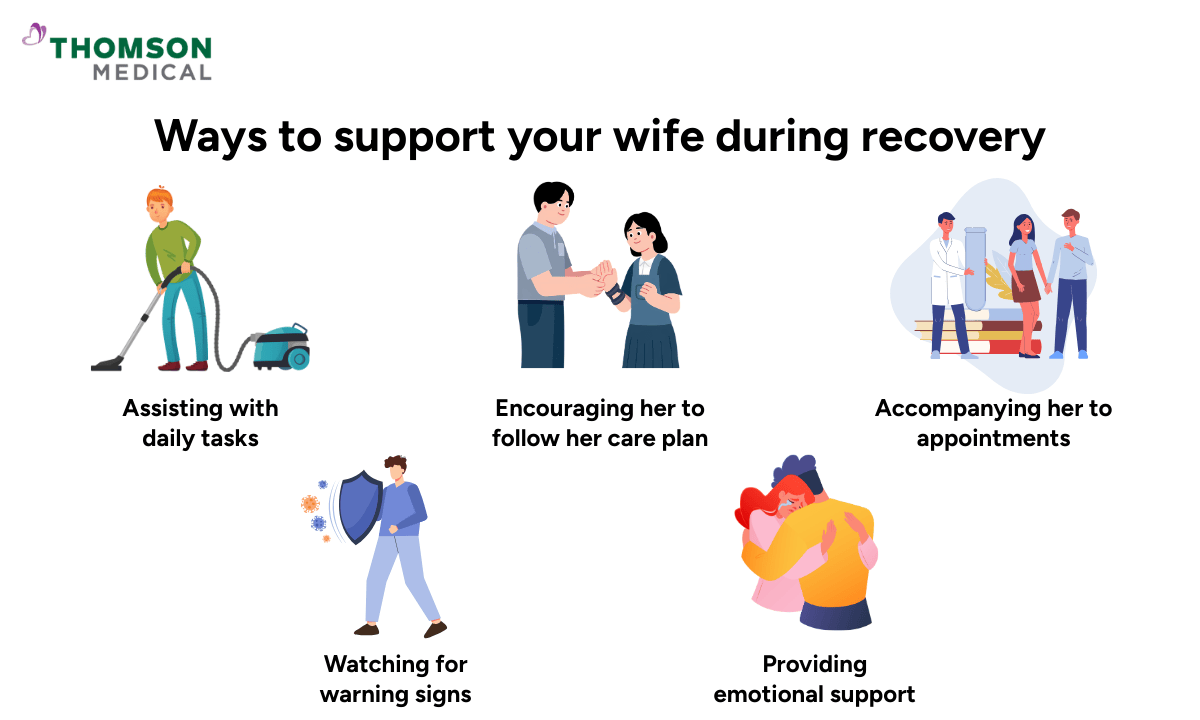
Recovery from a hysterectomy typically takes from 4 to 8 weeks, depending on the type of surgery your wife had. During this time, your presence and support at home can make a difference to how she heals.
Some meaningful ways you can help her include:
Assisting with daily tasks:
Take over household responsibilities such as cooking, cleaning, and grocery shopping.
Help her get in and out of bed or chairs if these movements are uncomfortable.
Encouraging her to follow her care plan:
Gently remind her of her medication schedule, rest guidelines, and activity restrictions, especially in the first few weeks.
Accompanying her to follow-up appointments:
Offer to drive her to and from her postoperative check-ups.
Attend consultations so you can listen alongside her, ask questions, and help her remember what the doctor said
Watching for warning signs:
If you notice any of the warning signs, including heavy bleeding, fever, increasing pain, redness or discharge at the wound site, contact her doctor promptly.
Providing emotional support:
A hysterectomy can bring up complex feelings about femininity or fertility, so be patient with her emotional ups and downs.
What matters here is that she doesn’t have to get through this alone. Having you by her side through the small, everyday moments can make the hard days become more manageable.
How can you and your wife maintain intimacy after a hysterectomy?
Intimacy is an important part of any relationship, and it’s natural to have questions about how things may change after surgery.
Intimacy after a hysterectomy is still very much possible. It may take some time and adjustment. But with patience and open communication, you and your wife can learn to reconnect both physically and emotionally.
How does a hysterectomy affect intimacy?
It is common for sexual function to change in the weeks and months after surgery. These changes can be physical, hormonal, emotional, or a combination of all.
Your wife may experience:
Decreased libido during recovery
Pain during intercourse (dyspareunia)
Vaginal dryness or reduced lubrication
Emotional barriers to intimacy, such as fear of pain or injury
Intimacy doesn’t disappear after a hysterectomy. But it may need to be rebuilt on her timeline and at her pace. Knowing that from the start will help you approach this part of the process with more patience and less stress.
Tips for resuming intimacy after a hysterectomy
Returning to intimacy after surgery can be a deeply personal journey, and there is no single timeline that is right for everyone. Her doctor may recommend waiting around 6 to 8 weeks before resuming sexual activity, once they have confirmed that her body is healing well.
When the time feels right for both of you, here are a few gentle things to keep in mind:
Let her determine timing and pace
Use water-based or silicone lubricants as needed
Be gentle and avoid deep or forceful penetration at first
It’s also important to pay attention to her body and how she feels during and after intimacy. If she experiences pain or any bleeding after intercourse, it can be a good idea to pause and check in with her doctor.
Having difficulties with sexual wellbeing after a hysterectomy is common. If you and your wife need help, her gynaecologist can tailor guidance and support.
How can couples adjust to long-term changes after a hysterectomy?
Life after a hysterectomy looks different for every couple. Adjusting to those changes takes time, patience, and a willingness to figure things out together.
Areas the two of you may need to navigate together include:
Managing menopausal symptoms if her ovaries are removed
Adjusting expectations around intimacy
Seeking professional support when needed (counselling, intercourse therapy)
A hysterectomy changes things, but it doesn't have to change what matters most between you. It can be a long journey ahead, but going through it together can bring you closer in ways you may not expect.
If you and your wife are finding it difficult to adjust to life after a hysterectomy, schedule an appointment with Thomson Medical. Our specialist will work with both of you to find the right support and care.
FAQ
What advice can help husbands support their wives after a hysterectomy?
Be patient, stay informed, and show up consistently. Remember that recovery involves both physical healing and emotional adjustment.
What are the behavioural changes after hysterectomy?
Behavioural changes may include irritability, mood swings, fatigue, or withdrawal. These may be related to hormonal shifts, pain, or emotional stress. If these changes feel persistent or distressing, it's worth encouraging her to speak with her doctor.
How can I help make sexual intercourse less painful for my wife after a hysterectomy?
Wait until her doctor confirms she's ready, use lubricant, go slowly, and let her set the pace entirely. If pain persists after several attempts, encourage her to raise it with her gynaecologist.
What are the dos and don’ts for partners during hysterectomy recovery?
Do:
Support physical rest and medical guidance
Validate symptoms and emotional responses
Assist with daily responsibilities
Don’t:
Pressure for rapid recovery or sexual activity
Dismiss her pain or psychological symptoms
Ignore warning signs of complications
What should I do if my wife is bleeding after a hysterectomy?
Light spotting early on can be normal. However, if you notice heavy or persistent bleeding, you should:
Keep her calm and help her lie down and rest
Note when the bleeding started and how heavy it is
Contact her doctor right away
What can we expect one year after a hysterectomy?
By the one-year mark, most women have made good progress physically, and hormonal levels and sexual function tend to have stabilised. Many women who had surgery to address chronic pain or heavy bleeding also notice an improvement in their overall quality of life.
That said, every woman's journey is her own. If she has any lingering concerns, a follow-up with her gynaecologist is always a good idea.
The information provided is intended for general guidance only and should not be considered medical advice. For personalised recommendations and advice based on your unique situation, please consult a specialist at Thomson Medical. Request an appointment with Thomson Medical today.
For more information, contact us:
Thomson Specialists (Women's Health)
Thomson Women's Clinic (TWC)
- Novena:
6592 6686 (Call), 8611 8986 (WA) - Bukit Batok:
6569 0668 (Call), 8686 3525 (WA) - Choa Chu Kang:
6893 1227 (Call), 8282 1796 (WA) - Jurong:
6262 8588 (Call), 6262 8588 (WA) - Katong (female doctor):
6970 2272 (Call), 8611 9020 (WA) - Punggol:
6243 6843 (Call), 8811 0328 (WA) - Sembawang: 6753 5228
- Sengkang: 6388 8125
- Serangoon (female doctor): 6382 3313
- Tampines: 6857 6266
- Tiong Bahru: 6276 1525
Notice
The range of services may vary between TWC/TS locations. Please contact your preferred branch directly to enquire about the current availability.
Request an Appointment