

If you have recently noticed genital warts, it’s natural to wonder how long they might last and whether they will clear up without treatment.
For many people, the warts may gradually go away as their immune system controls the virus, allowing them to naturally recover without long-term health problems. In other cases, treatment may help remove the warts sooner or prevent them from spreading.
Knowing how long they may persist and when to seek medical advice can help you feel more confident about your next steps.
What are genital warts?
Genital warts are small growths that appear on the skin around the genital or anal area. They are a sexually transmitted infection (STI) caused by certain types of the human papillomavirus (HPV), most commonly HPV types 6 and 11.
These warts may appear as:
Small, flesh-coloured or grey bumps
Clusters that resemble cauliflower
Flat or slightly raised skin lesions
You may notice them in areas such as:
The penis or scrotum
The vulva or vaginal area
Around the anus
The surrounding genital skin
Some people develop just one or two warts, while others may notice several appearing at the same time. In many cases, the warts don’t cause pain, though they can feel itchy or uncomfortable.
How long do genital warts last?
The warts often clear on their own within several months to two years, as the immune system works to control the virus. That said, in some cases the warts may take longer to resolve or come back over time.
Even after the visible warts disappear, HPV may still be present in the body – which is why they can sometimes return after being treated or clearing on their own.
While this may feel unsettling, it helps to know that warts in the genital area are generally manageable. Treatment can remove visible warts and ease any discomfort in the meantime.
If you think you might have genital warts, you may schedule a consultation with Thomson Medical. Our doctors provide judgement-free care and will work with you to determine the best treatment for your condition.
Factors that affect how long genital warts last
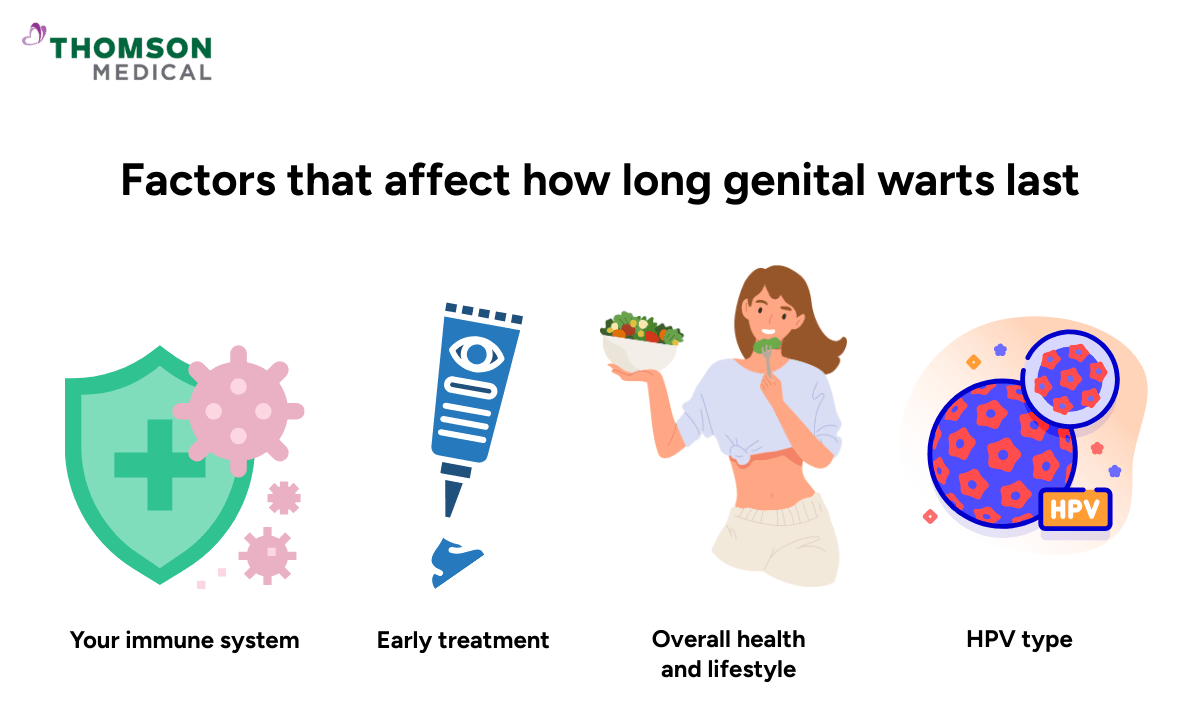
How long the warts last can differ from person to person.
The duration depends on several factors, including:
Your immune system:
A stronger immune response may help your body suppress the virus more quickly, causing the warts to shrink or clear sooner.
Early treatment:
Getting treatment when you first notice the warts can help remove them sooner and lower the chance of them growing larger or spreading.
Overall health and lifestyle:
Smoking, high stress, or certain conditions such as diabetes can weaken your immune system
HPV type:
HPV 6 and 11, which cause most genital warts, are considered low-risk strains.
Because these factors vary between individuals, a common follow-up question is, 'Do they always need treatment?'
Is treatment necessary?
Not everyone with warts in the genital area needs to start treatment straight away, since they may clear up on their own over time.
That said, many people choose to treat them because genital warts can:
Cause discomfort or itching
Continue to grow or spread
Affect confidence or emotional wellbeing
Our specialist in genital warts
Loading...
Treatment options for genital warts
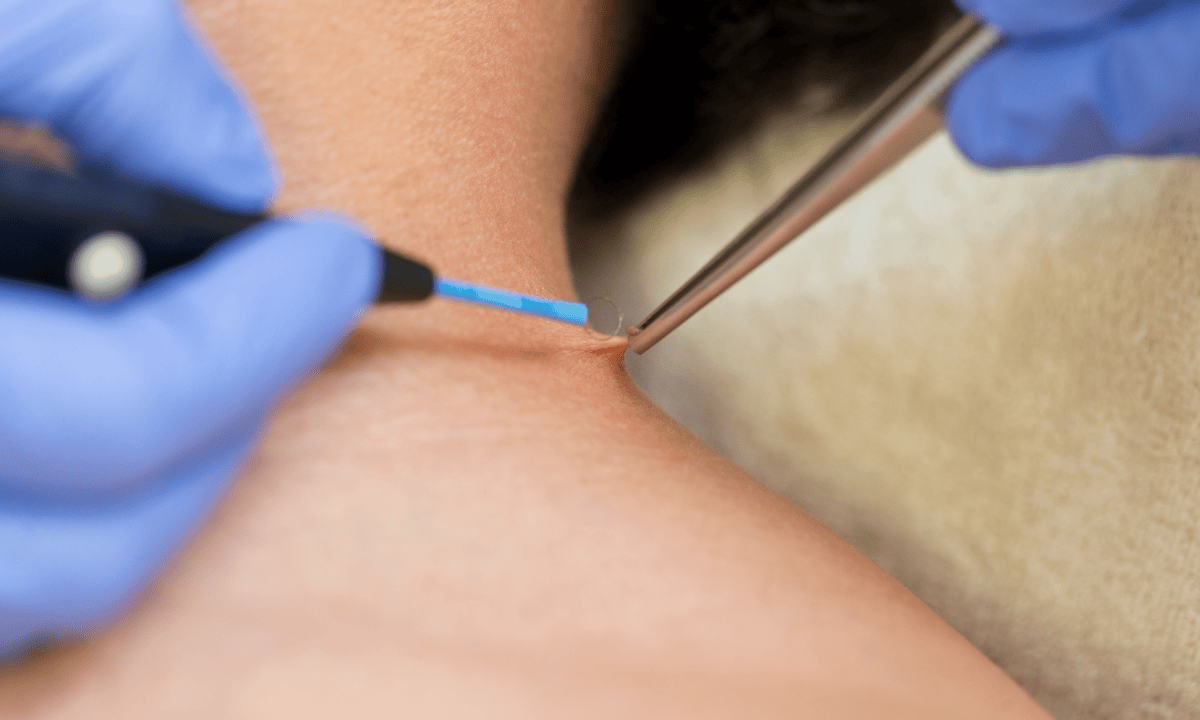
If treatment is recommended, the goal is usually to remove the visible warts and ease any symptoms. Treatment doesn’t completely clear HPV from your body, but it can help manage the condition effectively.
Topical medicine
Your doctor may prescribe a cream or solution that you apply directly to the warts. These medications work by breaking down wart tissue or helping your immune system fight the virus.
Common topical prescriptions may include:
Imiquimod cream:
A topical treatment that helps your immune system fight abnormal skin growths, including genital warts.
Podofilox:
A prescription gel or solution that works by directly destroying wart tissue and stopping it from growing.
Sinecatechins (green tea extract):
A plant-based ointment derived from green tea that helps clear warts through antiviral and anti-inflammatory effects.
Trichloroacetic acid (TCA):
A chemical applied by your doctor to burn off and remove warts or abnormal tissue in a controlled way.
These treatments can take up to 16 weeks to work fully. Your doctor will walk you through how to use them safely at home.
Procedural or surgical treatment
If the warts are large, persistent, or not improving with topical treatment, your doctor may recommend a procedure to remove them.
Procedural treatments may include:
Cryotherapy by freezing and destroying the warts with liquid nitrogen
Electrocautery by burning off the warts with electric current
Laser therapy uses focused light to destroy wart tissue
Surgical removal by cutting away the warts under local anaesthesia
Most of these options are straightforward and performed in a clinic.
Genital warts can feel alarming when you first notice them, but they are generally considered a common and manageable issue. With the right information and appropriate care, many people are able to treat the warts and keep them under control.
If you have concerns about genital warts or notice new growths in the genital area, consulting a doctor can help you understand your options and choose the most appropriate treatment for your situation. Request an appointment with Thomson Medical.
FAQ
Can I get genital warts more than once?
Yes, it is possible to develop genital warts more than once. This can happen if the virus becomes active again or if you are exposed to HPV (human papillomavirus) again in the future.
How do genital warts affect pregnancy?
The warts usually don’t affect pregnancy or your baby’s health. However, hormonal changes during pregnancy may sometimes cause existing warts to grow or reappear.
Is there a vaccine for genital warts?
Yes, the HPV vaccine can protect against the types of HPV that commonly cause genital warts, as well as some types linked to cancer. However, the vaccine prevents infection and doesn’t treat existing warts.
What happens if genital warts are left untreated?
If left untreated, genital warts may remain the same, grow larger, or increase in number. In some cases, they may also cause itching, irritation, or occasional bleeding.
Can genital warts cause cancer?
The warts themselves don’t turn into cancer because they are usually caused by low-risk HPV strains, such as HPV 6 and HPV 11.
However, some other HPV types are linked to certain cancers, such as cervical cancer or vaginal cancer. That is why HPV vaccination and regular cervical screenings (including Pap smears or HPV DNA testing) are important.
What treatment options are available for genital warts?
Treatment for genital warts usually focuses on removing the visible warts and relieving symptoms. Your doctor may recommend:
Topical medications, including imiquimod, podofilox, sinecatechins, or trichloroacetic acid
In-office procedures such as cryotherapy, laser treatment, or surgical removal
The information is intended for general guidance only and should not be considered medical advice. For personalised recommendations and advice based on your unique situation, please consult a specialist at Thomson Medical. Request an appointment with Thomson Medical today.
For more information, contact us:
Thomson Specialists (Women's Health)
Thomson Women's Clinic (TWC)
- Novena:
6592 6686 (Call), 8611 8986 (WA) - Bukit Batok:
6569 0668 (Call), 8686 3525 (WA) - Choa Chu Kang:
6893 1227 (Call), 8282 1796 (WA) Jurong:
6262 8588 (Call), 6262 8588 (WA)- Katong (female doctor):
6970 2272 (Call), 8611 9020 (WA) - Punggol:
6243 6843 (Call), 8811 0328 (WA) - Sembawang: 6753 5228
- Sengkang: 6388 8125
- Serangoon (female doctor): 6382 3313
- Tampines: 6857 6266
- Tiong Bahru: 6276 1525