

After giving birth, most of your attention naturally shifts to your baby. Between feeding schedules, sleep changes, and adjusting to life with a newborn, it’s easy for your own health appointments to slip down the priority list.
Many new mothers also find themselves wondering if they still need a Pap smear after having a baby, especially if they had one done during or before pregnancy.
Cervical screening after birth is usually simple and straightforward. Knowing when you may need a Pap smear and why it remains important can help you take care of your own health while caring for your baby.
What is a Pap smear?
To understand why your doctor recommends cervical screening after childbirth, it helps to know what a Pap smear does.
A Pap smear, sometimes called a Pap test, is a screening test that checks for abnormal cells in the cervix.
It doesn't diagnose cancer directly. Instead, it helps detect early cell changes, often long before you'd notice any symptoms. Catching those changes early means treatment can step in before cervical cancer gets a chance to develop.
Regular Pap smears are one of the most effective ways to protect your cervical health over the long term. This remains true even after pregnancy and childbirth.
Why Pap smear is still important after giving birth
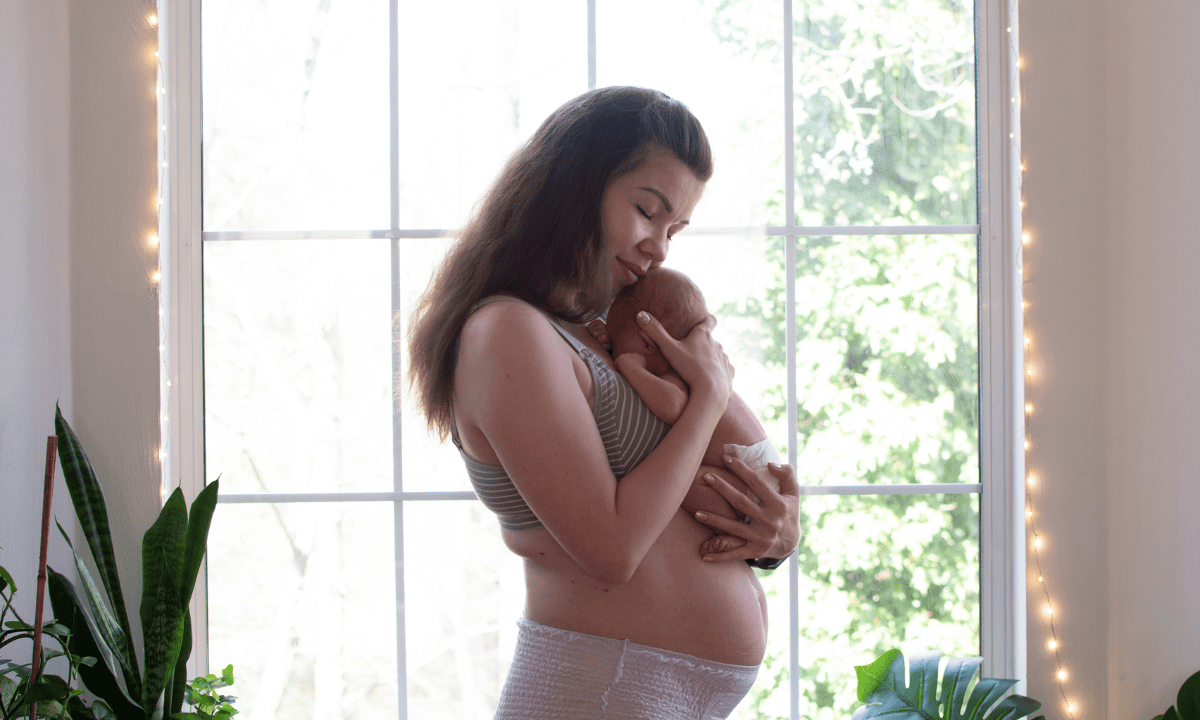
Pregnancy and birth don't remove the risk of HPV infection or the other factors that can lead to cervical cell changes.
The postpartum period also brings its own shifts. As your body recovers, hormonal fluctuations, infections, or other reproductive health conditions can sometimes affect cervical cells after delivery.
It’s important to know that cervical changes tend to develop slowly, and in the early stages, they rarely cause any noticeable symptoms. You can feel completely fine and still have abnormal cells present, which is exactly why screening matters.
When should you have a Pap smear after giving birth?
In most cases, a Pap smear can be done around 6 to 12 weeks after childbirth, often during your postpartum check-up.
By this time, your cervix has generally had enough time to heal and settle back closer to its pre-pregnancy state. Having the test earlier, while your cervix is still healing, can sometimes lead to unclear results that need to be repeated anyway.
That said, when you actually need one depends on your screening history:
If you had a normal Pap smear recently, you probably won't need another one immediately.
If your last screening was several years ago or overdue, your doctor may recommend doing one during your postpartum visit.
If you've previously had abnormal results, your doctor may advise closer follow-up.
Your doctor can review your screening history and let you know whether you need one at your postpartum visit or can wait until your next routine screening is due.
Signs you should not delay a Pap smear
Even if your next screening isn't due yet, certain symptoms are worth getting checked sooner.
You should speak with your doctor if you experience:
Unusual vaginal bleeding between periods
Persistent pelvic pain
These symptoms don't necessarily point to something serious but it's always better to let your doctor take a look and rule out possible causes.
If you notice any of these signs or feel unsure about your cervical health after giving birth, schedule a consultation at Thomson Medical. Our gynaecologists can assess your symptoms, perform appropriate screening, and guide you on the next steps to protect your cervical health.
Our gynaecologists
Loading...
What to expect during a postpartum Pap smear
A Pap smear after childbirth follows the same process as a routine cervical screening.
During the test:
You'll lie comfortably on the examination table
Your doctor gently inserts a small instrument called a speculum to get a clear view of your cervix
A soft brush or small spatula is then used to collect a sample of cells
The entire procedure usually takes a few minutes, and most women find it causes little to no discomfort.
How to prepare for a postpartum Pap smear
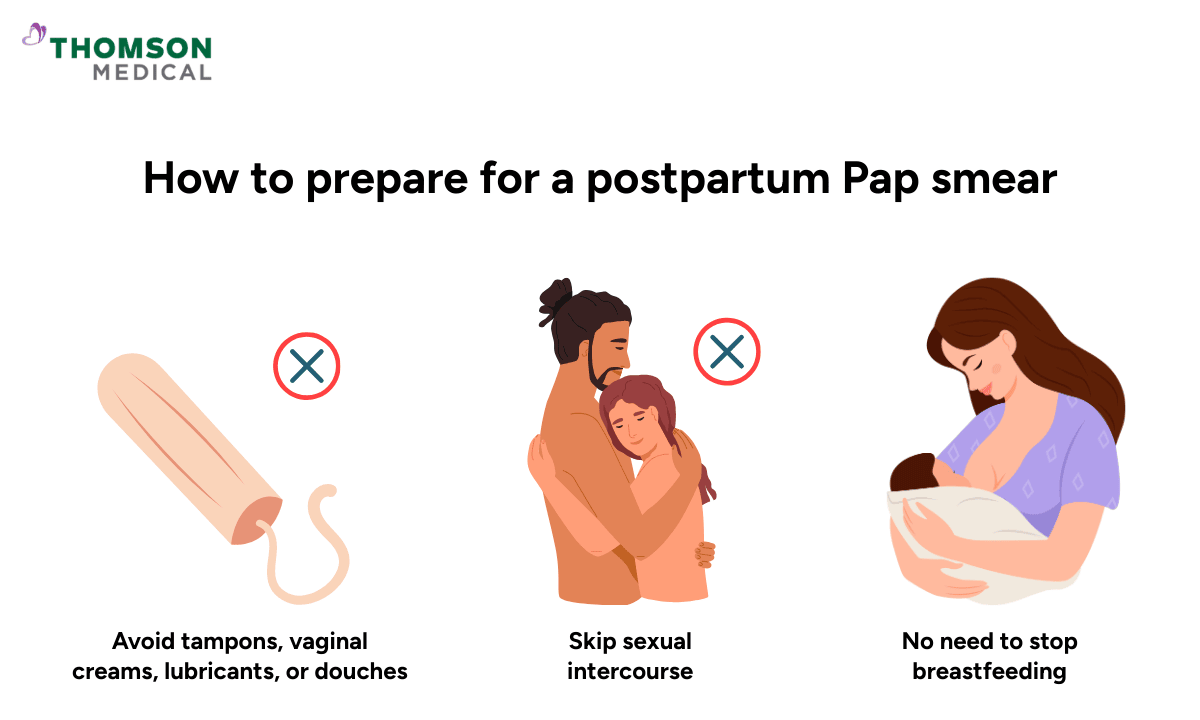
To help get the most accurate results, your doctor may suggest a few things ahead of your appointment:
Avoid tampons, vaginal creams, lubricants, or douches for 24 to 48 hours beforehand
Skip sexual intercourse for about 24 hours before the test
If you're breastfeeding, there's no need to stop – it doesn't affect your results
Following these simple steps can make your Pap smear appointment easier and more comfortable.
Is a Pap smear safe after childbirth?
A Pap smear is safe after both vaginal delivery and caesarean section. Because the cervix can still be a little sensitive after birth, some women notice very light spotting afterwards, but this tends to settle quickly.
A Pap smear won't get in the way of your postpartum recovery. The test only involves collecting a small sample of cells from the surface of your cervix, so it doesn’t affect how your body heals after delivery.
Milk production and the safety of nursing aren't impacted by the procedure, so you can carry on breastfeeding your baby as normal.
What happens if my postpartum Pap smear is abnormal?
If your Pap smear comes back abnormal, try not to panic. An abnormal result doesn't mean you have cervical cancer. In most cases, it means some cervical cells look slightly different and may need closer monitoring.
These changes are often linked to HPV infection or temporary inflammation, and many mild abnormalities clear up on their own without any treatment.
Depending on what was found, your doctor may suggest one of a few different next steps:
Repeat Pap smear in several months to see if the cell changes resolve naturally
HPV testing to check for high-risk types of the virus
Colposcopy, a closer examination of the cervix using a special microscope
In some cases, a small biopsy to examine cervical tissue more closely
These follow-up tests are usually quick and help your doctor understand what the changes are more clearly.
The most important thing to remember is that Pap smear screening works best when changes are found early. When abnormal cells are detected at an early stage, your doctor can monitor or treat them before they develop into something more serious.
If you would like to discuss cervical screening or your postpartum recovery, request an appointment with Thomson Medical. Our gynaecologists can help you understand your cervical screening schedule and ensure you receive the care that supports your health after childbirth.
FAQ
Is a Pap smear part of the standard 6-week postpartum check?
If you are due for cervical screening, your doctor may perform a Pap smear during the 6-week postpartum visit. If you recently had a normal Pap smear, the test may be scheduled for a later time.
Does breastfeeding affect Pap smear results?
No, breastfeeding doesn’t affect the accuracy of a Pap smear. Hormonal changes after childbirth may slightly affect how cervical cells appear, but your doctor can interpret the results accurately.
Is it safe or painful to get a Pap smear soon after delivery?
A Pap smear is generally safe after childbirth. Some women may feel mild discomfort during the test and notice light spotting afterward.
Do I still need Pap smears if I had a C-section?
A C-section doesn’t remove the cervix, so cervical screening is still necessary. Many women can have a Pap smear around 6–12 weeks after delivery, depending on their recovery.
What if my last Pap smear was normal?
Even with a normal result, regular screening is still recommended. Most guidelines advise a Pap smear every 3–5 years, depending on your age and the type of test.
Can a Pap smear detect HPV after childbirth?
Yes, a Pap smear can detect abnormal cervical cells that may be caused by HPV infection, and HPV testing may also be performed if needed.
The information is intended for general guidance only and should not be considered medical advice. For personalised recommendations and advice based on your unique situation, please consult a specialist at Thomson Medical. Request an appointment with Thomson Medical today.
For more information, contact us:
Thomson Specialists (Women's Health)
Thomson Women's Clinic (TWC)
- Novena:
6592 6686 (Call), 8611 8986 (WA) - Bukit Batok:
6569 0668 (Call), 8686 3525 (WA) - Choa Chu Kang:
6893 1227 (Call), 8282 1796 (WA) Jurong:
6262 8588 (Call), 6262 8588 (WA)- Katong (female doctor):
6970 2272 (Call), 8611 9020 (WA) - Punggol:
6243 6843 (Call), 8811 0328 (WA) - Sembawang: 6753 5228
- Sengkang: 6388 8125
- Serangoon (female doctor): 6382 3313
- Tampines: 6857 6266
- Tiong Bahru: 6276 1525