

A hysterectomy is often seen as the closing of a chapter. That is what makes spotting years later feel unexpected and, at times, worrying.
While bleeding after a hysterectomy is not always serious, it is not something to ignore. Understanding what might cause it and when to seek medical advice can help you respond with confidence.
Is spotting years after a hysterectomy normal?
A hysterectomy is a surgical procedure to remove your uterus. This procedure is often performed to treat conditions such as fibroids, endometriosis, abnormal bleeding, or certain cancers when other treatments have been unsuccessful.
In most cases, spotting or vaginal bleeding years after a hysterectomy isn't expected, especially if your uterus and cervix were both removed.
What your doctor will consider:
The type of hysterectomy you had (whether your cervix was removed or kept)
Whether your ovaries were preserved
How long ago your surgery was
Any other symptoms you are experiencing, such as pain, unusual discharge, or fever
The key difference is timing. Bleeding that appears much later is different from typical surgical recovery and needs to be assessed.
When can light bleeding be explained?
Not every case of light bleeding after a hysterectomy points to something serious. Some spotting is normal, especially in the first few months after surgery or if the cervix was kept.
Some possible causes of light bleeding after a hysterectomy include:
Early recovery spotting:
Light bleeding in the first few weeks or months after surgery can happen as your body heals
Ovulatory spotting:
If your cervix was kept, you may still notice very slight spotting linked to hormonal changes in your cycle
Vaginal dryness or atrophy:
This is particularly common after menopause and can lead to light bleeding, especially after sexual intercourse
If your bleeding is mild and occasional, it may not require urgent review. However, persistent or unclear symptoms should still be discussed with a doctor.
Our hysterectomy specialists in Singapore
Loading...
Warning signs that need prompt medical attention
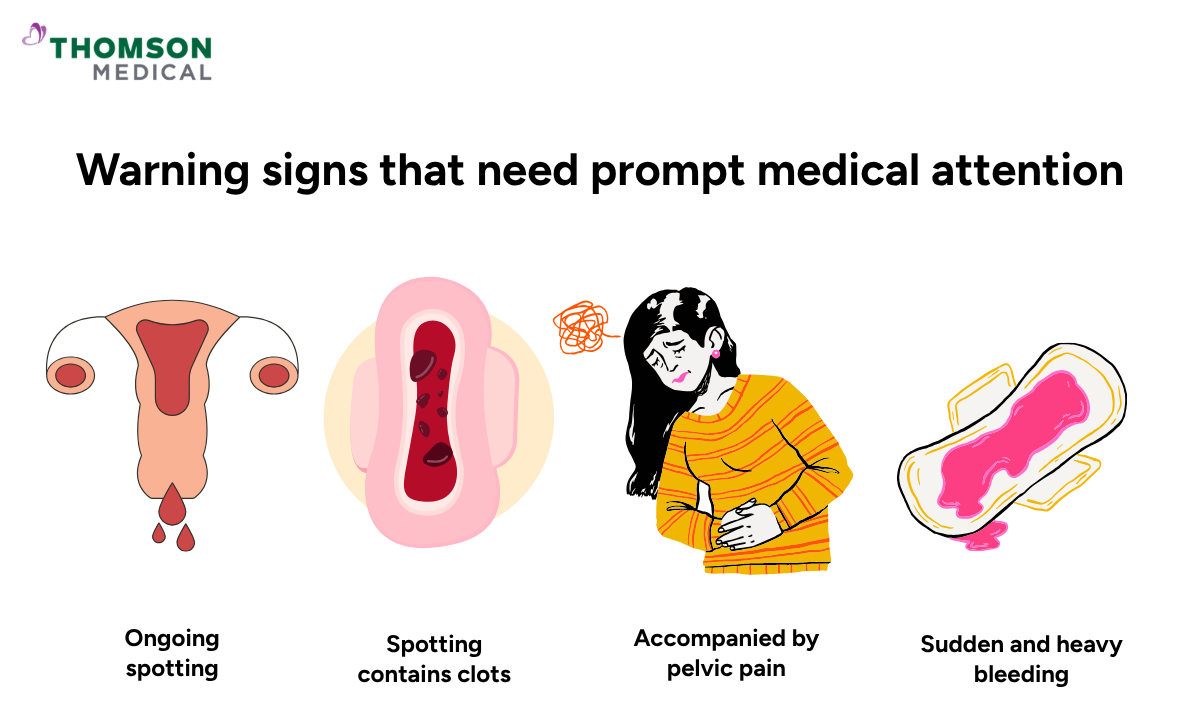
While light spotting can be a normal part of recovery, changes in bleeding may point to something that needs attention.
If you notice any of the following, please reach out to your doctor:
New bleeding, especially if it appears after months or years with no symptoms
Ongoing or recurring spotting
Spotting that contains clots
Bleeding accompanied by pelvic pain, fever, or unusual discharge
Spotting triggered by sexual intercourse (postcoital bleeding)
Sudden and heavy bleeding soaking through a pad within an hour, or bleeding that continues for several hours
A sensation that something has changed or prolapsed inside the vagina
When you contact your doctor, it helps to note how much you are bleeding (for example, how many pads you are using per day), when it started, and whether anything triggered it. This helps your doctor understand whether you need to be examined immediately or within a few days.
If you notice new or abnormal bleeding after a hysterectomy, request an appointment with Thomson Medical. Our gynaecologists can assess your symptoms, help you understand the cause, and guide you on the next steps for your care.
What could be causing the bleeding years after a hysterectomy?
Bleeding years after a hysterectomy can happen for different reasons. Some are minor and easy to treat, while others need closer examination.
Vaginal cuff complications
If your cervix was removed, the top of your vagina is closed with stitches, forming what is known as a ‘vaginal cuff’.
Over time, a few issues can develop here:
Granulation tissue:
This is overgrown healing tissue that can cause light spotting. It is a benign and relatively common cause of light spotting.
Infection or inflammation:
This condition may lead to bleeding, discharge, and discomfort.
Cuff separation:
In some cases, the stitching partially or fully comes apart, causing bleeding, pain, or a feeling of pressure.
The pattern of bleeding you notice, whether it is light spotting or a heavier flow with pain, can help your doctor understand what may be happening.
Vaginal atrophy and hormonal changes
After a hysterectomy, your hormones can change in ways that may not become noticeable for some time. One of the most common reasons for bleeding is a drop in oestrogen levels, which can happen after the menopause or if your ovaries were removed.
When oestrogen falls, the vaginal tissue can become thinner, drier, and more fragile, leading to vaginal atrophy. You may notice light bleeding, especially after sexual intercourse, as the tissue becomes easily irritated. If this sounds familiar, it is worth mentioning to your doctor.
Residual tissue, polyps, or endometriosis
Not all causes of bleeding after hysterectomy are related to hormones. In some cases, it may be due to remaining tissue after surgery or conditions that continue to develop.
Your doctor will consider:
Residual cervical tissue:
This is relevant if you had a supracervical hysterectomy (where the cervix was kept). Remaining cervical tissue can still respond to hormonal changes and occasionally bleed.
Endometriosis:
Even after a hysterectomy, endometriosis can sometimes affect the vaginal cuff area, causing both pain and occasional bleeding.
Benign polyps:
Non-cancerous growths can develop in the vagina or on remaining cervical tissue, leading to spotting.
What these causes have in common is that they can develop or persist gradually after surgery, sometimes without symptoms until bleeding appears.
Infections
Infections are another possible reason for post-hysterectomy bleeding. Conditions such as vaginitis or sexually transmitted infections (STIs) can cause both bleeding and unusual discharge. Once your doctor has assessed you, these are generally straightforward to identify and treat.
Gynaecological cancers
While uncommon, cancers of the vagina, ovary, or cervix (if present) may be considered. This is why new bleeding should always be evaluated.
Cancer is not usually the cause of bleeding after a hysterectomy, but it is important not to overlook it. In rare cases, vaginal or ovarian cancer could be the cause, and if your cervix was kept, your doctor will also look for any signs of cervical cancer.
Most of these conditions can be identified through diagnostic tests. Your doctor will advise you on which tests are appropriate based on your symptoms, examination findings, and the type of hysterectomy you have had.
How is post-hysterectomy bleeding diagnosed?
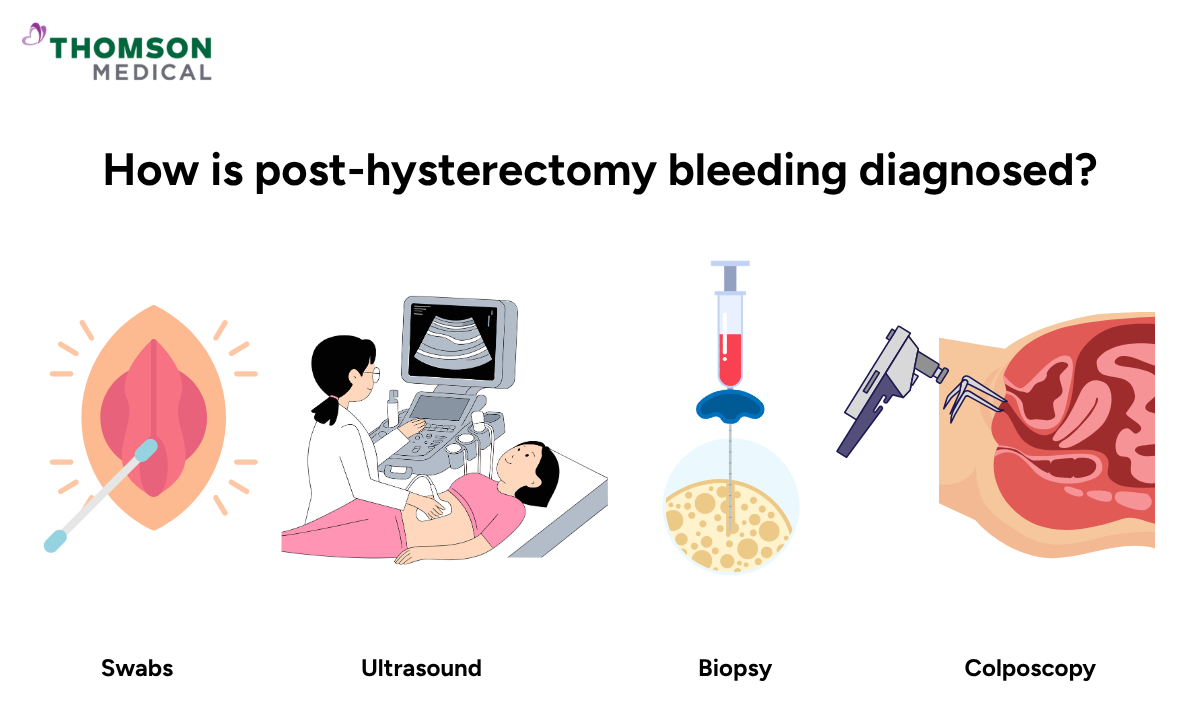
Evaluation usually begins with a pelvic examination to assess the vaginal cuff and any remaining cervical tissue.
Depending on the results, further tests may include:
Swabs to check for infection or inflammation
An ultrasound to examine your pelvic organs and check for abnormalities
A biopsy to rule out cancer if there are any concerning findings
A colposcopy where a closer look at vaginal tissue is taken using a magnifying instrument
In many cases, a diagnosis is made over one or two visits. The first appointment often helps identify the likely cause through an examination and simple tests, while any additional tests, such as a biopsy, usually return results within one to two weeks.
How is it treated?
Once the cause of your bleeding is identified, treatment can be tailored to your situation. Most causes can be treated effectively.
Treatment depends on what's causing your bleeding:
For vaginal atrophy:
Topical oestrogen (creams or pessaries) can help restore moisture and strengthen the tissue.
For infection:
Antibiotics or antifungal medication is usually effective and works quickly.
For granulation tissue:
Cauterisation (a minor procedure using heat or silver nitrate to remove the tissue)
For vaginal cuff problems:
Surgical repair may be needed if there is separation or complications.
For cancer:
Referral to a gynaecological oncologist for personalised treatment.
Recovery timelines vary, but many women improve sooner than expected. Granulation tissue and infections often clear within a few weeks, while vaginal atrophy tends to improve more gradually over several months with oestrogen therapy.
Supporting your vaginal health after a hysterectomy
Treating the cause of bleeding is the first step, but ongoing care helps prevent it from coming back and supports your long-term recovery.
Here are some practical steps worth building into your routine:
Use vaginal oestrogen consistently if it has been prescribed:
It helps maintain the thickness and resilience of vaginal tissue after the menopause.
Used regularly, it reduces both dryness and the risk of minor bleeding.
Follow your doctor's guidance on resuming sexual activity:
This helps avoid placing unnecessary strain on the vaginal cuff while it heals.
Do pelvic floor exercises gently and regularly:
These help support tissue health over time.
These are worth doing every day, even when you feel well.
After menopause, vaginal tissue becomes more fragile without oestrogen support. Consistent care helps maintain tissue health and reduce irritation. Staying consistent with these steps helps keep your tissue strong and reduces the chances of spotting returning.
If you are just recovering from a hysterectomy, request an appointment with Thomson Medical. Our specialists can provide ongoing care to support healing, prevent complications, and help maintain your vaginal health.
FAQ
Can you still get your period after a hysterectomy?
No. Once the uterus is removed, menstruation stops permanently. If your cervix was kept, you may sometimes notice very light spotting due to small amounts of remaining tissue responding to hormonal changes.
What are the longer-term effects of a hysterectomy?
- Periods stopping permanently
- Infertility, as pregnancy is no longer possible
- Hormonal changes, if your ovaries were also removed
- Vaginal dryness or atrophy, particularly after the menopause
- Changes in sexual function, which vary from person to person
What changes can I expect five years after a hysterectomy?
By five years after surgery, most women have fully healed. Any ongoing changes at this stage are more likely to be related to the menopause, hormonal shifts, or pelvic floor function rather than the surgery itself. If you notice anything new or unusual, it is still worth checking with your doctor.
How do doctors diagnose the cause of spotting years after a hysterectomy?
- A detailed review of your medical and surgical history
- A pelvic exam
- A cervical screening test, if your cervix is still present
- Vaginal cultures or STI testing
- An ultrasound or other imaging
- A biopsy, if any area looks unusual
When should I be concerned about spotting years after a hysterectomy?
Any new or unexplained bleeding that appears years after your hysterectomy should be assessed by a doctor, even if it seems minor. This is especially important if the bleeding is accompanied by pelvic pain, unusual discharge, or fever.
How does a hysterectomy affect menstrual bleeding?
A hysterectomy permanently stops menstrual bleeding by removing the uterus. If your ovaries were kept, your body may still go through hormonal cycles, but this should not cause any visible bleeding. Any bleeding after a hysterectomy is worth reporting to your doctor.
What causes brown discharge years after a hysterectomy?
- Vaginal atrophy
- Granulation tissue at the vaginal cuff
- Minor trauma
- Infection
The information provided is intended for general guidance only and should not be considered medical advice. For personalised recommendations and advice based on your unique situation, please consult a specialist at Thomson Medical. Request an appointment with Thomson Medical today.
For more information, contact us:
Thomson Specialists (Women's Health)
Thomson Women's Clinic (TWC)
- Novena:
6592 6686 (Call), 8611 8986 (WA) - Bukit Batok:
6569 0668 (Call), 8686 3525 (WA) - Choa Chu Kang:
6893 1227 (Call), 8282 1796 (WA) Jurong:
6262 8588 (Call), 6262 8588 (WA)- Katong (female doctor):
6970 2272 (Call), 8611 9020 (WA) - Punggol:
6243 6843 (Call), 8811 0328 (WA) - Sembawang: 6753 5228
- Sengkang: 6388 8125
- Serangoon (female doctor): 6382 3313
- Tampines: 6857 6266
- Tiong Bahru: 6276 1525