

If you've had a hysterectomy, it's natural to assume that reproductive cancers are no longer something you need to think about. So coming across information about vaginal cancer after a hysterectomy can feel rather concerning.
Vaginal cancer is actually quite rare, and most women who've had a hysterectomy for non-cancerous conditions have a low chance of developing it. That said, because the vagina stays in place after surgery, abnormal cells can still develop in the vaginal tissue over time.
Knowing why this can happen, what signs to look out for, and when screening might be advised can help you feel more confident about your health going forward.
What is vaginal cancer?
The vagina is a muscular canal that connects your external genitalia (the vulva) to your cervix. Vaginal cancer develops when abnormal cells form in the vaginal tissue.
In Singapore, vaginal cancer is uncommon – it affects around 0.72 in every 100,000 women, compared to 11.1 in every 100,000 for cervical cancer.
What is a hysterectomy?
To understand how vaginal cancer fits into the picture, it helps to first be clear on what a hysterectomy actually removes – and what it leaves behind.
A hysterectomy is an operation to remove your uterus (womb). Your doctor may recommend it to treat:
Benign conditions such as fibroids, endometriosis, heavy periods, uterine prolapse, or chronic pelvic pain
Gynaecological cancers, including uterine cancer, cervical cancer, and in some cases ovarian cancer or fallopian tube cancer
Depending on your situation, the surgery may also involve removing nearby structures, such as the cervix, fallopian tubes, ovaries, surrounding tissue, or lymph nodes.
In most cases, the vagina is not removed during a hysterectomy. However, a radical hysterectomy, performed for gynaecological cancers, may involve removing the upper part of the vagina as well. In either case, some or all of the vaginal tissue remains, which is why conditions affecting it can still develop after surgery.
Can you get vaginal cancer after a hysterectomy?
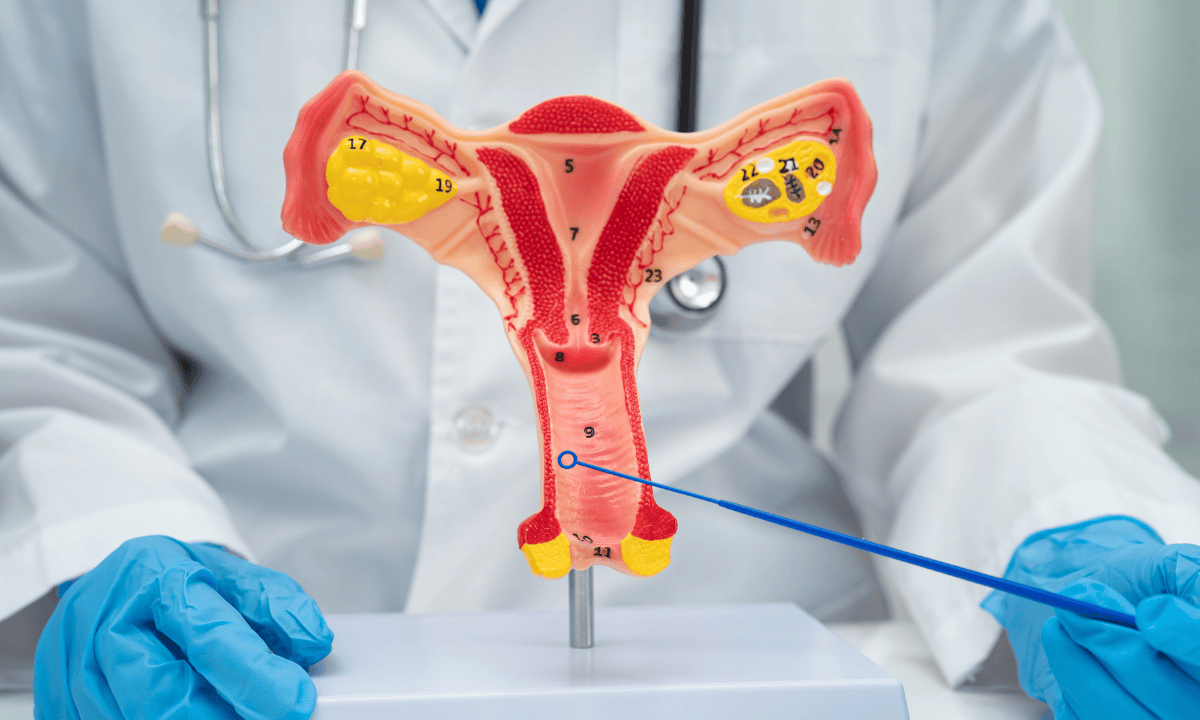
While it's uncommon, vaginal cancer can occur after a hysterectomy.
Vaginal cancer grows from the cells that line the vaginal surface, most often the thin, flat cells known as squamous cells. It shares some similarities with cervical cancer in terms of where it starts, but it's different from cancers that originate in the womb.
Removing the womb does eliminate the risk of uterine cancer. But it doesn't remove the possibility of cancer developing in the surrounding tissues, including the vagina.
Risk factors for vaginal cancer after hysterectomy
Factors that may increase the chance of abnormal cells forming in the vaginal tissue include:
A history of cervical cancer or precancerous cervical changes:
Women who have had cervical cancer or high-grade cervical dysplasia share similar risk factors for vaginal cancer.
Persistent high-risk HPV infection:
Long-term HPV infection can gradually change the cells lining the vagina. Over time, these changes may progress from precancerous lesions to cancer.
Age over 50:
Vaginal cancer is more common in women over 50 or 60.
Smoking:
Smoking reduces your body's ability to clear HPV infections and raises the risk of abnormal cell changes.
Previous pelvic radiation therapy:
Radiation to the pelvic area can increase the risk of vaginal cancer later in life.
Chronic vaginal irritation or inflammation:
Ongoing irritation of vaginal tissue may contribute to abnormal cell changes in some cases.
Having one or more of these risk factors doesn't mean you will develop vaginal cancer. But knowing your personal risk can help you and your doctor decide whether ongoing monitoring or screening may be helpful.
Signs and symptoms to watch for
Vaginal cancer can develop quietly in the early stages, which is why paying attention to new or unusual changes in your body matters. Catching concerns early gives you the best chance of getting the right care quickly.
Symptoms that may be linked to vaginal cancer include:
Vaginal bleeding unrelated to menstrual periods
Changes in vaginal discharge, such as red, brownish, or foul-smelling discharge
Persistent pelvic pain
Pain or bleeding during sexual intercourse
Discomfort or pain during urination
Constipation
Lumps or bumps felt inside the vagina
Many of these symptoms can also be caused by benign conditions. Even so, if something persists, gets worse, or just doesn't feel right, it's worth getting it checked by your doctor.
Early assessment helps identify the cause of your symptoms and allows treatment to begin promptly if needed.
If you’re unsure about your risk of cancer after a hysterectomy or have new symptoms, schedule a consultation with Thomson Medical. Our gynaecologists can review your history and guide you on appropriate screening and care.
Our gynaecologists
Loading...
Do you need vaginal cancer screening after a hysterectomy?
Whether you need regular screening after a hysterectomy comes down to why the surgery was done in the first place:
If your hysterectomy was for a benign disease:
Routine vaginal cancer screening is generally not needed, as your risk is very low.
If your hysterectomy was due to cervical cancer, high-grade dysplasia, or HPV-related vulvar cancer:
If you're not sure what follow-up care applies to your situation, it's worth having that conversation with your doctor so you know what to expect going forward.
Reducing your risk of vaginal cancer after hysterectomy
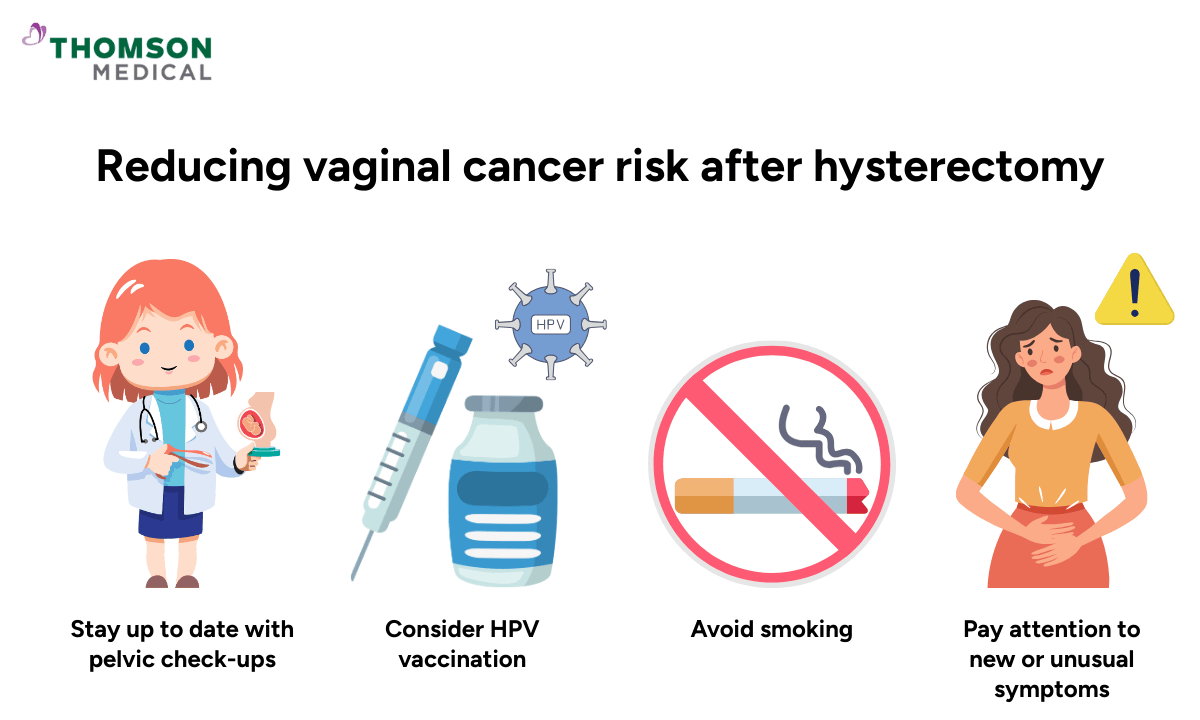
There are practical steps you can take to support your long-term vaginal health. Most of them focused on reducing known risk factors and catching any abnormal changes early.
Stay up to date with pelvic check-ups
Even after a hysterectomy, regular pelvic examinations are useful for monitoring vaginal tissue health. During these visits, your doctor can check for anything unusual, including irritation, abnormal growths, or other changes that may need further assessment.
Consider HPV vaccination
Human papillomavirus (HPV) is one of the most important risk factors for vaginal cancer. The HPV vaccine protects against several high-risk strains linked to cancers of the cervix, vagina, vulva, anus, and throat.
If you haven't been vaccinated, ask your doctor whether it might still be beneficial given your age and medical history.
Avoid smoking
Smoking weakens your immune system and reduces your body's ability to clear HPV infections, which raises the risk of persistent infection and abnormal cell changes.
Quitting smoking can make a real difference to your overall health and may also lower your risk of HPV-related cancers.
Pay attention to new or unusual symptoms
Getting to know your body makes it easier to spot changes when they happen. If something feels off or a new symptom appears, it’s important to seek medical advice rather than waiting for symptoms to go away on their own.
If you’re experiencing persistent or unexplained pelvic symptoms after a hysterectomy, request an appointment with Thomson Medical. Our specialists can assess your symptoms, perform the appropriate tests if needed, and help you understand the next steps for your care.
FAQ
Do I still need Pap smears after a hysterectomy?
If you had a total hysterectomy for benign conditions, such as fibroids or endometriosis, Pap tests are usually no longer needed. However, if your hysterectomy was related to cervical cancer or high-grade precancer, such as cervical dysplasia (CIN), or if your cervix remains, your doctor may recommend continued screening.
How common is vaginal cancer after hysterectomy?
Vaginal cancer is much less common than other gynaecological cancers, with an incidence rate of about 0.72 cases per 100,000 women in Singapore.
What are the warning signs of vaginal cancer after hysterectomy?
Possible warning signs of vaginal cancer include:
Vaginal bleeding
Unusual vaginal discharge
Pelvic pain
Changes in bowel or urinary habits
A lump felt in the vagina
These symptoms can have many causes, but they should be evaluated by a doctor.
Does having a hysterectomy increase my risk of vaginal cancer?
No, hysterectomy itself does not increase the risk of vaginal cancer. However, women who had surgery due to cervical cancer or high-grade precancerous changes may have a higher risk and may need ongoing monitoring.
How many years after a hysterectomy can vaginal cancer develop?
There is no fixed timeframe. Vaginal cancer can develop many years after a hysterectomy. Precancerous changes to the vaginal lining, known as vaginal intraepithelial neoplasia (VAIN), may sometimes be detected in the early years after surgery.
With appropriate follow-up, these changes can often be identified and managed before they progress.
Can HPV cause vaginal cancer after my uterus has been removed?
Yes, HPV can still infect the vaginal tissue even after the uterus is removed. Persistent high-risk HPV infection can lead to abnormal cell changes over time, which is why screening may still be recommended for some women.
The information provided is intended for general guidance only and should not be considered medical advice. For personalised recommendations and advice based on your unique situation, please consult a specialist at Thomson Medical. Request an appointment with Thomson Medical today.
Reference:
- HPV Information Centre. (2023). Singapore Human Papillomavirus and Related Cancers, Fact Sheet 2023. https://hpvcentre.net/statistics/reports/SGP_FS.pdf
For more information, contact us:
Thomson Specialists (Women's Health)
Thomson Women's Clinic (TWC)
- Novena:
6592 6686 (Call), 8611 8986 (WA) - Bukit Batok:
6569 0668 (Call), 8686 3525 (WA) - Choa Chu Kang:
6893 1227 (Call), 8282 1796 (WA) Jurong:
6262 8588 (Call), 6262 8588 (WA)- Katong (female doctor):
6970 2272 (Call), 8611 9020 (WA) - Punggol:
6243 6843 (Call), 8811 0328 (WA) - Sembawang: 6753 5228
- Sengkang: 6388 8125
- Serangoon (female doctor): 6382 3313
- Tampines: 6857 6266
- Tiong Bahru: 6276 1525