

HPV and HIV are two viruses that are often mentioned when discussing sexual health. Because their names sound similar and both can be transmitted through sexual contact, it is easy to confuse them.
However, HPV and HIV are very different infections. Each one affects the body differently, carries its own set of long-term health risks, and is managed in its own way.
Knowing these differences can help you make informed decisions about screening, prevention, and protecting your long-term health.
What is HPV?
Human papillomavirus (HPV) is a family of more than 200 related viruses. Some types are low-risk and may cause genital warts. Others are high-risk and are linked to certain cancers, including anal, throat, penile, vulvar, vaginal, and cervical cancers.
It's also more common than most people realise. Since many HPV cases don't experience any overt symptoms, most sexually active people will be exposed to HPV at some point in their lives, often without even realising it.
How HPV affects your body
HPV mainly infects the skin and mucosal cells, especially in areas such as the cervix, genitals, mouth, and throat.
In most cases, the immune system clears the virus on its own within one to two years without causing any problems. But some high-risk types can persist longer and gradually cause changes to cells over time.
What is HIV?
Human immunodeficiency virus (HIV) is a virus that targets the immune system. More specifically, HIV targets CD4 cells, which are important immune cells that help your body fight infections.
How HIV affects your body
Unlike HPV, which tends to remain at the site of infection, HIV travels through the bloodstream and affects the whole body.
Without treatment, HIV can damage the immune system, making it harder for the body to defend itself against infections and certain cancers. At its most advanced stage, HIV can progress to AIDS (acquired immunodeficiency syndrome).
That said, treatment today allows many people with HIV to lead long, healthy lives as long as the virus is properly managed.
Key differences between HPV and HIV
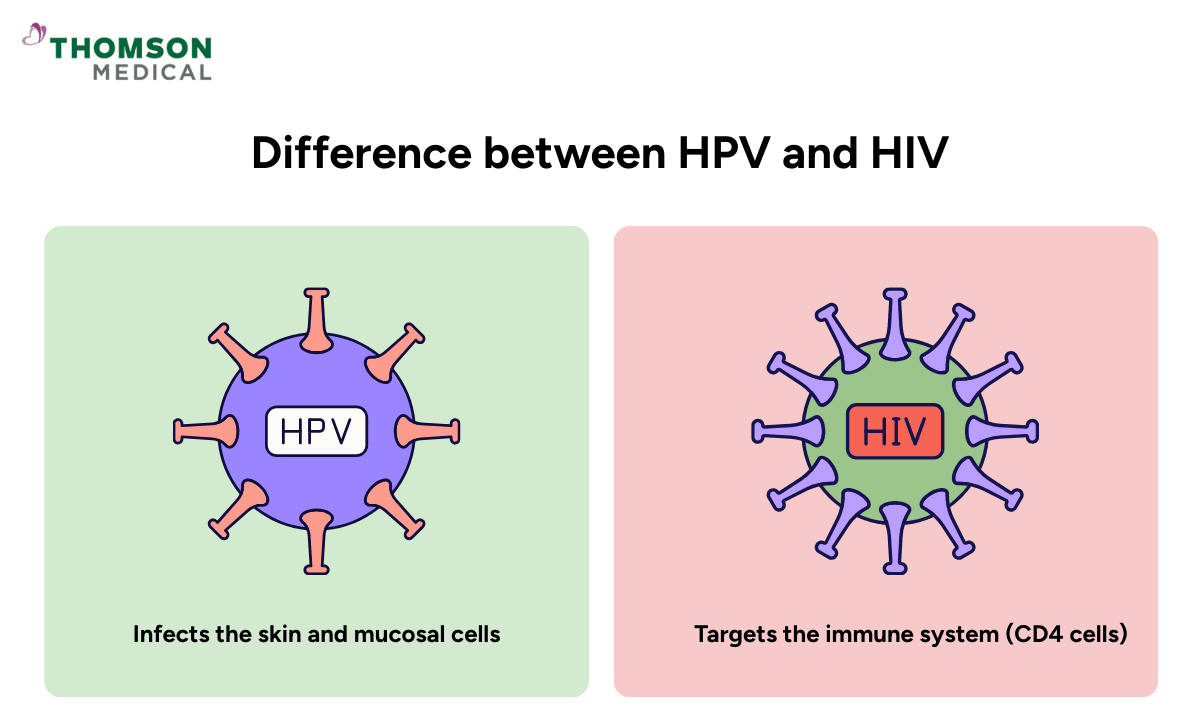
HPV and HIV differ in several important ways. The comparison below highlights some of the main distinctions.
Feature | HPV | HIV |
Main effect | Infects skin and mucosal cells | Attacks immune system cells |
Long-term risk | Certain cancers and genital warts | Progressive immune damage |
Symptoms | Often none | Early flu-like symptoms possible |
Natural clearance | Often cleared by immune system | Does not clear without treatment |
Treatment | Monitoring and treatment of cell changes | Lifelong antiretroviral therapy |
Vaccine | Yes | No |
Understanding these differences can give you a clearer picture of why HPV and HIV are managed in different ways. To build on this, let’s take a closer look at how each virus spreads.
Transmission differences between HPV and HIV
Both HPV and HIV can spread through sexual contact, but they spread in different ways. Understanding how this happens can help you protect yourself and have more informed conversations with your doctor.
HPV transmission
HPV passes through skin-to-skin contact, typically during vaginal, anal, or oral sexual contact. Because the virus lives on the skin, it can spread even without penetration. This is one reason HPV is so widespread.
HIV transmission
Unlike HPV, HIV spreads through specific body fluids:
Blood
Semen
Vaginal fluids
Rectal fluids
Breast milk
Transmission most often happens through unprotected sexual contact, sharing needles, or from mother to child during pregnancy, birth, or breastfeeding.
HIV can affect anyone, so if you are living with the virus, there is no need to feel ashamed – and, just as importantly, it’s a reminder to approach others with understanding rather than stigma.
Comparing testing and diagnosis
Because the two viruses spread in different ways, how we screen and test for each one is different as well.
HPV testing
Testing for HPV is primarily done through cervical screening for people with a cervix.
This may include:
Pap smear, which checks for abnormal cells in the cervix
HPV test, which identifies high-risk types of the virus
These tests help your doctor detect cell changes before you notice any symptoms. If anything is found, your doctor can monitor it closely or recommend treatment early, when it is most effective.
HIV testing
HIV is diagnosed through saliva or blood tests that detect the virus or the antibodies your body produces in response to it.
Because HIV may not cause noticeable symptoms at first, testing is the most reliable way to know your status. Regular HIV testing is recommended for sexually active adults – it is simply part of looking after yourself and nothing to be anxious about.
Getting tested allows you to take control of your health and, if needed, start treatment early to protect your immune system. Regular HIV testing can also provide reassurance and help you make informed decisions about your sexual health.
If you have questions about HPV, HIV, or any of the recommended screening tests, request an appointment with Thomson Medical. Our healthcare professionals can help answer your queries and provide guidance based on your personal health history.
Our gynaecologist in Singapore
Loading...
Treatment and management for HPV and HIV
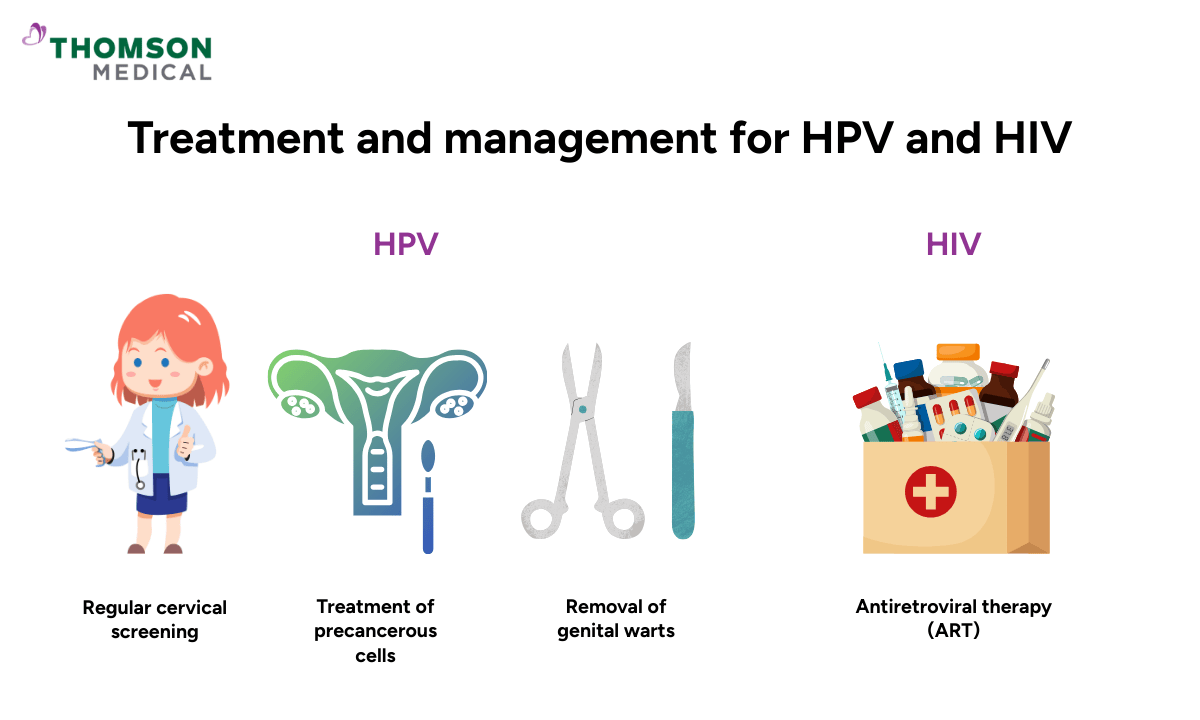
While HPV and HIV require different approaches, both respond well to modern medical care.
Managing HPV
For many people, HPV infections clear up without the need for treatment, especially when your immune system is functioning well.
Supporting your overall health and immune system can help your body respond more effectively to the virus. At the same time, medical care focuses on monitoring and managing any conditions that may develop from HPV.
Your doctor may recommend:
Regular cervical screening to detect abnormal cell changes early
Treatment of precancerous cells through procedures such as the loop electrosurgical excision procedure (LEEP) or cryotherapy
Removal of genital warts, if they appear
When these changes are detected early through screening, treatment is usually effective.
Managing HIV
Unlike HPV, HIV requires ongoing treatment because the virus does not clear on its own. The good news is that modern medicine has made living with HIV more manageable than it used to be.
The main treatment is antiretroviral therapy (ART), a combination of medications that suppress the virus.
When taken consistently, these medications can:
Reduce the amount of virus in your body
Protect the immune system from damage
Prevent HIV from progressing to AIDS
Lower the risk of passing HIV to others
With consistent treatment and regular medical care, many people living with HIV can expect a better life expectancy and quality of life.
Preventing HPV and HIV infection
Learning about sexually transmitted infections can feel daunting, but there are practical steps you can take to protect yourself.
HPV prevention
HPV spreads mainly through skin-to-skin contact during sexual activity.
While no single method offers complete protection, you can meaningfully lower your risk in several ways:
HPV vaccination:
The HPV vaccine protects against several high-risk virus types that cause most HPV-related cancers, as well as some types that cause genital warts.
Condom use:
Condoms can reduce HPV transmission, even though they cannot completely eliminate the risk.
If you would like to learn whether HPV vaccination is suitable for you, request an appointment at Thomson Medical for personalised advice from our doctors.
HIV prevention
Since this virus spreads through specific body fluids, HIV prevention focuses on reducing exposure to those fluids.
You can lower your risk by:
Using condoms consistently during sexual activity
Getting regular HIV testing, especially if you have new or multiple partners
Considering PrEP (pre-exposure prophylaxis) if your doctor recommends it
Avoiding shared needles or injection equipment
Taking these steps helps protect both your health and your partner's health while also giving you greater confidence when it comes to your sexual wellbeing.
FAQ
Which virus is more serious – HPV or HIV?
Human immunodeficiency virus (HIV) is generally considered more serious medically because it attacks the immune system and requires lifelong treatment. Human papillomavirus (HPV) often causes no symptoms and your immune system can clear the virus on its own.
Can HPV turn into HIV?
No, HPV and HIV are completely different viruses. HPV infects skin and mucosal cells, while HIV attacks the immune system. One virus cannot turn into the other.
Can a person have both HPV and HIV?
Yes, people living with HIV may be more likely to develop persistent HPV infections and HPV-related cancers because HIV can weaken the immune system.
Is HPV more common than HIV?
Yes, HPV is much more common. Most sexually active people will encounter HPV at least once in their lives, often without realising it.
Can either HIV or HPV be cured?
Most HPV infections clear on their own as the immune system responds naturally over time – though this is not guaranteed for all types or all individuals.
HIV can't be eliminated, but antiretroviral treatment can control it very effectively and allow people to live long, healthy lives.
How long do HPV and HIV stay in the body?
While HIV remains in the body for life, HPV can clear within several months to a few years as the immune system eliminates it.
The information is intended for general guidance only and should not be considered medical advice. For personalised recommendations and advice based on your unique situation, please consult a specialist at Thomson Medical. Request an appointment with Thomson Medical today.
For more information, contact us:
Thomson Specialists (Women's Health)
Thomson Women's Clinic (TWC)
- Novena:
6592 6686 (Call), 8611 8986 (WA) - Bukit Batok:
6569 0668 (Call), 8686 3525 (WA) - Choa Chu Kang:
6893 1227 (Call), 8282 1796 (WA) Jurong:
6262 8588 (Call), 6262 8588 (WA)- Katong (female doctor):
6970 2272 (Call), 8611 9020 (WA) - Punggol:
6243 6843 (Call), 8811 0328 (WA) - Sembawang: 6753 5228
- Sengkang: 6388 8125
- Serangoon (female doctor): 6382 3313
- Tampines: 6857 6266
- Tiong Bahru: 6276 1525